India, Ghana sign ICAR-CSIR MoU to boost agri research and tech ties

Synopsis
India and Ghana have moved beyond diplomatic niceties into field-level science: a five-year ICAR–CSIR-CRI MoU signed in New Delhi commits both countries to joint tomato crop research, cassava and yam value-chain upgrades, and cold-chain technology transfer — with a commercial partner already named and a Joint Working Group to hold both sides accountable.
Key Takeaways
India and Ghana signed an ICAR–CSIR-CRI MoU on 7 October 2026 in New Delhi .
The five-year agreement covers joint research, technology transfer, capacity building, and commercialisation of agricultural innovations.
Phase one focuses on high-yielding tomato varieties ; later phases target cassava, yam, and other tuber crop value chains.
Post-harvest management — including cold storage, refrigerated transport, and food processing — is a priority cooperation area.
Arima Farms Ltd. of Ghana is the designated commercial partner for research-to-market activities under the MoU.
A Joint Working Group will meet periodically in New Delhi and Accra to oversee implementation.
India and Ghana on 7 October 2026 formalised a new chapter in bilateral agricultural cooperation, signing a Memorandum of Understanding (MoU) between the Indian Council of Agricultural Research (ICAR) and Ghana's Crops Research Institute (CSIR-CRI). The agreement, announced in New Delhi, covers joint research, technology transfer, capacity building, and commercialisation of agricultural innovations — and reinforces India's broader South-South cooperation agenda with the African continent.
High-Level Endorsement
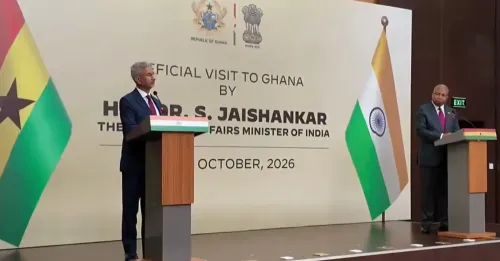
The MoU was signed in the presence of External Affairs Minister S. Jaishankar and Ghana's Foreign Minister Samuel Okudzeto Ablakwa, signalling the political weight both governments are placing on the partnership. The five-year agreement establishes a structured framework for collaboration in agricultural science, education, and technological exchange between the two nations.
Key Areas of Cooperation
Under the arrangement, ICAR and CSIR-CRI will undertake joint research projects, facilitate the exchange of scientists and technical experts, and share scientific information, research methodologies, and breeding materials. Institutional linkages between agricultural research centres in both countries will also be actively encouraged to sustain long-term scientific engagement.
The first phase will focus on vegetable crop research, particularly tomatoes. ICAR will support the introduction of high-yielding tomato varieties suited to Ghanaian conditions and help scale up proven technologies to strengthen domestic tomato production. Beyond vegetables, the partnership will target value addition and processing of cassava, yam, and other tuber crops — staples that are central to Ghana's food economy.
Post-Harvest Management and Value Chains
Post-harvest losses — a chronic challenge in sub-Saharan agriculture — have been identified as a priority area. The collaboration will provide technical support in cold storage, refrigerated transportation, sorting, grading, and food processing technologies. These interventions are expected to reduce wastage and improve farm incomes across the value chain.
Arima Farms Ltd. of Ghana has been designated as the commercial partner to CSIR-CRI for specific research and commercialisation activities, serving as the bridge between laboratory innovation and market-level adoption.
Governance and Implementation
A Joint Working Group comprising representatives from ICAR and CSIR-CRI will oversee implementation, meeting periodically in New Delhi and Accra to review progress and set priorities. This structured oversight mechanism is intended to ensure the agreement moves beyond intent to measurable outcomes — a recurring challenge in bilateral MoUs.
This initiative comes amid India's sustained push to deepen Africa ties through technical cooperation, with agriculture seen as one of the most tangible areas of India-Africa South-South engagement. As the Joint Working Group convenes for its first review, the spotlight will be on whether field-level outcomes — particularly in tomato yields and post-harvest efficiency — match the ambition of the framework.
Point of View
And the real test is always in execution rather than ceremony. The decision to name a commercial partner — Arima Farms Ltd. — at the point of signing is a meaningful structural departure from earlier India-Africa agricultural agreements that stopped at the research-exchange stage. The focus on tomatoes is also shrewdly specific: Ghana faces chronic domestic supply shortfalls in the crop, giving ICAR a clear and measurable mandate. However, Joint Working Groups with biannual meetings have a history of slow-walking deliverables; without binding timelines tied to disbursements or technology benchmarks, the five-year window could narrow without visible farmer-level impact.
NationPress
7 Oct 2026
Frequently Asked Questions
What is the India-Ghana ICAR–CSIR-CRI MoU signed on 7 October 2026?
It is a five-year Memorandum of Understanding between India's Indian Council of Agricultural Research (ICAR) and Ghana's Crops Research Institute (CSIR-CRI), signed on 7 October 2026 in New Delhi. The agreement covers joint agricultural research, technology transfer, capacity building, and commercialisation of innovations, with an initial focus on high-yielding tomato varieties.
Which Indian and Ghanaian ministers witnessed the MoU signing?
External Affairs Minister S. Jaishankar represented India and Ghana's Foreign Minister Samuel Okudzeto Ablakwa witnessed the signing, reflecting high-level political backing from both governments.
What crops and technologies are covered under the India-Ghana agriculture agreement?
The first phase targets vegetable crops, particularly tomatoes, with ICAR supporting high-yielding variety introduction. Later phases will address value addition for cassava, yam, and other tuber crops, as well as post-harvest technologies such as cold storage, refrigerated transport, sorting, grading, and food processing.
Who is the commercial partner for the ICAR-Ghana research collaboration?
Arima Farms Ltd. of Ghana has been designated as the commercial partner to CSIR-CRI for specific research and commercialisation activities under the MoU, bridging the gap between agricultural research and market adoption.
How will the India-Ghana MoU be implemented and monitored?
A Joint Working Group comprising representatives from ICAR and CSIR-CRI will oversee implementation. The group will meet periodically in New Delhi and Accra to review progress and guide activities over the five-year agreement period.