India-Japan sign health research and quantum tech pacts in New Delhi
Synopsis
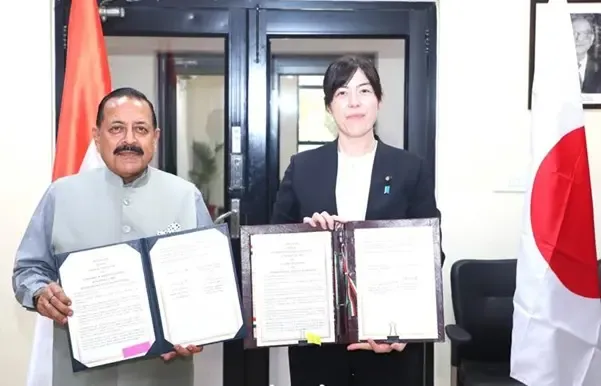
India and Japan formalised two landmark agreements on 6 May — a health and medical devices MoC between AMED, ICMR, and DST, and a quantum science LoI between Tokyo's Cabinet Office and DST. The deals translate commitments made during PM Modi's August 2025 Japan visit into concrete bilateral action, spanning next-generation tech and medical research.
Key Takeaways
India and Japan signed two agreements on 6 May 2025 in New Delhi covering health research and quantum technologies .
A Memorandum of Cooperation (MoC) in health and medical devices was exchanged among AMED , ICMR , and DST .
A Letter of Intent (LoI) on quantum science and technology was signed between Japan's Cabinet Office and DST .
The pacts build on outcomes of PM Modi's visit to Japan in August 2025 under the India-Japan Science, Technology and Innovation Partnership.
Both sides also discussed expanding joint health research programmes, capacity building, and structured funding mechanisms.
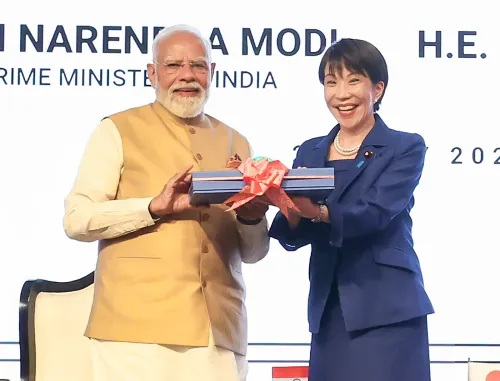
India and Japan on Wednesday, 6 May signed formal agreements to deepen cooperation in health research and quantum technologies, marking a significant step in their bilateral science, technology and innovation partnership. The pacts were exchanged during a high-level meeting in New Delhi, the Ministry of Science & Technology confirmed.
Key Agreements Signed
Two distinct instruments were formalised at the meeting. First, a Memorandum of Cooperation (MoC) in health and medical devices was exchanged among the Japan Agency for Medical Research and Development (AMED), the Indian Council of Medical Research (ICMR), and India's Department of Science and Technology (DST). Second, a Letter of Intent (LoI) on cooperation in quantum science and technology was signed between the Cabinet Office of Japan and the DST, opening new avenues for collaboration in next-generation technologies.
High-Level Meeting
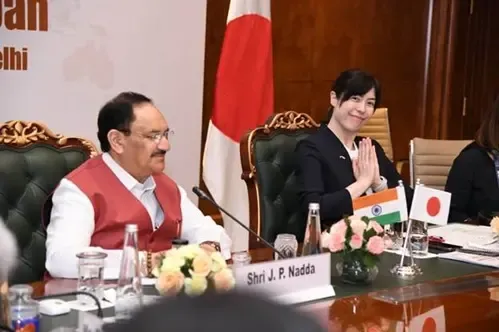
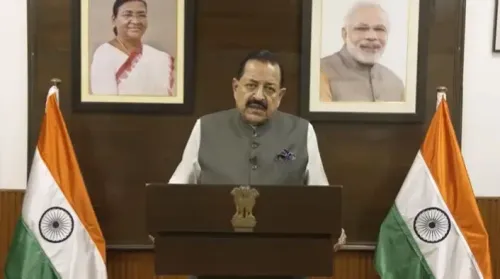
The agreements were exchanged during talks between Union Minister Dr Jitendra Singh and Japan's Minister for Science and Technology Policy and Minister of State for Space Policy, Kimi Onoda, who arrived in India with a high-level delegation. Singh noted that India and Japan share a natural synergy in science and technology, with Japan's advanced technological capabilities complementing India's vast pool of skilled human resources.
He further highlighted that India's expanding national missions in quantum technologies, cyber-physical systems, electric mobility, clean energy, and advanced computing are creating fresh opportunities for joint research, co-development, and industrial partnerships.
Building on Modi's Japan Visit
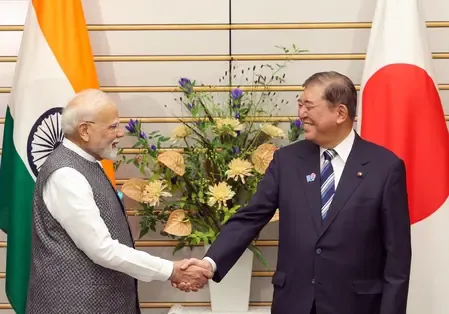
The government noted that this engagement builds on outcomes from Prime Minister Narendra Modi's visit to Japan in August 2025, during which both sides agreed to expand cooperation under the India-Japan Science, Technology and Innovation Partnership across sectors, including industry and startups. The current agreements represent a concrete follow-through on those commitments.
Health and AI in Focus
In the health sector, both sides deliberated on expanding joint research programmes, capacity building, and structured funding mechanisms to support collaborative projects. Japanese Minister Onoda appreciated India's rapid economic growth and its growing focus on innovation, particularly the large-scale adoption of artificial intelligence across sectors. This is notably the first formal health research MoC between AMED and ICMR, signalling a more structured approach to bilateral medical collaboration.
What's Next
With the LoI on quantum science now in place, both governments are expected to outline specific research programmes and funding frameworks in the coming months. Industry bodies and startups in both countries stand to benefit as the partnership expands beyond government-to-government engagement into co-development and commercialisation.
Point of View
However, will be whether structured funding mechanisms materialise or whether these instruments remain aspirational, as has been the case with several past bilateral science pacts. With China accelerating in both quantum and health tech, the urgency for India and Japan to move from LoIs to live programmes has never been greater.
NationPress
24 Sept 2026
Frequently Asked Questions
What agreements did India and Japan sign on 6 May 2025?
India and Japan signed a Memorandum of Cooperation (MoC) in health and medical devices among AMED, ICMR, and DST, and a Letter of Intent (LoI) on quantum science and technology between Japan's Cabinet Office and India's DST. Both instruments were exchanged during a high-level meeting in New Delhi.
What is the India-Japan Science, Technology and Innovation Partnership?
It is a bilateral framework under which India and Japan collaborate across sectors including quantum technologies, health research, clean energy, and startups. The partnership was reinforced during PM Modi's visit to Japan in August 2025, with the latest agreements serving as a concrete follow-through.
Who represented India and Japan at the New Delhi meeting?
India was represented by Union Minister Dr Jitendra Singh, while Japan's delegation was led by Minister for Science and Technology Policy and Minister of State for Space Policy, Kimi Onoda, who visited India with a high-level team.
Why is the quantum technology LoI significant?
The LoI between Japan's Cabinet Office and India's DST opens formal collaboration in next-generation quantum science, an area where both countries are investing heavily. It creates a framework for joint research, co-development, and potentially industrial partnerships in a strategically critical technology domain.
How does the health MoC benefit India?
The MoC between AMED, ICMR, and DST is expected to expand joint health research programmes, support capacity building, and establish structured funding mechanisms. It pairs India's large clinical and research workforce with Japan's advanced medical device and pharmaceutical capabilities.