India-Japan JCM: Healthcare, digital health, supply chains on agenda
Synopsis
India and Japan's third healthcare JCM went beyond diplomatic ritual — with supply chain resilience, AI-enabled health tech, and the Ayushman Bharat Digital Mission all on the table, the meeting signals a maturing bilateral health partnership that could reshape how both nations tackle NCDs, ageing, and medical access.
Key Takeaways
The third India-Japan Joint Committee Meeting on Healthcare was held in New Delhi on 5 May 2025 .
Co-chaired by Jagat Prakash Nadda and Japan's Kimi Onoda , the meeting covered supply chains, digital health, NCDs, and workforce development.
India presented the Ayushman Bharat Digital Mission as its flagship digital health initiative; Japan shared its AI-enabled medical technology experience.
On supply chains, India highlighted its pharmaceutical and medical devices manufacturing strengths; Japan shared its public-private collaboration model.
Both sides discussed cancer screening, early diagnosis , and NCD response frameworks aligned with the Sustainable Development Goals .
Concrete project-level agreements are expected to follow in the coming months.
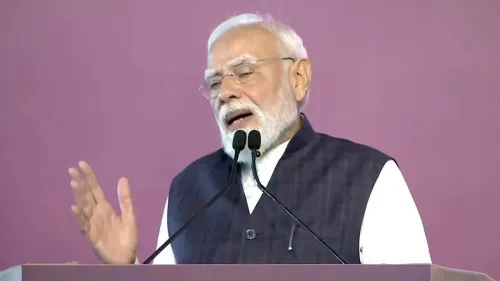
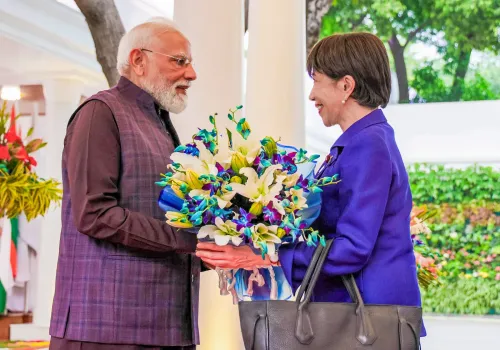
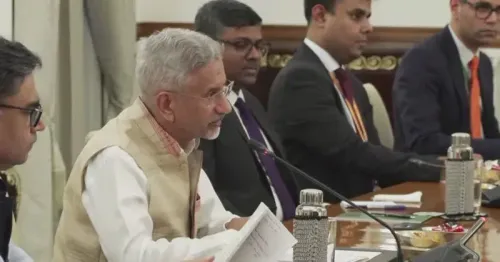
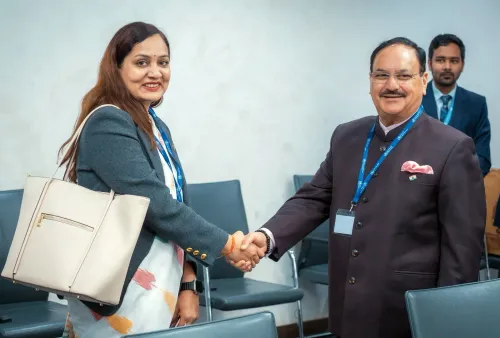
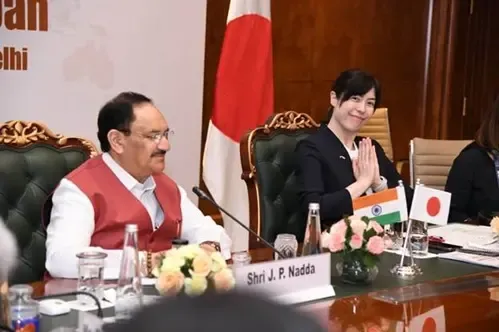
India and Japan on Tuesday, 5 May held the third Joint Committee Meeting (JCM) on Healthcare in New Delhi, with both nations committing to deepen bilateral cooperation across stronger healthcare systems, resilient medical supply chains, and enhanced collaboration in digital health, medical innovation, and workforce development. The meeting was co-chaired by Union Minister of Health and Family Welfare Jagat Prakash Nadda and Japan's Minister in charge of Healthcare Policy Kimi Onoda.
What the Ministers Said
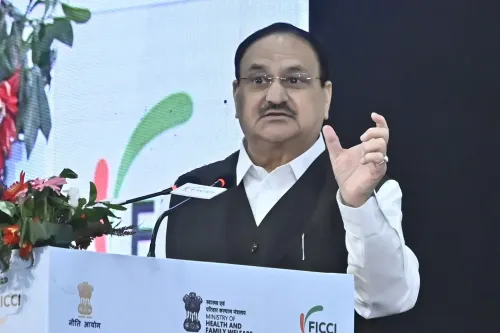
Nadda underscored that the meeting reflected a shared commitment to strengthen health sector cooperation, noting that India-Japan collaboration is guided by the Memorandum of Cooperation in Healthcare and Wellness. He emphasised a common vision centred on improving accessibility, strengthening health systems, and promoting innovation for better health outcomes. Invoking India's guiding principle of 'Sabka Saath, Sabka Vikas', Nadda described the JCM as a vital platform for advancing bilateral healthcare cooperation.
Onoda, for her part, reaffirmed Japan's commitment to deepening engagement through innovation, technology, and research, expressing readiness to further strengthen the bilateral partnership. Union Health Secretary Punya Salila Srivastava, who welcomed the Japanese delegation, described the India-Japan partnership as one built on mutual respect, trust, and a shared vision for the future.
Supply Chain Resilience and Medical Products
One of the central agenda items was supply chain resilience. India highlighted its considerable pharmaceutical and medical devices manufacturing capabilities, along with ongoing efforts to strengthen domestic production and ensure affordable access to medical products. Japan, in turn, shared its model of public-private collaboration aimed at enhancing medical supply chains and accelerating technology deployment — a framework that Indian officials noted with interest given India's own push to reduce import dependency in critical medical inputs.
Digital Health and Non-Communicable Diseases
On digital health, India outlined the Ayushman Bharat Digital Mission, which is building an interoperable, citizen-centric digital health ecosystem across the country. Japan shared its experience in digitalisation, AI-enabled medical technologies, and collaborative research — areas where both sides agreed to explore deeper joint initiatives.
On non-communicable diseases (NCDs), India presented its response framework built around screening, continuum of care, and health promotion aligned with the Sustainable Development Goals (SDGs). Japan shared its ongoing cooperation initiatives, including cancer screening, early diagnosis, and capacity-building projects — areas of growing relevance as India grapples with a rising NCD burden.
Human Resource Development and Workforce Exchange
Both sides discussed human resource development, with India highlighting its skilled healthcare workforce ecosystem and existing exchange programmes. Japan outlined ongoing cooperation in joint research and personnel exchange initiatives, signalling appetite for expanded engagement. This comes amid broader global competition for healthcare talent, and with India's nursing and paramedical workforce increasingly sought after in ageing economies like Japan.
What Comes Next
The third JCM builds on the framework established in earlier rounds of bilateral health dialogue and is expected to translate into concrete project-level agreements in the months ahead. With both countries facing distinct but complementary healthcare challenges — India's scale and affordability pressures, Japan's ageing population and advanced medical technology base — the partnership holds structural promise that goes beyond diplomatic optics.
Point of View
AI diagnostics, and a public-private supply chain model; India brings pharmaceutical manufacturing scale, a massive digital health infrastructure, and a workforce that ageing economies desperately need. The real story is not the meeting itself but whether these complementary strengths translate into binding agreements — past JCMs have produced goodwill communiqués that stalled at implementation. With India's NCD burden accelerating and Japan's healthcare costs ballooning, both sides have genuine incentive to move beyond optics this time.
NationPress
22 Sept 2026
Frequently Asked Questions
What was discussed at the India-Japan Joint Committee Meeting on Healthcare?
The third India-Japan Joint Committee Meeting on Healthcare, held in New Delhi on 5 May 2025, covered supply chain resilience, digital health, non-communicable diseases, and human resource development. Both sides shared their respective frameworks and expressed commitment to deepening bilateral cooperation.
Who co-chaired the India-Japan healthcare meeting?
The meeting was co-chaired by Union Minister of Health and Family Welfare Jagat Prakash Nadda from India and Japan's Minister in charge of Healthcare Policy Kimi Onoda. Union Health Secretary Punya Salila Srivastava also participated and welcomed the Japanese delegation.
What is the Ayushman Bharat Digital Mission and why was it highlighted?
The Ayushman Bharat Digital Mission is India's flagship initiative to build an interoperable, citizen-centric digital health ecosystem. It was highlighted at the JCM to showcase India's digital health capabilities and explore potential areas of collaboration with Japan's AI-enabled medical technologies.
Why is supply chain resilience a priority in India-Japan healthcare talks?
India has significant pharmaceutical and medical devices manufacturing capabilities and is working to reduce import dependency in critical medical inputs. Japan's public-private collaboration model for supply chains was seen as relevant to India's goals of strengthening domestic production and ensuring affordable medical access.
How does India-Japan healthcare cooperation address non-communicable diseases?
India presented a response framework for NCDs based on screening, continuum of care, and health promotion aligned with the Sustainable Development Goals. Japan shared its ongoing initiatives in cancer screening, early diagnosis, and capacity-building — areas where both nations agreed to explore closer cooperation.