India's digital health push at 79th World Health Assembly: Key highlights
Synopsis
At the 79th World Health Assembly in Geneva, India's Health Minister J.P. Nadda unveiled a striking scorecard: 880 million digital health IDs, 1,85,000 community health centres, 600 million insurance beneficiaries, and 300 million vaccines shipped to 100 nations. The pitch was unmistakable — India isn't just reforming its own healthcare system, it's auditioning to lead the global health order.
Key Takeaways
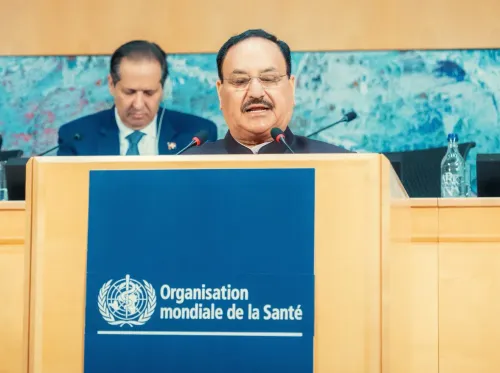
Nadda addressed the 79th World Health Assembly plenary in Geneva on 19 May 2025 .
India's Ayushman Bharat Digital Mission has created over 880 million unique digital health identities .
Over 1,85,000 Ayushman Arogya Mandirs are now operational, providing community-level primary care.
AB PM-JAY , the world's largest public health assurance scheme, covers nearly 600 million vulnerable beneficiaries.
Under Vaccine Maitri , India supplied nearly 300 million vaccine doses to around 100 countries during COVID-19.
Nadda called for ethical, human-centric AI in healthcare as India launched its national AI in Healthcare strategy .
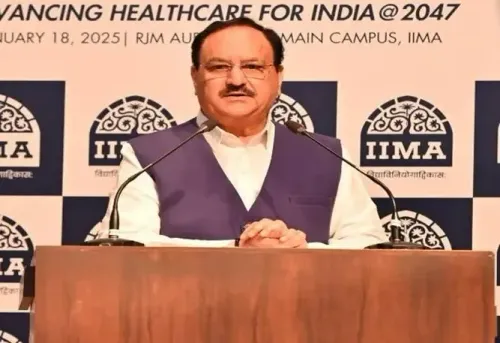
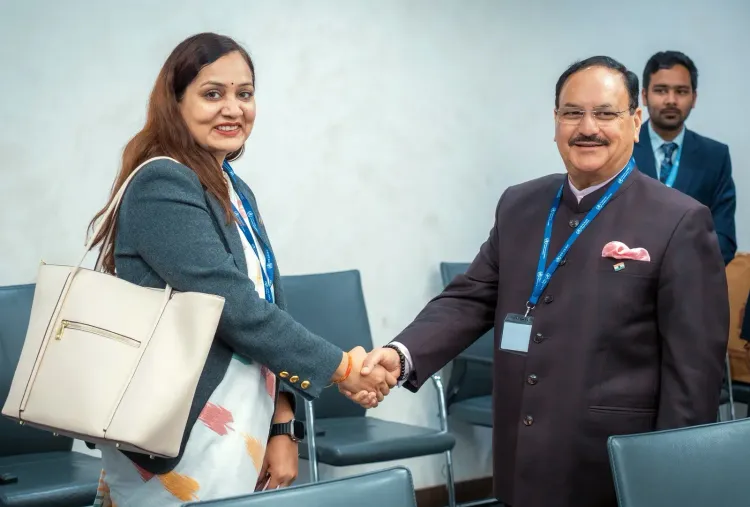
Union Health Minister J.P. Nadda on Tuesday, 19 May addressed the plenary session of the 79th World Health Assembly (WHA) in Geneva, laying out India's sweeping advances in digital health infrastructure, universal coverage, and global health solidarity. Speaking under the Assembly's theme — 'Reshaping Global Health: A Shared Responsibility' — Nadda positioned India as a model for equitable, technology-driven healthcare at scale.
Digital Health at the Centre
Nadda placed the Ayushman Bharat Digital Mission at the heart of India's health transformation. The mission has created over 880 million unique digital health identities, enabling longitudinal health records and continuous care coordination across providers. 'This mission is strengthening India's national digital health ecosystem,' he said, underlining how the infrastructure supports data-driven policymaking and improved patient outcomes.
He also presented India's recently launched Strategy for Artificial Intelligence in Healthcare, calling for responsible, human-centric AI development. 'The future of Artificial Intelligence depends on our collective ability to build ethical and human-centric systems,' Nadda said, stressing patient safety and equity as non-negotiable principles.
Universal Health Coverage: Scale and Reach
India has operationalised over 1,85,000 Ayushman Arogya Mandirs across the country, delivering comprehensive primary healthcare at the community level. These centres focus on preventive care, early diagnosis, and treatment of common ailments — reducing the pressure on secondary and tertiary facilities.
On financial protection, the Ayushman Bharat Pradhan Mantri Jan Arogya Yojana (AB PM-JAY) — described as the world's largest public health assurance scheme — continues to cover nearly 600 million vulnerable beneficiaries, shielding them from catastrophic out-of-pocket health expenses. Nadda framed India's approach as a 'whole-of-government' and 'whole-of-society' model, emphasising that progress is anchored in people-centric policies that leave no one behind.
India's Global Health Role
Reaffirming India's identity as the 'Pharmacy of the World', Nadda recalled the country's role during the COVID-19 pandemic. Under the Vaccine Maitri initiative, India supplied nearly 300 million vaccine doses to around 100 countries, a figure he cited as evidence of India's commitment to global health solidarity.
He also outlined India's ongoing efforts to build resilient public health infrastructure capable of handling future pandemics, including strengthened preparedness frameworks and supply chain investments.
India's Call to the Global Community
Nadda urged member states to translate shared responsibility into concrete outcomes. 'In the spirit of solidarity, let this Assembly move forward to transform policy into action for a healthier future for all,' he said in his closing remarks.
India's engagement at the WHA signals its intent to play a larger role in shaping global health governance — particularly in areas where its domestic scale offers replicable models for low- and middle-income countries. How the international community responds to India's digital health framework, and whether Vaccine Maitri's goodwill translates into durable multilateral partnerships, will define the next chapter of India's global health diplomacy.
Point of View
But the critical question — how many of those IDs are actively used for longitudinal care — went unaddressed. Similarly, AB PM-JAY's 600 million beneficiary count has long been contested by health economists who distinguish between enrolled and actually-served populations. Vaccine Maitri was a genuine geopolitical asset during COVID-19, but sustaining that goodwill requires consistent supply diplomacy, not just retrospective citation. India's growing voice in global health governance is real — but the gap between headline metrics and ground-level outcomes remains the unresolved tension in its pitch.
NationPress
26 Sept 2026
Frequently Asked Questions
What did India announce at the 79th World Health Assembly?
Union Health Minister J.P. Nadda highlighted India's key health milestones at the 79th World Health Assembly in Geneva on 19 May 2025, including over 880 million digital health identities under the Ayushman Bharat Digital Mission, 1,85,000 Ayushman Arogya Mandirs, and coverage of nearly 600 million beneficiaries under AB PM-JAY.
What is the Ayushman Bharat Digital Mission?
The Ayushman Bharat Digital Mission is India's national digital health initiative that creates unique digital health identities for citizens, enabling longitudinal health records and seamless care coordination. It has so far generated over 880 million such IDs, according to Minister Nadda's address.
What is Vaccine Maitri and how many doses did India supply?
Vaccine Maitri is India's COVID-19 vaccine diplomacy initiative under which India supplied nearly 300 million vaccine doses to around 100 countries during the pandemic. Nadda cited it at the WHA as evidence of India's commitment to global health solidarity.
How many people does Ayushman Bharat PM-JAY cover?
Ayushman Bharat Pradhan Mantri Jan Arogya Yojana (AB PM-JAY) is described as the world's largest public health assurance scheme, covering nearly 600 million vulnerable beneficiaries and protecting them from catastrophic out-of-pocket health expenses.
What did India say about AI in healthcare at the WHA?
India presented its recently launched Strategy for Artificial Intelligence in Healthcare at the WHA. Minister Nadda stressed that AI systems must be ethical and human-centric, prioritising patient safety and equity, and called on the global community to adopt responsible innovation frameworks.