CM Dhami: 35,000 Jobs in 5 Years, Nakal Mafia Gone
Synopsis
Chief Minister Pushkar Singh Dhami claims his government delivered over 35,000 jobs in five years and dismantled Uttarakhand's 'nakal mafia', directly contrasting his tenure with alleged Congress-era recruitment corruption.
Key Takeaways
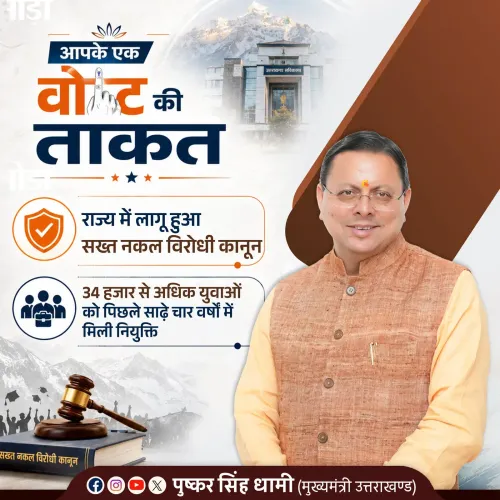
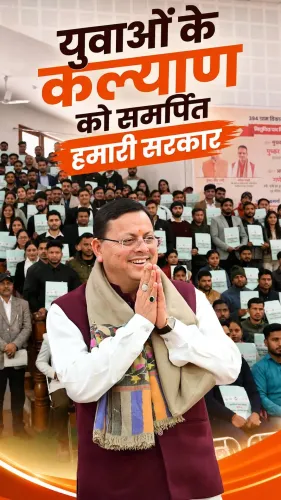
CM Pushkar Singh Dhami claims his government provided jobs to more than 35,000 youths in the last five years in Uttarakhand.
Dhami directly accuses the previous Congress administration of allowing a 'nakal mafia' (cheating syndicate) to dominate the state's public recruitment process.
He alleges that under Congress rule, degrees and government jobs were openly sold, compromising the futures of young aspirants.
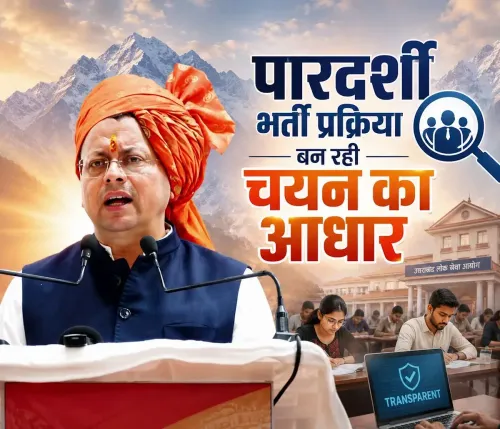
The BJP government says it has made the recruitment process transparent — a claim that will be tested against future notifications from the Uttarakhand Public Service Commission and UKSSSC .
The statement was posted by the official Chief Minister's Office of Uttarakhand on 10 November 2026 .
When Chief Minister Pushkar Singh Dhami of Uttarakhand takes aim at the previous administration, he does not reach for vague accusations — he reaches for a number. 35,000 jobs in five years, delivered through a recruitment process his government says it has made transparent, against what he describes as a regime of exam fraud and open sale of degrees and postings.
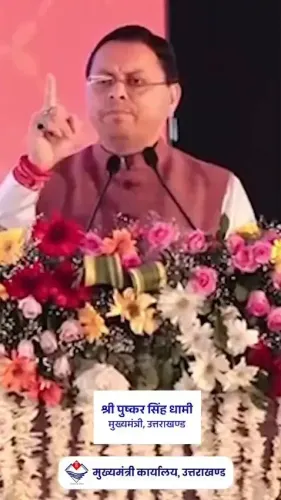
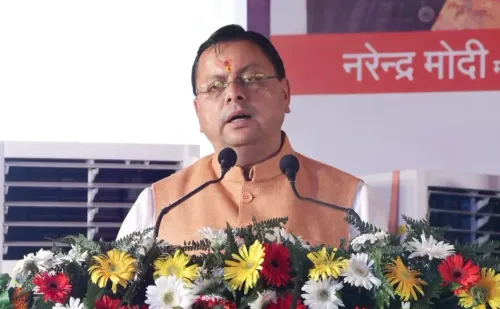
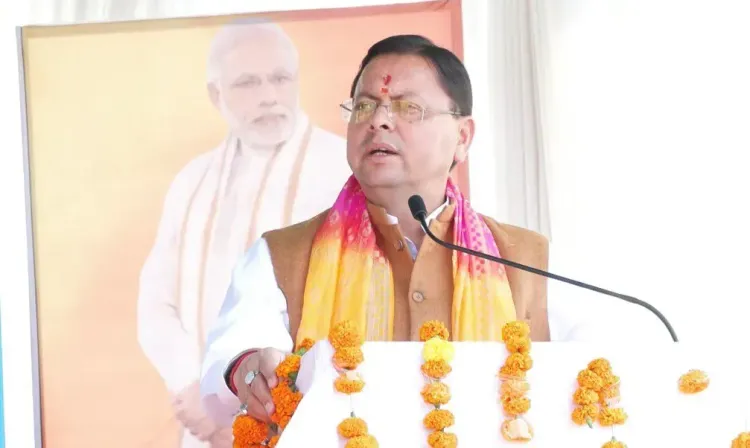
Speaking on Tuesday, 10 November 2026, the Chief Minister's Office posted a direct quote from CM Dhami that laid out the contrast in blunt terms: 'कांग्रेस के समय प्रदेश में नकल माफिया हावी थी' — 'During the Congress era, the exam-cheating mafia held sway in the state. The futures of young people were toyed with. Degrees and jobs were sold. But we made the recruitment process transparent and provided jobs to more than 35,000 youths in the last five years.'
The 'Nakal Mafia' Charge and What It Refers To
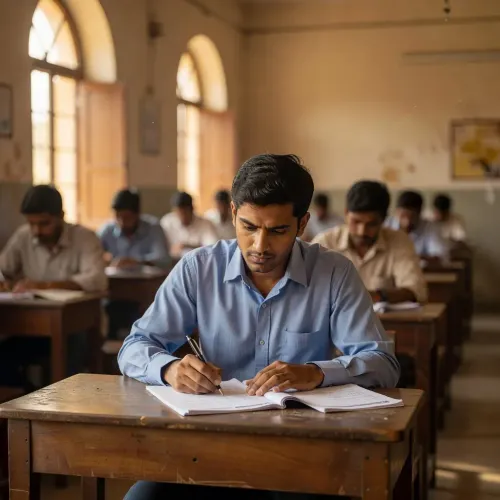
Uttarakhand has a documented history of paper-leak scandals and irregularities in public-sector recruitment — a pattern that has repeatedly forced governments to cancel exams and re-conduct selection processes. The term nakal mafia (cheating syndicate) has become a charged political shorthand in the state for organised networks that allegedly facilitated exam fraud for a price. Dhami's remarks place the blame squarely on the Congress-era administration for allowing these networks to flourish.
The Bharatiya Janata Party has governed Uttarakhand since March 2022, when it won the state assembly election. Dhami, who has served as Chief Minister since July 2021, has repeatedly positioned transparent government hiring as a signature deliverable of his tenure — an argument that carries particular weight in a young, hill-state economy where a central or state government job remains one of the most sought-after career outcomes.
Recruitment Reform as a Political Weapon
Across India, ruling parties have increasingly made recruitment transparency a front-line political argument — especially in states with large youth populations and high unemployment anxiety. The pattern is consistent: contrast a cleaned-up present against an allegedly corrupt past, and anchor the claim with a jobs number. Dhami's statement fits precisely within that playbook, but the specificity of the 35,000 figure gives it sharper edges than most such claims.
The Uttarakhand Public Service Commission and the Uttarakhand Subordinate Services Selection Commission are the two principal bodies through which these recruitments flow. How rigorously those pipelines have been reformed — and how many of the promised appointments have translated into active service — will be the question opposition parties and job aspirants continue to press.
What Youth Aspirants Are Watching
For Uttarakhand's young job seekers, the proof is not in a press statement but in the next recruitment notification. With the government staking its credibility on a clean hiring record, any future irregularity carries disproportionate political cost. That pressure cuts both ways: it incentivises the administration to keep the process clean, and it gives the opposition a loaded weapon if anything goes wrong.
Dhami's government has drawn a bright line. The clock is running on whether the numbers hold up to scrutiny — and whether the exam halls of Uttarakhand stay free of the mafia the Chief Minister says he drove out.
Point of View
Making it one of the safest and most potent campaign planks available. The unverified nature of the 35,000 figure in the public record means the claim invites scrutiny, and any future recruitment controversy would land with amplified political damage. For the opposition, the most effective counter is not to dispute the rhetoric but to demand appointment-order documentation — a battle Dhami's government has effectively invited by making the number so specific.
NationPress
10 Nov 2026
Frequently Asked Questions
What did CM Pushkar Singh Dhami say about jobs in Uttarakhand?
CM Dhami claimed that his government provided jobs to more than 35,000 youths in the last five years and made the recruitment process transparent, contrasting it with alleged large-scale fraud under the previous Congress administration.
What is the 'nakal mafia' in Uttarakhand?
The nakal mafia refers to organised networks allegedly involved in facilitating cheating and paper leaks in public-sector recruitment examinations. CM Dhami claims such networks flourished under Congress rule and have been dismantled by his government.
How many government jobs has Uttarakhand given in five years under Dhami?
CM Dhami has claimed that more than 35,000 government jobs were given to youth in Uttarakhand over the last five years under his administration. This figure has been stated by the Chief Minister's Office but has not been independently verified.
Which bodies handle government recruitment in Uttarakhand?
The two principal agencies are the Uttarakhand Public Service Commission (UKPSC) and the Uttarakhand Subordinate Services Selection Commission (UKSSSC) , both of which conduct state-level competitive examinations for government posts.
Is Pushkar Singh Dhami from the BJP?
Yes. Pushkar Singh Dhami is a Bharatiya Janata Party (BJP) leader who has served as Chief Minister of Uttarakhand since July 2021 . The BJP retained power in the state after winning the March 2022 assembly election.