JP Nadda at WHA79: Early lung screening, responsible AI key to better healthcare
Synopsis
India's Health Minister took the WHA79 stage in Geneva to pitch two big ideas: mass lung screening as a public health imperative, and an AI governance framework — SAHI — that he called the first of its kind from the Global South. With India carrying a heavy TB burden and a growing digital health infrastructure, Nadda's address signals New Delhi's ambition to move from policy recipient to global health standard-setter.
Key Takeaways
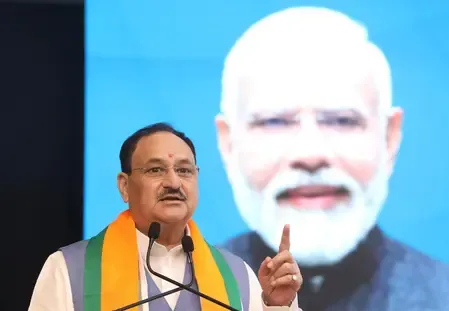
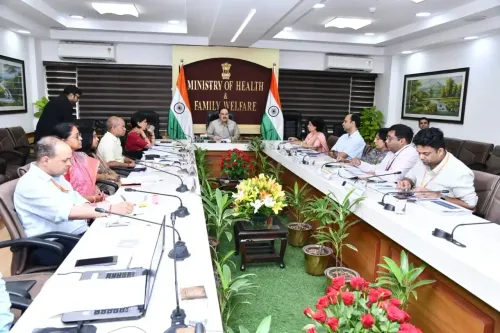
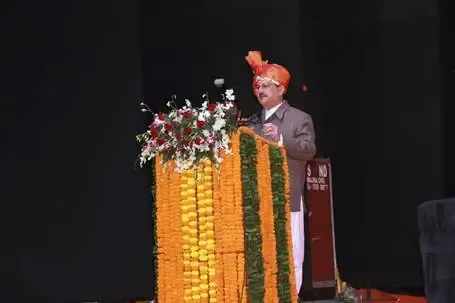
Union Health Minister Jagat Prakash Nadda spoke at two side events at the 79th World Health Assembly in Geneva on 21 May 2025 .
India's National Tuberculosis Elimination Programme and TB-Mukt Bharat campaign were cited as among the world's largest early-detection efforts.
The TB Mukt Bharat App features 'Khushi' , an AI-enabled multilingual chatbot accessible on entry-level smartphones for real-time health guidance.
The Strategy for AI in Healthcare for India (SAHI) , launched in February 2026 , was described as the first comprehensive AI health strategy from the Global South .
Nadda called for AI health deployment guided by 'sound regulation, rigorous research, ethical oversight, and a deep commitment to equity.'
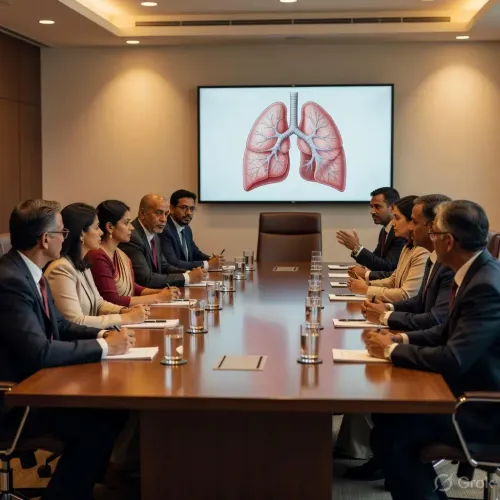
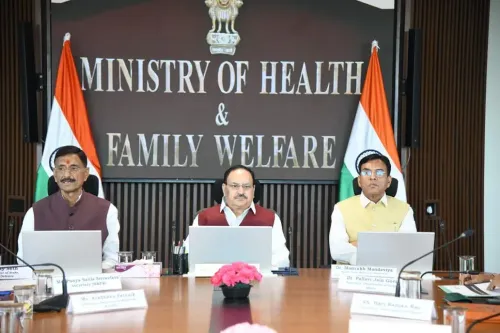
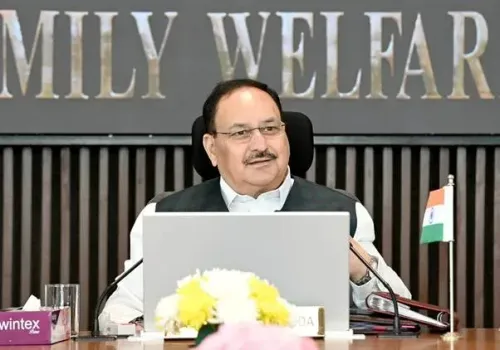
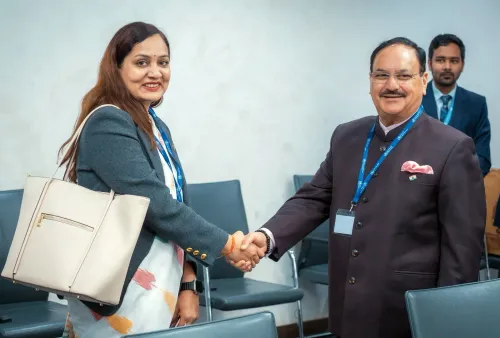
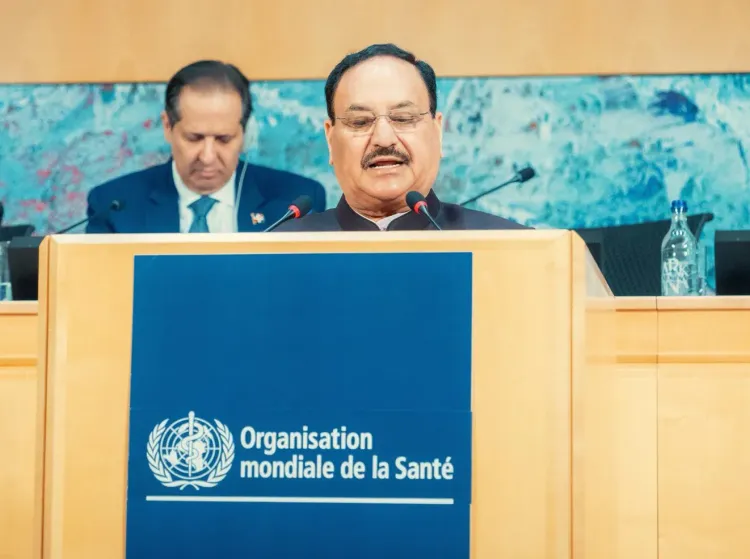
Union Health Minister Jagat Prakash Nadda on 21 May 2025 called for stronger global action on early lung-health screening and the responsible deployment of artificial intelligence in healthcare, speaking at two high-level side events on the sidelines of the 79th World Health Assembly (WHA79) in Geneva. Nadda argued that timely screening, early diagnosis, and equitable access to care are foundational to building resilient, people-centred health systems.
India's TB Screening Push on the Global Stage
The minister highlighted India's National Tuberculosis Elimination Programme and the TB-Mukt Bharat campaign as among the world's largest early-detection efforts. He said India has 'expanded active case finding among vulnerable populations through house-to-house outreach, mobile screening teams, community campaigns and focused drives in high-risk areas and among vulnerable populations.'
Nadda noted that the country has significantly scaled up modern diagnostics to detect TB and other lung diseases. Molecular testing platforms, digital chest X-ray services, AI-assisted interpretation tools, handheld screening devices, and decentralised testing systems are now being deployed extensively — particularly in remote and underserved regions — to cut diagnostic delays.
The TB Mukt Bharat App and AI-Enabled Outreach
On India's digital health initiatives, Nadda pointed to the TB Mukt Bharat App, which features 'Khushi', an AI-enabled multilingual chatbot designed to run on entry-level smartphones. The platform offers real-time guidance on symptoms, patient entitlements, and the nearest diagnostic facilities, helping close the gap between symptom onset and timely clinical care.
This comes amid growing global concern that diagnostic delays — especially in low-resource settings — remain one of the primary drivers of preventable TB mortality. India accounts for a significant share of the global TB burden, making domestic innovations in this space directly relevant to international health targets.
India's AI Health Strategy: A First from the Global South
At a separate side event focused on artificial intelligence in healthcare, Nadda stressed that AI-led health delivery must be 'shaped by sound regulation, rigorous research, ethical oversight, and a deep commitment to equity so its benefits reach every citizen.'
He highlighted the launch of the Strategy for AI in Healthcare for India (SAHI) at the India AI Impact Summit in February 2026, describing it as 'the first comprehensive strategy emerging from the Global South, guiding India's healthcare journey in an ethical, transparent and people-centric manner.' The SAHI framework is positioned as a model for other developing nations navigating the intersection of digital health and equitable access.
Why This Matters Beyond Geneva
Notably, India's dual focus — on grassroots screening infrastructure and high-level AI governance — reflects a broader strategic intent to present itself as a credible voice in global health policy. The WHA79 platform gives New Delhi an opportunity to project domestic health programmes as scalable blueprints for the developing world.
As the World Health Organization intensifies its push toward universal health coverage, India's interventions at Geneva signal that the country intends to be a standard-setter, not merely a participant, in shaping the next generation of global health architecture.
Point of View
The Health Ministry is attempting to reframe India not just as a high-burden country managing disease, but as an exporter of scalable health solutions. The SAHI claim — 'first comprehensive AI health strategy from the Global South' — is a bold positioning move that will invite scrutiny on implementation depth. The harder question is whether the grassroots infrastructure (handheld devices, decentralised testing) is keeping pace with the headline announcements, or whether Geneva is getting the polished version of a more uneven domestic reality.
NationPress
6 Oct 2026
Frequently Asked Questions
What did Health Minister JP Nadda say at the World Health Assembly 2025?
Union Health Minister Jagat Prakash Nadda called for stronger global action on early lung-health screening and the responsible use of AI in healthcare at two side events during the 79th World Health Assembly in Geneva on 21 May 2025. He highlighted India's TB-Mukt Bharat campaign and the SAHI AI health strategy as models for the developing world.
What is the TB Mukt Bharat App and who is 'Khushi'?
The TB Mukt Bharat App is an Indian government digital health platform that includes 'Khushi', an AI-enabled multilingual chatbot designed to work on entry-level smartphones. It provides real-time guidance on TB symptoms, patient entitlements, and the location of nearby diagnostic facilities to help patients seek timely care.
What is the SAHI strategy for AI in healthcare?
SAHI — Strategy for AI in Healthcare for India — was launched at the India AI Impact Summit in February 2026. According to Minister Nadda, it is the first comprehensive AI healthcare strategy to emerge from the Global South, aimed at guiding India's health system toward ethical, transparent, and people-centric AI deployment.
How is India addressing tuberculosis through early screening?
India has deployed molecular testing platforms, digital chest X-ray services, AI-assisted interpretation tools, handheld screening devices, and decentralised testing systems under its National Tuberculosis Elimination Programme. Active case finding is conducted through house-to-house outreach, mobile screening teams, and community campaigns, especially in high-risk and remote areas.
Why is India's role at WHA79 significant?
India used the WHA79 platform to position itself as a global health standard-setter rather than a passive participant. By presenting domestic programmes like TB-Mukt Bharat and SAHI as scalable blueprints, New Delhi is signalling ambitions to influence global health policy — particularly on AI governance and early disease detection — in line with WHO's universal health coverage goals.