US sanctions 10 individuals in Hezbollah cash-transfer network
Synopsis
The US Treasury has sanctioned 10 individuals running a Hezbollah cash-courier network that allegedly moved hundreds of millions of dollars via commercial flights between Lebanon, Turkey, UAE, and Iran — bypassing the formal financial system entirely. The action also re-designates Hezbollah under Iran's IRGC-QF command, tightening the legal noose on Tehran's proxy financing architecture.
Key Takeaways
OFAC sanctioned 10 individuals on 21 August for their role in transferring cash to Hezbollah .
The network used couriers on commercial flights between Lebanon , Turkey , the UAE , and Iran to move hundreds of millions of dollars .
Hezbollah was also re-designated as a terrorist entity under IRGC-QF command, pursuant to Executive Order 13224 .
The network was reportedly linked to deceased IRGC-QF finance official Behnam Shahriyari .
Hezbollah's broader financing methods include oil smuggling , illicit shipping , and commodities sales , according to the Treasury Department.
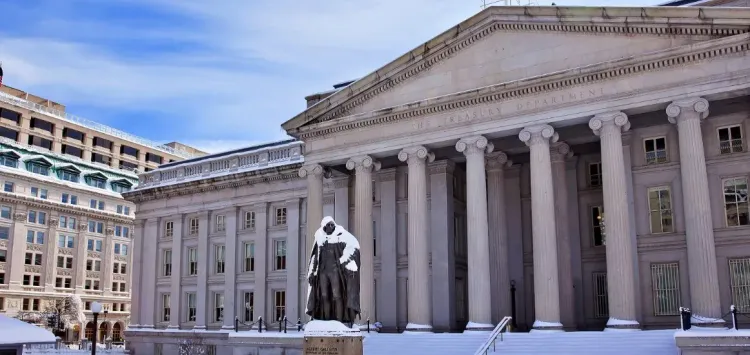
The US Department of the Treasury's Office of Foreign Assets Control (OFAC) has imposed sanctions on 10 individuals identified as part of a network responsible for transferring cash to Hezbollah, the Iran-backed militant organisation. The designations, announced on 21 August, target couriers who reportedly move hundreds of millions of dollars across borders using commercial airline flights.
How the Network Operated
According to OFAC, the network used couriers travelling on commercial flights between Lebanon, Turkey, the UAE, and Iran to physically transport large sums of cash. This bulk-cash smuggling method allowed Hezbollah to obtain foreign currency and sidestep the formal financial system, effectively evading existing sanctions regimes.
The network was reportedly once associated with Behnam Shahriyari, a now-deceased finance official of Iran's Islamic Revolutionary Guard Corps-Qods Force (IRGC-QF). Treasury officials described it as one example of the broader financing methods used to funnel support to terrorist proxy groups across the region.
Re-Designation of Hezbollah
OFAC also announced the re-designation of Hezbollah for its service to the Iranian regime under the command of the IRGC-QF. The action was taken under the United States' counterterrorism authority, Executive Order (E.O.) 13224, as amended.
Notably, the US Department of State first designated Hezbollah as a Specially Designated Global Terrorist (SDGT) on 31 October 2001, citing the group's commission of — or significant risk of committing — acts of terrorism threatening US nationals, national security, foreign policy, or the economy.
Broader Financing Schemes Flagged
The Treasury Department highlighted that Hezbollah and its allies exploit a range of illicit financing methods beyond bulk-cash smuggling. These include oil smuggling, illicit shipping, and commodities sales to generate and move funds across the Middle East region. Treasury officials framed Tuesday's action as part of a sustained counterterrorism effort to disrupt these channels.
What Happens Next
The sanctions freeze any US-based assets of the designated individuals and generally prohibit Americans from conducting transactions with them. The move signals continued US pressure on Hezbollah's financial infrastructure, particularly its Iran-linked funding pipelines, at a time of heightened regional tensions. Further designations targeting related networks remain possible, according to the Treasury's broader counterterrorism mandate.
Point of View
But the network's resilience lies in its replaceability: couriers can be swapped out faster than designations can be processed. The re-designation of Hezbollah under IRGC-QF command is also significant — it tightens the legal link between Tehran and Beirut at a moment when the US is calibrating pressure on Iran. The real question is whether Gulf partners, particularly the UAE, will act on the intelligence embedded in these designations to close transit routes on their own soil.
NationPress
21 Aug 2026
Frequently Asked Questions
Why did the US sanction these 10 individuals?
The US Treasury's OFAC sanctioned the 10 individuals for being part of a network that transfers cash to Hezbollah, helping the group evade existing sanctions by moving hundreds of millions of dollars via couriers on commercial flights. The action was taken under counterterrorism authority Executive Order 13224.
How did the Hezbollah cash-transfer network function?
The network used couriers travelling on commercial airline flights between Lebanon, Turkey, the UAE, and Iran to physically move large amounts of cash across jurisdictions. This method allowed Hezbollah to obtain foreign currency outside the formal financial system, bypassing sanctions controls.
What does re-designating Hezbollah mean?
Re-designation reaffirms Hezbollah's status as a Specially Designated Global Terrorist under US law and formally links it to Iran's IRGC-Qods Force. This strengthens the legal basis for targeting individuals and entities that provide it financial or material support.
Who was Behnam Shahriyari?
Behnam Shahriyari was a finance official of Iran's Islamic Revolutionary Guard Corps-Qods Force (IRGC-QF) who was reportedly associated with the cash-transfer network now targeted by OFAC. He is described as deceased in the Treasury's press release.
What other financing methods does Hezbollah use?
According to the US Treasury Department, Hezbollah and its allies also rely on oil smuggling, illicit shipping, and commodities sales to generate and move funds across the Middle East, in addition to bulk-cash smuggling via couriers.