India gem and jewellery exports hit $9.17 billion in April-July 2026
Synopsis
India's gem and jewellery sector held its ground against global headwinds, with exports reaching $9.17 billion in April–July 2026. The real story is the structural shift underway: studded gold jewellery up 21%, silver jewellery up 72%, even as cut diamonds and plain gold slid. A new tax exemption bill could push India from a processing centre to a global diamond trading hub.
Key Takeaways
India's gross gem and jewellery exports rose 2.44 per cent to $9.17 billion in April–July 2026 , according to GJEPC data.
In rupee terms, exports grew 13.58 per cent to ₹87,078.01 crore over the same period.
Studded gold jewellery surged 21.09 per cent to $2.24 billion ; silver jewellery jumped 72.19 per cent to $508.18 million .
Cut and polished diamond exports fell 8 per cent to $3.60 billion ; plain gold jewellery dropped 8.46 per cent to $1.80 billion .
IIJS Bharat Premiere 2026 attracted over 61,000 visitors , including 5,000+ international buyers from 80 countries .
A proposed 15-year tax exemption for foreign rough diamond traders in Special Notified Zones aims to position India as a global diamond trading hub.
India's gross gem and jewellery exports climbed 2.44 per cent in US dollar terms to $9.17 billion during April–July 2026, driven by robust demand in value-added segments including studded gold and silver jewellery, according to data released by the Gem and Jewellery Export Promotion Council (GJEPC) on 13 August 2026. In rupee terms, the sector posted an even sharper rise of 13.58 per cent to ₹87,078.01 crore over the same four-month period compared with the year-ago period.
Value-Added Segments Drive Growth
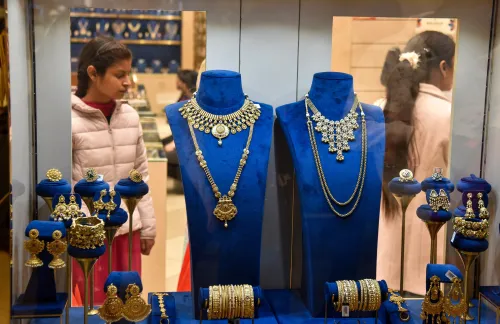
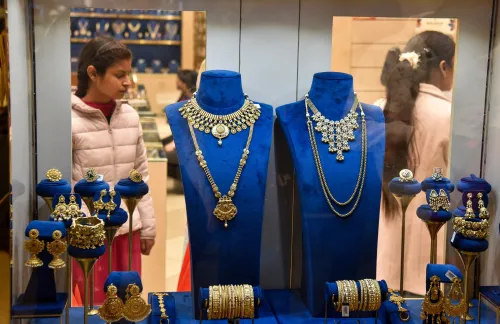
Studded gold jewellery was the standout performer, with exports surging 21.09 per cent to $2.24 billion. Silver jewellery posted the sharpest jump in the basket, rising 72.19 per cent to $508.18 million. Platinum jewellery exports advanced 17.20 per cent to $77.82 million, while polished lab-grown diamond exports grew 7.47 per cent to $408.50 million. Overall gold jewellery exports — covering both plain and studded categories — expanded 5.87 per cent to $4.03 billion.
Weak Spots: Diamonds and Plain Gold
Not all segments shared in the gains. Cut and polished diamond exports fell 8 per cent to $3.60 billion, continuing a trend of pressure on the natural-diamond processing trade amid shifting global preferences. Plain gold jewellery exports also contracted, declining 8.46 per cent to $1.80 billion. These two categories remain the sector's largest by volume, meaning their underperformance partly offset the strong gains posted elsewhere.
Key Demand Markets
According to GJEPC data, growth was anchored by strong demand from the United States, Singapore, Hong Kong, and the United Kingdom. The US in particular has emerged as a critical destination for Indian value-added jewellery, as buyers there shift toward finished, design-led pieces over raw or semi-processed stones. This comes amid broader global uncertainty around trade tariffs and currency fluctuations that have made some markets more cautious.
What the GJEPC Said
GJEPC Chairman Kirit Bhansali said the sector had demonstrated resilience despite a challenging global environment, with value-added segments leading export growth. He noted that easing gold prices could support demand in key consuming markets in the months ahead. Bhansali also expressed optimism that business generated at IIJS Bharat Premiere 2026 — which drew more than 61,000 visitors, including over 5,000 international visitors from 80 countries — would translate into actual shipments in the coming quarters.
Diamond Trading Hub Ambition
On the Taxation and Other Laws (Amendment) Bill, 2026, Bhansali said the proposed 15-year income tax exemption for foreign companies trading rough diamonds through Special Notified Zones could catalyse a structural shift for India — from a diamond processing centre to a global diamond trading hub. The move, if implemented effectively, could attract international diamond traders currently based in Antwerp and Dubai, positioning India more centrally in the global diamond value chain. The sector will be watching closely for implementation details in the months ahead.
Point of View
Design-led products. The 72 per cent surge in silver jewellery and the 21 per cent rise in studded gold are not flukes — they reflect deliberate industry repositioning as natural diamond demand softens globally. The real test is the proposed Special Notified Zone tax exemption: if executed well, it could challenge Antwerp and Dubai's dominance in rough diamond trade. But India has announced diamond hub ambitions before without the follow-through infrastructure to match. The GJEPC's optimism is warranted on the value-added side; on the diamond trading hub front, the proof will be in implementation, not legislation.
NationPress
28 Sept 2026
Frequently Asked Questions
How much did India's gem and jewellery exports grow in April–July 2026?
India's gross gem and jewellery exports rose 2.44 per cent in US dollar terms to $9.17 billion during April–July 2026, according to GJEPC data released on 13 August 2026. In rupee terms, the growth was sharper at 13.58 per cent, reaching ₹87,078.01 crore.
Which jewellery segments performed best in the April–July 2026 export data?
Silver jewellery was the top performer, surging 72.19 per cent to $508.18 million. Studded gold jewellery also posted strong growth of 21.09 per cent to $2.24 billion, while platinum jewellery rose 17.20 per cent to $77.82 million.
Why did cut and polished diamond exports fall?
Cut and polished diamond exports declined 8 per cent to $3.60 billion during April–July 2026. The GJEPC data does not specify a single cause, but the decline is consistent with broader global softness in natural diamond demand, partly driven by growing competition from lab-grown diamonds and cautious consumer spending in key markets.
What is the significance of the Taxation and Other Laws (Amendment) Bill, 2026 for the jewellery sector?
The bill proposes a 15-year income tax exemption for foreign companies trading rough diamonds through India's Special Notified Zones. GJEPC Chairman Kirit Bhansali said this could help India transition from a diamond processing centre to a global diamond trading hub, potentially attracting international traders currently based in competing hubs.
Which countries are the top markets for Indian gem and jewellery exports?
According to GJEPC, growth in April–July 2026 was led by strong demand from the United States, Singapore, Hong Kong, and the United Kingdom. The US has emerged as a key destination for India's value-added jewellery products.