India poultry sector revenue to rise 6-7% in FY27: CareEdge
Synopsis
India's poultry sector is heading into FY27 on firmer ground: CareEdge Ratings projects 6–7% revenue growth and up to 100 basis points of margin expansion, with organised players — holding 60–65% of the market — already reaping the benefits of lower maize costs and tighter operational discipline. The sector's next growth frontier is processed poultry, riding QSR expansion and cold-chain build-out.
Key Takeaways
India's poultry industry revenue is forecast to grow 6–7% in FY27 , per CareEdge Ratings .
Profitability is expected to improve by 50–100 basis points over FY26 levels.
Organised players, representing 60–65% of the industry, saw strong margin gains in FY26 aided by a sharp fall in maize prices .
India produced 149.11 billion eggs and approximately 5.18 million tonnes of poultry meat in FY25 .
India ranks as the second-largest egg producer globally and a top producer of broiler meat.
Processed poultry, QSR expansion, and cold-chain growth are flagged as key long-term value-addition drivers.
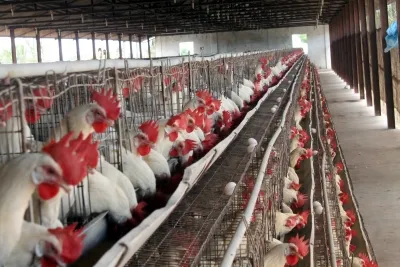
India's poultry industry is projected to post revenue growth of 6–7 per cent in FY27, alongside a profitability improvement of 50 to 100 basis points over the previous year, according to a report released on Tuesday, 14 July 2025 by CareEdge Ratings. The outlook follows a year of stabilisation in operating performance, underpinned by healthy production growth and resilient demand across multiple channels.
Key Drivers Behind the Growth Outlook
CareEdge Ratings attributed the positive trajectory to rising protein consumption, accelerating urbanisation, improving affordability, and shifting dietary preferences among Indian consumers. The agency noted that India ranks among the world's largest producers of both eggs and poultry meat — a position reinforced by FY25 output figures of 149.11 billion eggs and approximately 5.18 million tonnes of poultry meat, the latter accounting for nearly half of the country's total meat production.
Egg and meat production are forecast to maintain healthy momentum into FY27, supported by capacity additions from organised players and continued demand expansion.
Profitability Gains in FY26
Organised players — who account for roughly 60–65 per cent of the industry — recorded a marked improvement in profitability during FY26, driven by integrated operations, more disciplined feed procurement, and stronger pricing control. A sharp correction in maize prices, enabled by higher domestic production and improved supply conditions, provided significant margin relief, particularly for integrated producers with captive feed mills.
According to the report, focus on improving feed conversion ratios (FCR), better farm management practices, and increased operational efficiency is expected to sustain productivity gains and sharpen competitiveness across the organised segment.
Processed Poultry and Value-Addition Opportunities
The evolving processed poultry segment is emerging as a long-term growth lever. Expansion of organised retail, quick-service restaurants (QSRs), cold-chain infrastructure, and export opportunities are expected to provide additional avenues for value addition beyond the traditional fresh-meat market.
The report also highlighted the role of advanced breeding techniques, precision nutrition, and automation in enhancing farm-level productivity and improving feed conversion ratios — factors that could structurally lower input costs for well-capitalised players.
India's Standing in Global Poultry Production
India is ranked the second-largest producer of eggs globally and is among the top producers of broiler meat. The country's scale, combined with rising domestic consumption and improving supply-chain infrastructure, positions it favourably for both volume growth and export competitiveness in the medium term.
As organised players continue to consolidate their share and invest in technology-driven farm management, the sector's trajectory for FY27 appears firmly positive — provided feed cost conditions remain stable and demand channels hold.
Point of View
But the sector's structural story hinges on two variables the report cannot control: feed cost stability and the pace of cold-chain investment. Maize price relief in FY26 was largely a supply windfall — not a structural shift — and any reversal would quickly compress the margins that organised players have worked to protect. Meanwhile, the processed poultry segment, touted as the next growth engine, remains underpenetrated outside metro QSR corridors. India's per-capita poultry consumption still trails peer economies significantly, which means the demand ceiling is high — but closing that gap requires logistics and retail infrastructure investment that is moving slower than the headlines suggest.
NationPress
12 Oct 2026
Frequently Asked Questions
What is the revenue growth forecast for India's poultry industry in FY27?
CareEdge Ratings projects India's poultry industry revenues to grow by 6–7 per cent in FY27, alongside a profitability improvement of 50 to 100 basis points over FY26. The forecast is underpinned by rising protein consumption, urbanisation, and capacity additions by organised players.
Why did poultry sector profitability improve in FY26?
Profitability in FY26 was boosted primarily by a sharp correction in maize prices, driven by higher domestic production and improved supply conditions. Organised players with captive feed mills and efficient procurement practices benefited most from this input cost relief.
How large is India's poultry production globally?
India is the second-largest producer of eggs globally and a leading producer of broiler meat. In FY25, the country produced 149.11 billion eggs and approximately 5.18 million tonnes of poultry meat, which accounts for nearly half of India's total meat output.
What share of the poultry industry do organised players hold?
Organised players account for roughly 60–65 per cent of India's poultry industry. Their integrated operations, better feed procurement, and stronger pricing discipline have been central to the sector's improved profitability in recent years.
What are the long-term growth drivers for India's poultry sector?
Long-term growth is expected from the processed poultry segment, supported by organised retail expansion, QSR growth, cold-chain infrastructure development, and export opportunities. Adoption of advanced breeding, precision nutrition, and automation are also expected to enhance productivity and lower costs over time.