India retail lending hits ₹170.2 lakh crore, gold loans surge 50.4% in FY26

Synopsis
India's retail credit hit ₹170.2 lakh crore by March 2026, but the real story is gold loans — up 50.4% year-on-year, outpacing every other segment as rising gold prices handed millions of households greater borrowing power. With delinquencies falling and rural penetration rising, the data points to a structural deepening of India's consumer credit market, not just a cyclical bounce.
Key Takeaways
India's retail lending portfolio stood at ₹170.2 lakh crore as of March 2026 , up 16.6 per cent YoY and 4.6 per cent QoQ .
Gold loans were the fastest-growing segment, surging 50.4 per cent YoY to ₹18.6 lakh crore .
Consumer durable loans grew 20.8 per cent YoY ; personal loans rose 12.9 per cent YoY .
Home loans outstanding reached ₹44.4 lakh crore , up 9.4 per cent YoY .
Credit cards remained the outlier — balances were flat YoY and negative QoQ.
Delinquency levels declined across most segments, signalling improving asset quality.
India's retail lending portfolio reached ₹170.2 lakh crore as of March 2026, expanding 16.6 per cent year-on-year and 4.6 per cent quarter-on-quarter, according to a report released on Wednesday, 20 May by credit bureau CRIF High Mark. The data signals broad-based momentum in consumer credit, with gold loans emerging as the standout performer of the cycle.
Gold Loans Lead the Charge
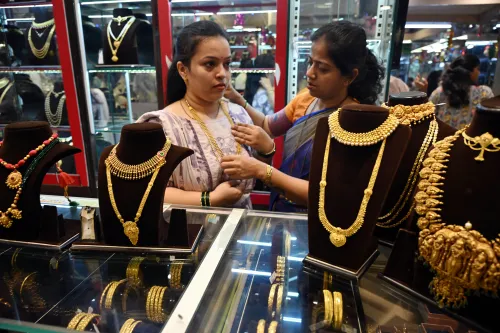
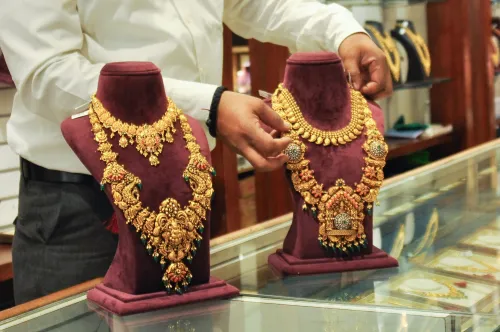
Gold loans were the fastest-growing segment in the retail credit stack, with portfolio outstanding reaching ₹18.6 lakh crore — a 50.4 per cent year-on-year jump. The CRIF High Mark report attributed this surge to favourable market conditions and higher collateral values, as elevated gold prices have raised the borrowing capacity of households pledging jewellery. Originations in this segment also led overall growth, reinforcing the shift toward secured lending.
Personal, Consumer Durable and Auto Loans
Consumption loans — the largest sub-category — grew 15.3 per cent year-on-year to ₹118.6 lakh crore, supported by broad-based expansion. Personal loans rose 12.9 per cent YoY, while consumer durable loans grew 20.8 per cent YoY, with originations posting over 30 per cent year-on-year growth. Auto and two-wheeler loans expanded 13.9–15.1 per cent YoY, though both segments moderated on a sequential basis after post-festive demand eased in Q4 FY26.
Home Loans and Credit Cards
Home loans maintained steady momentum, with portfolio outstanding at ₹44.4 lakh crore, up 9.4 per cent YoY and 3.4 per cent sequentially, supported by rising ticket sizes. In contrast, credit cards remained subdued — balances were flat year-on-year and negative on a quarter-on-quarter basis, suggesting cautious unsecured spending or tightened issuer underwriting.
Premiumisation and Rural Penetration
Notably, portfolio growth outpaced active loan growth across categories, indicating rising ticket sizes and a broader premiumisation trend. Total retail loan originations value rose 42.2 per cent YoY and 9.2 per cent sequentially in Q4 FY26. The report also flagged a continued shift toward collateral-led and secured lending, while credit penetration is expanding into semi-urban and rural markets — a structural deepening of India's retail credit ecosystem.
Asset Quality Improves
The growth was accompanied by improving portfolio performance, with delinquency levels declining across most segments. The combination of sustained expansion and strengthening asset quality suggests lenders have, for now, managed the balance between volume and credit discipline. This comes amid a broader regulatory push by the Reserve Bank of India (RBI) to monitor unsecured retail credit, making the improvement in delinquency metrics particularly significant.
Point of View
But they tend to be a lagging indicator — the real test comes when the interest-rate cycle turns or gold prices correct sharply.
NationPress
26 Sept 2026
Frequently Asked Questions
What is the size of India's retail lending portfolio as of March 2026?
India's retail lending portfolio stood at ₹170.2 lakh crore as of March 2026, reflecting 16.6 per cent year-on-year growth and a 4.6 per cent quarter-on-quarter increase, according to the CRIF High Mark report released in May 2026.
Why did gold loans grow so fast in FY26?
Gold loans grew 50.4 per cent year-on-year to ₹18.6 lakh crore, driven by favourable market conditions and higher collateral values as elevated gold prices increased the borrowing capacity of households pledging jewellery. The segment also led retail loan originations growth in Q4 FY26.
How did home loans and credit cards perform?
Home loans maintained steady momentum with portfolio outstanding at ₹44.4 lakh crore, up 9.4 per cent YoY. Credit cards, however, were the weakest segment — balances were flat year-on-year and declined on a quarter-on-quarter basis.
What does the premiumisation trend in retail credit mean?
Portfolio growth outpacing active loan growth means average ticket sizes are rising — borrowers are taking larger loans even as the total number of active accounts grows more slowly. This reflects both income upgrades and a shift toward higher-value secured products like home loans and gold loans.
Is India's retail credit asset quality improving?
Yes, delinquency levels declined across most retail lending segments in the period covered by the CRIF High Mark report, indicating that portfolio expansion has so far been accompanied by stronger repayment discipline and tighter underwriting.