Gold Loans Dominate India's Retail Credit Sector with 36% Volume Share
Synopsis
Gold loans have taken the lead in India's retail credit market, now representing 36% of the total loan volume. This trend is propelled by rising gold prices and a shift towards secured borrowing, according to a recent report.
Key Takeaways
Gold loans dominate with a 36% volume share.
Significant average loan amount of Rs 1.9 lakh .
Increasing demand in non-metro areas, especially rural regions.
Expansion noted in northern and western states.
More diverse borrower base emerging.
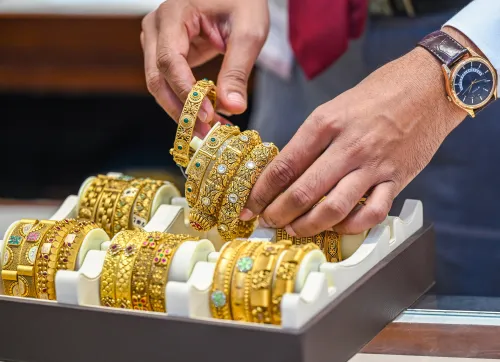
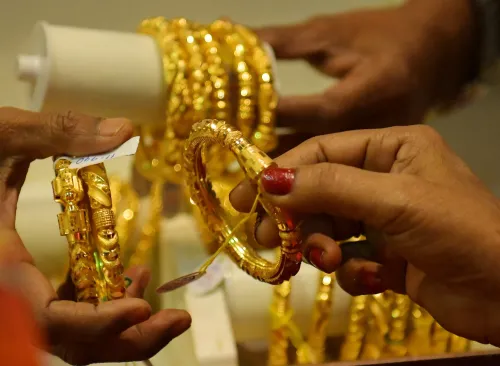
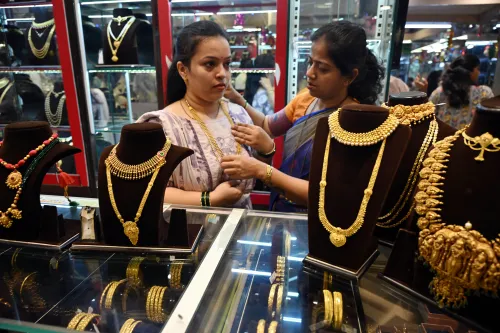
New Delhi, March 31 (NationPress) Gold loans have established themselves as the dominant sector in India’s retail credit landscape, representing 36 percent of loan volumes and approximately 40 percent by value. This growth is fueled by rising gold prices and a growing consumer inclination towards secured borrowing, according to a report released on Tuesday.
The analysis by TransUnion CIBIL indicated a notable increase in ticket sizes, with the average gold loan amount rising to nearly Rs 1.9 lakh during the December 2025 quarter.
Moreover, the consumer market indicator (CMI), a critical metric for assessing credit market health, climbed to 102 in the December 2025 quarter, an increase from 97 a year prior and 100 in the previous September quarter, marking three consecutive quarters of improvement.
The report also underscored that the appreciation in gold prices has prompted consumers to leverage their holdings, resulting in a significant uptick in loan demand and disbursements.
Interestingly, gold loans are expanding beyond their traditional stronghold in southern India. More rapid growth is now being observed in northern and western states such as Uttar Pradesh, Madhya Pradesh, and Rajasthan.
This market segment is also appealing to a broader range of borrowers, with over half of the loans being taken out by prime and higher-category clients, showcasing the increasing acceptance of gold loans as a mainstream lending option.
It was noted that while credit supply experienced a decrease following festive demand and GST-related fluctuations, this moderation reflects seasonal patterns rather than a structural decline.
Credit demand remains robust, especially in semi-urban and rural regions, with non-metro areas making up 54 percent of the overall borrower base, a rise of three percentage points year-on-year. Furthermore, the fraction of new-to-credit consumers has increased to 15 percent.
On the other hand, auto loans have maintained stable volumes during the post-festive season, supported by demand in the affordable mid-segment, with an increase in supply noted on a daily average compared to the previous year.
Point of View
Where gold loans have emerged as a leading product. This trend reflects both consumer behavior and economic factors, suggesting a robust demand for secured borrowing options. It's crucial for stakeholders to recognize these changes and adapt accordingly.
NationPress
7 Oct 2026
Frequently Asked Questions
Why are gold loans becoming more popular in India?
Gold loans are favored due to rising gold prices and a growing preference for secured borrowing, making them an attractive option for consumers.
What percentage of the retail credit market do gold loans account for?
Gold loans make up 36% of the total loan volume in India's retail credit market.
Which regions in India are seeing growth in gold loans?
Growth in gold loans is expanding beyond southern India, with significant increases noted in northern and western states like Uttar Pradesh, Madhya Pradesh, and Rajasthan.
What is the average amount for gold loans currently?
The average gold loan amount has risen to approximately Rs 1.9 lakh as of the December 2025 quarter.
What is the consumer market indicator (CMI) level?
The consumer market indicator (CMI) increased to 102 in the December 2025 quarter, indicating improvement in credit market health.