India tea exports hit ₹8,719 crore in FY26, up 93% since FY2013-14
Synopsis
India's tea exports have nearly doubled in value over a decade, hitting ₹8,719 crore in FY2025-26 — a 93% jump from FY2013-14. With 263 million kg shipped in FY25 and women making up 58% of the organised sector's 12-lakh workforce, the numbers tell a story of quiet, sustained growth that mainstream coverage rarely spotlights.
Key Takeaways
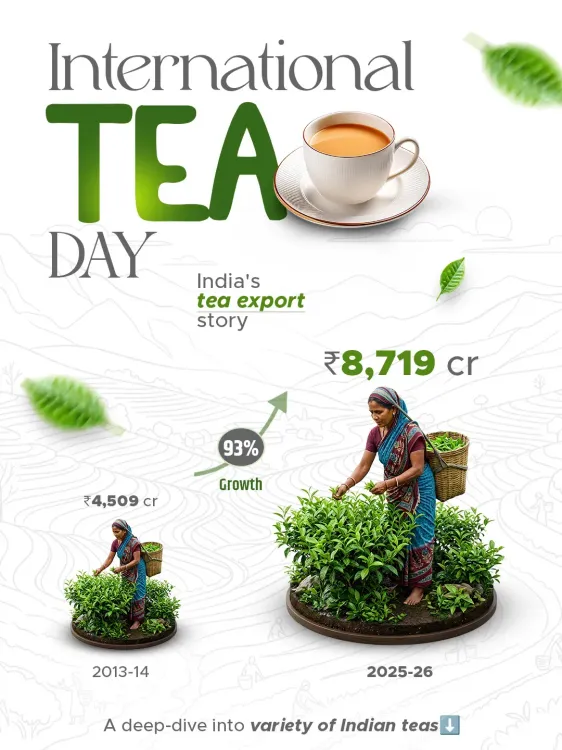
India's tea exports reached ₹8,719 crore in FY2025-26 , up 93% from ₹4,509 crore in FY2013-14 .
In FY2024-25 , India exported 263 million kg of tea valued at ₹7,818 crore (DGCIS data).
The organised tea sector employs approximately 12 lakh workers , with 58% being women.
Commerce Minister Piyush Goyal credited the Tea Board of India with improving quality standards and global outreach.
Key producing regions include Darjeeling , Assam , and the Nilgiris , each contributing distinct varieties to India's export basket.
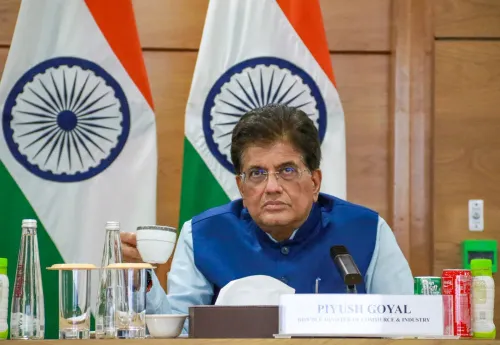
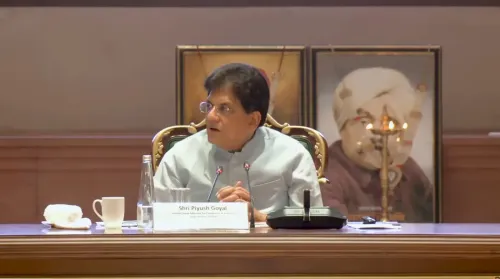
India's tea exports have surged 93 per cent over the past decade, climbing from ₹4,509 crore in FY2013-14 to ₹8,719 crore in FY2025-26, Union Commerce and Industry Minister Piyush Goyal announced on Thursday, 21 May, on the occasion of International Tea Day. The figures underscore India's deepening footprint in global tea markets, backed by rising quality benchmarks and sustained promotional efforts.
Export Growth in Numbers
In FY2024-25, India exported 263 million kg of tea, realising a total value of ₹7,818 crore, according to data from the Directorate General of Commercial Intelligence and Statistics (DGCIS). The jump to ₹8,719 crore in FY26 marks the strongest export value on record, reflecting both volume gains and improved price realisation in key overseas markets.
What Minister Goyal Said
Marking International Tea Day with a post on social media platform X, Goyal described tea as 'an emotion' deeply woven into India's daily life and traditions. 'Tea is an emotion. And on #InternationalTeaDay, there cannot be a better way to describe it! Across India, tea is more than just a beverage, it is a part of everyday life, conversations and traditions,' he wrote.
He further highlighted the geographic diversity of India's tea regions: 'From the hills of Darjeeling to the valleys of Assam and the plantations of the Nilgiris, every region brings its own distinct flavour, aroma and character to a cup of tea!'
Employment and Women's Role
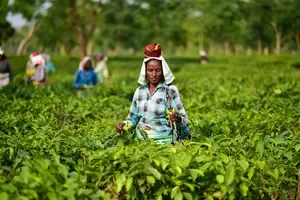
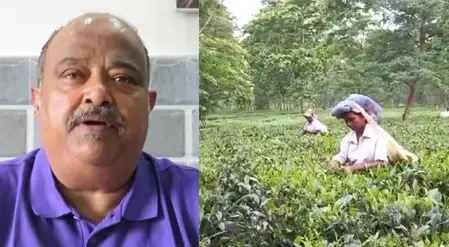
The Indian tea industry's organised sector employs approximately 12 lakh workers, of whom about 58 per cent are women, Goyal noted. In a post on X in June 2025, the minister acknowledged women's central role in the sector's growth: 'Women are leading the growth of India's tea sector. Our nation continues to make a mark globally with its aromatic teas and steady export rise.'
The Role of Tea Board of India
Goyal credited the Tea Board of India with driving quality improvements and promoting India's tea heritage internationally. The board's sustained outreach across markets in Europe, the Middle East, and Central Asia has helped Indian teas — particularly premium varieties from Darjeeling, Assam, and the Nilgiris — command stronger price premiums abroad. This comes amid growing global consumer interest in single-origin and specialty teas, a trend that plays to India's geographic advantage.
What Comes Next
With export value nearly doubling over a decade and the FY26 figure setting a new high, the sector's next challenge is sustaining volume growth while moving further up the value chain into premium and organic segments. Industry observers note that climate variability in key growing regions remains a structural risk that could affect output in coming seasons.
Point of View
But the more telling metric is price realisation per kg — and that story is mixed. India still competes heavily on volume in commodity-grade teas while premium segments remain underdeveloped relative to rivals like Sri Lanka and Kenya. The 58% female workforce figure, cited repeatedly by the ministry, deserves scrutiny: wage parity and working conditions in tea gardens have faced persistent criticism from labour groups, and export growth does not automatically translate into improved livelihoods at the garden level. The Tea Board's promotional push is necessary but not sufficient — without a credible GI enforcement mechanism and stronger retail branding in destination markets, India risks leaving significant value on the table.
NationPress
27 Sept 2026
Frequently Asked Questions
How much have India's tea exports grown in the last decade?
India's tea exports have grown by 93% over the past decade, rising from ₹4,509 crore in FY2013-14 to ₹8,719 crore in FY2025-26, according to Commerce Minister Piyush Goyal. This makes FY26 the strongest export value year on record.
How much tea did India export in FY2024-25?
In FY2024-25, India exported 263 million kg of tea, realising a total value of ₹7,818 crore, according to DGCIS data cited by the government.
How many people does the Indian tea industry employ?
The organised sector of India's tea industry employs approximately 12 lakh workers, of whom about 58% are women, according to figures shared by Commerce Minister Piyush Goyal.
Which regions produce India's exported tea?
India's tea exports draw from three primary growing regions: Darjeeling in West Bengal, the Assam valley in northeastern India, and the Nilgiris in Tamil Nadu, each known for distinct flavour profiles and aroma.
What is the Tea Board of India's role in export growth?
The Tea Board of India has driven quality improvements and promoted India's tea heritage in international markets, according to Minister Goyal. Its outreach has helped Indian teas gain stronger footholds in Europe, the Middle East, and Central Asia.