India and UK Unite to Enhance Green Hydrogen Safety Standards
Synopsis
A landmark conference in New Delhi focused on bolstering safety standards for green hydrogen, a vital clean energy source. Delegates from various sectors discussed necessary regulations to support India's National Green Hydrogen Mission, emphasizing global collaboration and innovative safety technologies.
Key Takeaways
Strengthened cooperation on green hydrogen safety standards.
Participation from diverse stakeholders including government and industry.
Focus on developing international safety protocols .
Discussions on risk assessment and hazard management.
Emphasis on global collaboration for effective implementation.
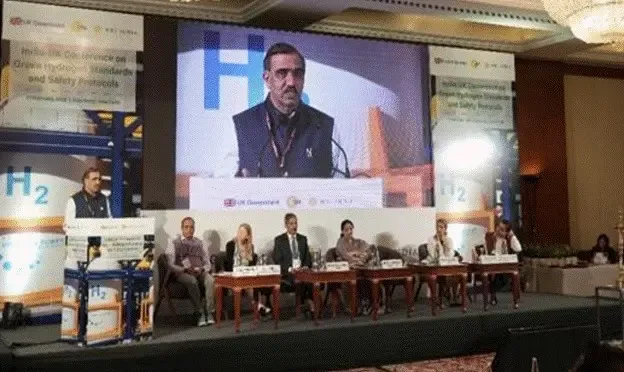
New Delhi, March 7 (NationPress) - A significant conference took place in the capital city of India, aimed at enhancing collaboration on safety protocols and regulatory guidelines for green hydrogen, a pivotal clean energy resource that India is advancing through its National Green Hydrogen Mission, as stated by the Ministry of New and Renewable Energy this past Saturday.
The event was attended by delegates from various sectors, including government, industry, academia, standards organizations, testing bodies, research institutions, and regulatory authorities from both nations.
This gathering concentrated on fortifying partnerships regarding the secure implementation of green hydrogen technologies as part of India's mission, according to the ministry.
Topics discussed encompassed safety systems, international standards, and regulatory practices throughout the entire green hydrogen value chain, covering aspects such as production, storage, transport, and end-use applications.
The conference was facilitated by the National Centre for Hydrogen Safety, which functions under the Ministry of New and Renewable Energy, in partnership with the British High Commission in India and the World Resources Institute India.
The opening session featured remarks from Mohammad Rihan, Director General of the National Institute of Solar Energy.
During his keynote address, Parvinder Maini, Scientific Secretary at the Office of the Principal Scientific Adviser to the Indian Government, emphasized the necessity for robust safety frameworks, definitive standards, and global cooperation to facilitate the large-scale implementation of green hydrogen technologies.
The conference also welcomed contributions from key regulators overseeing hydrogen safety and standards within India.
Officials from the Petroleum and Explosives Safety Organisation discussed regulatory strategies for safety adherence, risk evaluation, and hazard management in hydrogen systems.
Moreover, the Bureau of Indian Standards provided insights on formulating hydrogen standards and synchronizing them with international best practices.
Technical discussions during the conference included presentations by specialists from industry, research institutions, and academia.
These sessions highlighted topics such as the secure design and operation of hydrogen production facilities, storage and transportation systems, and the safety of hydrogen end-use applications.
Experts also deliberated on risk assessment methodologies, lessons learned from previous incidents, and innovative technologies like advanced sensors and AI-based monitoring systems for hydrogen safety.
Point of View
An essential element of India's clean energy strategy. With collaboration from the UK and various stakeholders, this initiative aims to establish robust regulatory frameworks that will ensure safe practices in the burgeoning hydrogen sector.
NationPress
26 Sept 2026
Frequently Asked Questions
What was the main purpose of the India-UK conference?
The conference aimed to strengthen cooperation on safety standards and regulatory frameworks for green hydrogen technologies.
Who organized the conference?
The conference was organized by the National Centre for Hydrogen Safety in collaboration with the British High Commission in India and the World Resources Institute India.
What topics were discussed at the conference?
Discussions included safety frameworks, international standards, regulatory practices, and risk assessment in hydrogen systems.
Who attended the conference?
Representatives from government, industry, academia, standards bodies, testing institutions, research organizations, and regulatory agencies participated.
What is the National Green Hydrogen Mission?
It is an initiative by the Indian government to promote the use and development of green hydrogen as a clean energy source.