Did the Indian Stock Market Turn Bullish After RBI's Rate Cut?

Synopsis
The Indian stock market experienced slight losses earlier in the week but ended on a strong note. The RBI's unexpected rate cut lifted investor sentiment, suggesting potential growth ahead. Market watchers are optimistic as global conditions evolve.
Key Takeaways
Indian stock market ended bullish after RBI's rate cut.
Benchmark indices saw slight declines this week.
Auto and IT sectors led gains during the week.
Immediate resistance levels for Nifty are 26,350–26,500 .
US Federal Reserve's decisions could impact foreign portfolio flows .
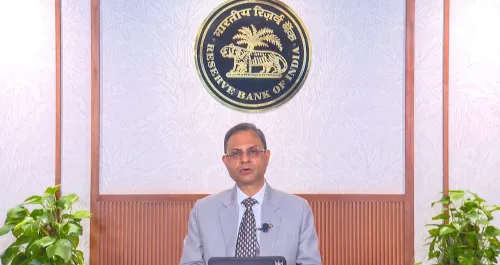
Mumbai, Dec 6 (NationPress) Indian equity benchmarks experienced slight losses following record highs and three weeks of uninterrupted gains attributed to profit booking. Nonetheless, the market concluded the week on a bullish note after the Reserve Bank of India (RBI) announced a 25 bps rate cut, which boosted investor sentiment.
Benchmark indices Nifty and Sensex fell by 0.37 and 0.27 percent over the week, closing at 26,186 and 85,712, respectively.
Initial optimism, driven by a strong Q2 GDP print and robust auto sales, was dampened by ongoing FII outflows, sharp rupee depreciation, and uncertainty regarding trade negotiations.
Broader indices lagged, with Nifty Midcap100 and Smallcap100 declining by 0.73 percent and 1.80 percent, respectively, during the week.
Market sentiment shifted positively on Friday following the RBI's unexpected 25-bps rate cut, supported by revised inflation forecasts and liquidity measures.
Sectoral gains during the week were led by the auto and IT sectors due to festive demand and favorable currency trends, while banks, finance, consumer durables, power, chemicals, and oil & gas sectors lagged behind.
As long as Nifty remains above the 26,050–26,000 range, the bullish trend stays intact. The immediate resistance is now positioned in the 26,350–26,500 zone, and a drop below 26,000 might trigger profit booking, according to market analysts.
With India’s economic growth maintaining resilience despite tariff pressures and global challenges, the Indian equity market is poised to gain if global fund flows shift back towards emerging markets, as per market observers.
Investors are eagerly awaiting insights from the upcoming US Federal Reserve monetary policy decision next week. The markets have already started to factor in a 25 bps rate cut, supported by dovish remarks from various Fed officials and recent data indicating a softening labor market.
Experts suggest that a shift in the US Fed's policy stance could impact currency movements and significantly affect foreign portfolio investor flows into emerging markets like India.
Point of View
This week’s market fluctuations reflect the resilience of the Indian economy amid global challenges. The RBI’s proactive approach in adjusting interest rates demonstrates an effort to maintain investor confidence and stimulate growth. As we navigate through these uncertain times, it remains crucial for investors to stay informed and prepared for potential market shifts.
NationPress
25 Sept 2026
Frequently Asked Questions
What caused the Indian stock market's recent bullish trend?
The recent bullish trend in the Indian stock market was primarily driven by the RBI's unexpected 25-bps rate cut, which significantly boosted investor sentiment.
How did the benchmark indices perform over the week?
During the week, benchmark indices Nifty and Sensex experienced slight declines of 0.37% and 0.27%, respectively, closing at 26,186 and 85,712.
What sectors led the gains this week?
The gains were predominantly led by the auto and IT sectors, attributed to festive demand and favorable currency conditions.
What are the immediate resistance levels for Nifty?
The immediate resistance levels for Nifty are set between 26,350 and 26,500.
What should investors watch for in the coming weeks?
Investors should keep an eye on the US Federal Reserve's monetary policy decisions, as these could significantly influence foreign portfolio investor flows into emerging markets like India.