How Does India's AI Strategy Embody PM Modi's Vision for Technology Democratization?
Click to start listening
Synopsis
India's AI strategy, inspired by PM Modi's vision, aims to democratize technology through the IndiaAI Mission, fostering talent and infrastructure for a thriving AI ecosystem. This initiative focuses on addressing national challenges while promoting indigenous capabilities and ensuring responsible AI governance.
Key Takeaways
- India's AI strategy aims to democratize technology.
- The IndiaAI Mission addresses national challenges.
- Over 38,000 GPUs available for startups.
- Support for 500 PhD scholars and thousands of graduates.
- Establishment of AI governance guidelines for responsible AI development.
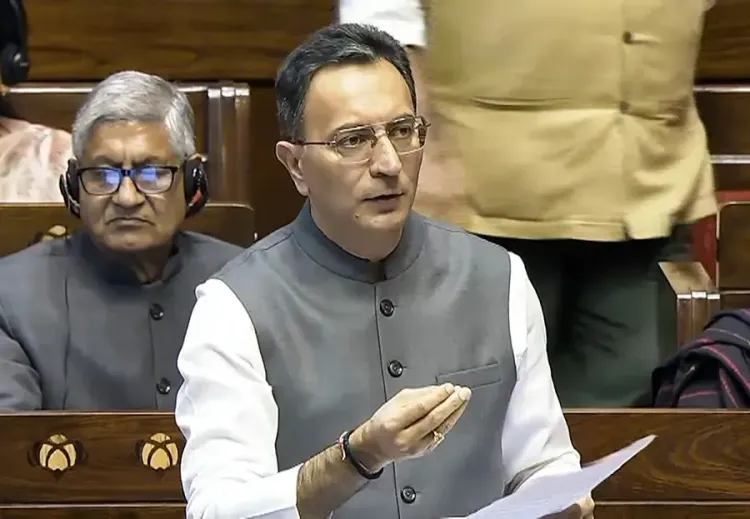
New Delhi, Dec 13 (NationPress) India's approach to artificial intelligence (AI) is rooted in Prime Minister Narendra Modi's vision of making technology accessible to all, stated Jitin Prasada, the Minister of State for Electronics and IT. In response to a question in the Rajya Sabha, the minister highlighted that the 'IndiaAI Mission' is designed to tackle challenges specific to the nation while generating new opportunities.
Initiated in March 2024, the 'IndiaAI Mission' aims to cultivate a robust and inclusive AI ecosystem across the country. Within a mere 18 months, this mission has laid down a solid groundwork, facilitating affordable access to computing infrastructure, with more than 38,000 GPUs being made available to Indian startups and academic institutions via a shared compute facility.
The mission emphasizes the development of indigenous AI capabilities, having selected twelve organizations and consortia to create foundational models, including Large Language Models (LLMs). Additionally, AIKosh has been launched as a national dataset platform to provide access to India-specific data sourced from governmental and non-governmental entities, as mentioned by the minister.
Furthermore, 30 applications have received approval to create AI solutions tailored to the unique needs of India. To ensure enduring sustainability, the IndiaAI Mission is making substantial investments in talent and infrastructure.
According to Prasada, the mission aims to nurture 500 PhD scholars, 5,000 postgraduates, and 8,000 undergraduates. It has already established 27 India Data and AI Labs, with an additional 174 approved, while providing foundational courses in AI and data-related fields to enhance the country's AI talent pipeline.
Moreover, the India AI Governance Guidelines, released on November 5, lay out a comprehensive national framework to ensure the safe, responsible, and inclusive development and deployment of artificial intelligence within the nation.
"These guidelines detail the principles and best practices for transparency, accountability, fairness, safety, and security in AI systems," the minister emphasized.
Additionally, the 'Semicon India Programme', which builds upon the success of electronics manufacturing, was launched in 2022 to advance semiconductor development.
The government is dedicated to fostering the entire semiconductor ecosystem, encompassing design, fabrication, assembly, testing, and packaging. The minister also underscored the government's commitment to developing the skills and talent necessary for the semiconductor sector.
Point of View
It's clear that India's commitment to AI underlines a significant shift towards inclusivity and innovation. The government’s proactive approach in establishing a comprehensive framework not only addresses local challenges but also positions India as a key player in the global AI landscape.
NationPress
14/12/2025
Frequently Asked Questions
What is the IndiaAI Mission?
The IndiaAI Mission is an initiative launched in March 2024 aimed at creating a strong and inclusive AI ecosystem in India, addressing nation-specific challenges while fostering innovation.
How many GPUs are available for startups?
Over 38,000 GPUs have been made available to Indian startups and academic institutions through a common compute facility.
What are the goals of the IndiaAI Mission?
The mission aims to support 500 PhD scholars, 5,000 postgraduates, and 8,000 undergraduates while developing indigenous AI capabilities and ensuring responsible governance.
What is the significance of the India AI Governance Guidelines?
Released on November 5, these guidelines provide a national framework for the safe, responsible, and inclusive development of AI technologies.
What is the Semicon India Programme?
Launched in 2022, the Semicon India Programme focuses on advancing the semiconductor ecosystem in India, including design, fabrication, and skills development.