Did India’s auto retail sales really grow by 2% in November?
Synopsis
In November, India's automotive sales displayed a surprising 2.14% growth year-on-year, reaching 33.01 lakh units. This report explores the factors behind this growth, including the impact of GST changes and evolving consumer preferences, highlighting the resilience of the auto market post-festivities.
Key Takeaways
Overall vehicle sales increased by 2.14% year-on-year.
Passenger vehicle sales showed resilience with improved availability.
Two-wheeler segment faced challenges with a 19.16% drop in sales.
Three-wheeler sales surged by 31.58% month-on-month.
Maruti Suzuki remains the market leader with a significant share.
New Delhi, Dec 8 (NationPress) India's automotive retail sector demonstrated consistent growth in November, with total vehicle sales increasing by 2.14% year-on-year (YoY) to reach 33.01 lakh units, as per data from the Federation of Automobile Dealers Associations (FADA).
Despite the conclusion of the festive season, demand remained robust, aided by price reductions following the rollout of GST 2.0, which continued to draw consumers to dealerships.
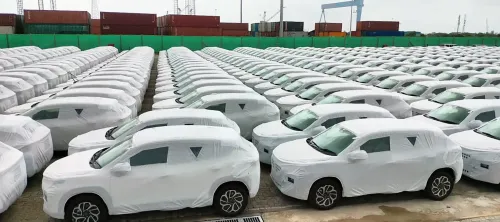
Sales of passenger vehicles exhibited promising trends, bolstered by improved model availability and heightened interest in compact SUVs.
Inventory levels for passenger vehicles improved significantly, now sitting at 44–46 days, down from 53–55 days the prior month—indicative of a resurgence in customer interest.
Maruti Suzuki retained its top position with a 39.4% market share, followed by Mahindra at 13.7% and Tata Motors at 13.2%.
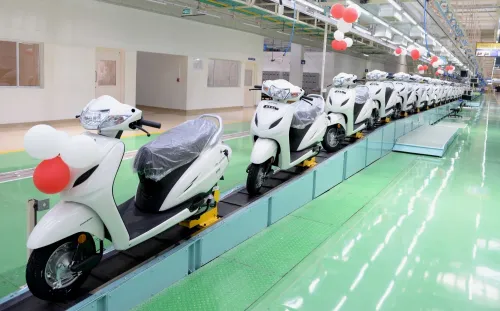
Conversely, the two-wheeler market experienced a decline, with sales dropping 19.16% month-on-month to 25.46 lakh units.
Yearly data showed a decline of 3.10%. FADA President C. S. Vigneshwar noted that this dip should be contextualized, as festive purchases in October shifted demand earlier than usual.
He further mentioned that delayed crop payments and inconsistent supply of popular models impacted sales, yet dealers are observing strong customer footfall driven by positive sentiment surrounding the GST revisions and ongoing marriage season demand.
“November defied the typical post-festive slowdown, showcasing a resilient performance despite a notably high comparative base,” Vigneshwar remarked.
Sales in the three-wheeler category surged impressively, increasing 31.58% month-on-month to 1.33 lakh units.
This category also saw a yearly expansion of 23.67%, primarily fueled by rising demand for e-rickshaws and e-carts.
The commercial vehicle segment displayed mixed results in November. While the light and medium commercial vehicle categories faced notable challenges, heavy commercial vehicles defied the trend, with sales rising 3.28% month-on-month to 28,659 units.
Analysts noted that the automotive industry demonstrated resilience throughout November, with strong performances in passenger vehicles and three-wheelers effectively offsetting the downturn in two-wheelers and certain commercial sectors.
Point of View
I acknowledge the resilience shown by India's automotive sector amidst fluctuating market dynamics. The growth in total vehicle sales signifies a positive consumer sentiment, despite challenges faced in specific segments. This trend not only reflects recovery post-festive season but also showcases the evolving landscape of consumer preferences. The Nation stands committed to bringing you insightful updates on such pivotal developments.
NationPress
24 Sept 2026
Frequently Asked Questions
What contributed to the rise in vehicle sales in November?
The rise in vehicle sales was primarily attributed to stable demand post-festive season and price cuts following the GST 2.0 rollout, which attracted buyers to dealerships.
How did passenger vehicle sales perform in November?
Passenger vehicle sales showed positive growth, aided by better model availability and strong demand for compact SUVs, with inventory levels improving significantly.
What was the performance of two-wheeler sales?
Two-wheeler sales experienced a decline of 19.16% month-on-month, reflecting shifting consumer preferences and challenges in the segment.
What trends were observed in the three-wheeler market?
The three-wheeler segment saw robust growth, with sales rising 31.58% month-on-month, driven largely by increased demand for e-rickshaws and e-carts.
Who are the leading players in the Indian auto market?
Maruti Suzuki leads with a 39.4% market share, followed by Mahindra at 13.7% and Tata Motors at 13.2%.