India corporate tax rates now lower than most developed nations: Expert
Synopsis
India's corporate tax rates are now structurally lower than most Western economies, according to the head of the Centre for WTO Studies — giving fresh institutional weight to PM Modi's call for India Inc to do more on jobs and wages. But the expert also flagged rising US and EU protectionism and the long, difficult road to Viksit Bharat 2047.
Key Takeaways
Nedumpara , Head of the Centre for WTO Studies , said India's corporate taxes have fallen substantially over the past 12 years and are now lower than rates in most Western countries .
He stated that corporate income tax is not eroding the competitiveness of Indian industries.
India is targeting $1 trillion in overall exports in the current financial year, but faces headwinds from US Section 301 duties and EU tariff-rate quotas on steel.
Nedumpara described Viksit Bharat 2047 as achievable but requiring sustained, careful policy choices over the coming decades.
He flagged de-industrialisation as a key risk, saying the PLI scheme must be viewed as a strategic industrial policy tool.
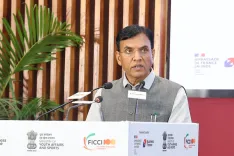
Dr. James J. Nedumpara, Head of the Centre for WTO Studies and CTIL under the Ministry of Commerce and Industry, said on Friday, 20 November 2026, that India's corporate tax structure remains globally competitive and is not undermining the competitiveness of domestic industries. His remarks came in the context of Prime Minister Narendra Modi's recent call to India Inc to generate more jobs and raise wages, backed by a supportive policy environment and tax relief measures.
India's Corporate Tax: A Decade of Decline
'Objectively speaking, India's corporate tax rates have come down substantially over the years, particularly in the last 12 years,' Nedumpara said. He added that compared to corporate tax rates in Western countries and other parts of the world, India's rates are now considerably lower. 'Therefore, corporate income tax is not eroding the competitiveness of Indian industries,' he noted.
The reduction in corporate tax rates has been a key plank of India's economic reform agenda. The government had slashed the base corporate tax rate for domestic companies to 22% (and 15% for new manufacturing units) in 2019 — a move widely seen as a structural shift to attract investment and counter a global race to the bottom on corporate taxation.
Export Headwinds and Global Protectionism
On India's export outlook, Nedumpara sounded a note of caution, warning that several major developed economies are increasingly resorting to protectionist trade measures. He specifically pointed to higher duties imposed by the United States and the European Union.
According to him, the US had imposed tariffs under the International Emergency Economic Powers Act (IEEPA), which have since been lifted, but new duties under Section 301 investigations have since been introduced. The EU has also implemented tariff measures, particularly affecting steel imports through its tariff-rate quota mechanism.
Despite these headwinds, he said India's export performance must be assessed against the backdrop of a challenging global trade environment, as the country pushes toward its target of $1 trillion in overall exports during the current financial year.
Viksit Bharat 2047: On Track but Long Road Ahead
Commenting on the government's long-term vision of Viksit Bharat 2047, Nedumpara said India remains on course, though achieving developed-economy status will demand sustained policy commitment over the coming decades. 'Viksit Bharat 2047 is again a long-term, long-term objective. So we have to walk slowly, but make incremental steps to meeting that particular goal. As of now, we are on track, but 2047 is still a distant time, and we have to make a lot of right choices,' he said.
He flagged de-industrialisation as a key risk to guard against, noting that every major economy today is investing in industrial policy. 'Our PLI scheme has to be looked at in that particular perspective,' he added, underscoring the scheme's strategic role in preventing a hollowing out of India's manufacturing base.
What It Means for India Inc
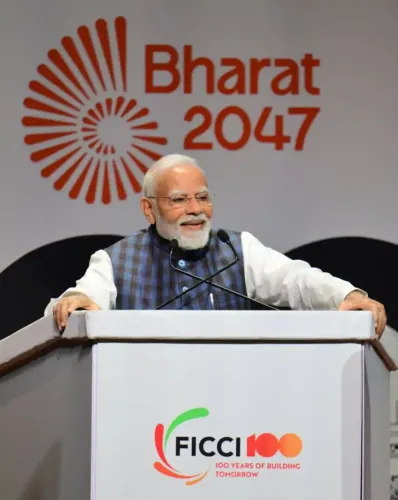
Nedumpara's remarks arrive at a critical juncture — PM Modi has publicly called on corporates to reciprocate favourable tax and policy conditions by expanding employment and improving wages. The expert's comments effectively provide an institutional endorsement of that expectation, arguing that the fiscal environment is already conducive for industry to invest more aggressively. Whether India Inc responds with a matching commitment on jobs and wages remains to be seen, with industry bodies yet to offer a formal roadmap.
Point of View
But it sidesteps the more contested question: lower taxes have not automatically translated into higher wages or employment at the scale PM Modi is now publicly demanding. India's corporate tax cuts since 2019 delivered a boost to after-tax margins and drew investment commitments, yet wage growth in the formal sector has remained uneven. The expert's caution on de-industrialisation is the more important signal — it acknowledges that in a world of aggressive industrial policy, India cannot rely on competitive tax rates alone. The PLI scheme's execution record, not its headline design, will determine whether India's manufacturing share finally breaks out of its decade-long 17% ceiling.
NationPress
20 Nov 2026
Frequently Asked Questions
Are India's corporate tax rates lower than those in developed countries?
Yes, according to Dr. James J. Nedumpara of the Centre for WTO Studies, India's corporate tax rates are now considerably lower than those in most Western nations and other developed economies, following substantial reductions over the past 12 years.
Why has PM Modi called on India Inc to create more jobs?
Prime Minister Narendra Modi has asked India Inc to expand employment and raise wages, citing the supportive policy environment and tax relief measures the government has provided. The call reflects expectations that lower tax burdens should translate into tangible benefits for workers.
What are the key risks to India's export target of $1 trillion?
India faces rising protectionism from major markets. The US has introduced new duties under Section 301 investigations, and the EU has applied tariff-rate quotas affecting steel imports. These measures could dampen global trade flows and pressure India's export performance.
What is Viksit Bharat 2047 and is India on track?
Viksit Bharat 2047 is the Indian government's long-term vision to achieve developed-economy status by the centenary of Independence. Dr. Nedumpara said India is currently on track but cautioned that achieving the goal requires sustained, correct policy choices over the coming decades, with preventing de-industrialisation identified as a key priority.
What role does the PLI scheme play in India's industrial strategy?
The Production-Linked Incentive (PLI) scheme is described by Dr. Nedumpara as a critical tool in India's industrial policy, designed to prevent de-industrialisation at a time when every major economy is aggressively deploying its own industrial strategies. He said it must be evaluated in that strategic context, not just as a fiscal incentive.