Dr. Jitendra Singh inaugurates 54th RSSDI Annual Conference in Bengaluru
Synopsis
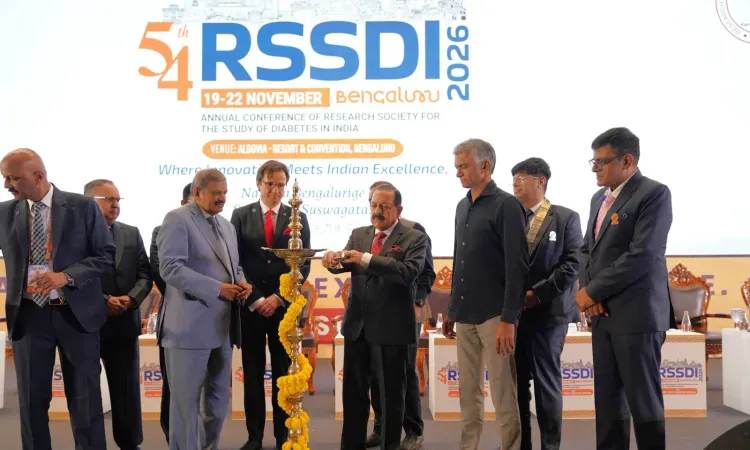
Union Minister Dr. Jitendra Singh lit the inaugural lamp at the 54th Annual Conference of the Research Society for the Study of Diabetes in India in Bengaluru on November 20, 2026, underscoring high-level government engagement with India's mounting diabetes crisis at a landmark four-day research conclave.
Key Takeaways
Jitendra Singh inaugurated the 54th RSSDI Annual Conference in Bengaluru on November 20, 2026 .
The four-day conference is organised by the Research Society for the Study of Diabetes in India , a leading professional body for diabetes research and clinical care.
The traditional lamp-lighting ceremony marked the event's formal opening, symbolising knowledge, learning, and collective commitment to diabetes care.
India carries one of the world's highest diabetes burdens, lending national urgency to RSSDI's annual deliberations.
Government engagement with diabetes dates to the 2010 launch of the National Programme for Prevention and Control of Cancer, Diabetes, Cardiovascular Diseases and Stroke (NPCDCS) .
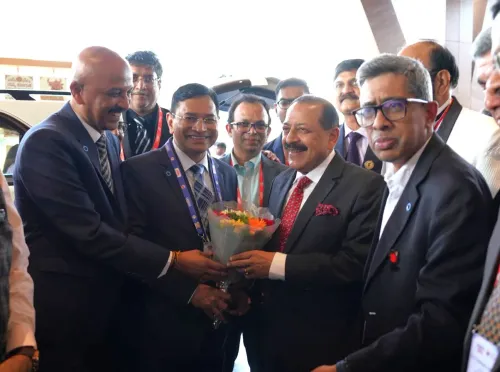
India's diabetes research community gathered in Bengaluru on Friday, November 20, 2026, as Union Science and Technology Minister Dr. Jitendra Singh lit the traditional lamp to inaugurate the 54th Annual Conference of the Research Society for the Study of Diabetes in India (RSSDI) — a four-day conclave that brings together the country's foremost clinicians, researchers, and public-health professionals under one roof.
The lamp-lighting ceremony, steeped in the academic tradition of Indian scientific gatherings, was described by Dr. Singh as symbolising 'the spirit of knowledge, learning and collective commitment towards advancing diabetes research and care.' For a nation carrying one of the heaviest diabetes burdens on the planet, the symbolism lands with particular weight.
Why RSSDI's annual forum matters for India's diabetes crisis
India is home to an estimated 100 million-plus diabetics — a figure that places it among the top two nations globally by absolute case count. The Research Society for the Study of Diabetes in India has, over five decades, evolved from a niche professional body into a primary national platform where clinical guidelines are debated, research findings are stress-tested, and care protocols are updated. Its annual conference is where that intellectual churn happens in real time.
Ministerial presence at the 54th edition is not incidental. It signals continued high-level attention to non-communicable diseases at a moment when India's public-health architecture is being stress-tested by a double burden: communicable diseases on one side, a surging NCD tide on the other.
NPCDCS and the policy scaffolding behind the science
The government's formal commitment to diabetes control dates at least to 2010, when India launched the National Programme for Prevention and Control of Cancer, Diabetes, Cardiovascular Diseases and Stroke (NPCDCS). That programme created a nationwide screening and management infrastructure, but researchers at forums like RSSDI have consistently argued that implementation gaps — especially in primary care settings — remain the defining challenge. The conference provides a live feedback loop between frontline science and policy.
Dr. Singh's portfolio spans Science and Technology and Earth Sciences, making his appearance a cross-sectoral signal: advances in diagnostics, genomics, and data-driven health tools increasingly sit at the intersection of science policy and medical care.
Four days of deliberations lie ahead. What emerges from the research presentations and clinical debates in Bengaluru this week could quietly shape the next iteration of India's diabetes management guidelines — and that is exactly why the lamp was worth lighting.
Point of View
The gesture reinforces the government's interest in keeping professional medical societies within its policy orbit. It also positions the RSSDI platform as a conduit for translating conference science into programme updates, particularly within the NPCDCS framework. For observers, the real test will be whether ministerial presence translates into actionable research funding or guideline revisions in the months that follow.
NationPress
20 Nov 2026
Frequently Asked Questions
What is RSSDI and what does it do?
The Research Society for the Study of Diabetes in India (RSSDI) is a professional organisation dedicated to diabetes research, education, and clinical care. It holds annual national conferences where clinicians and researchers share findings and update care protocols.
Where is the 54th RSSDI Annual Conference being held?
The 54th RSSDI Annual Conference is being held in Bengaluru, with the inauguration taking place on November 20, 2026.
Why did Dr. Jitendra Singh attend an RSSDI conference?
Dr. Jitendra Singh, as Union Minister for Science and Technology, attended to inaugurate the conference, reflecting the government's high-level engagement with diabetes research given India's large diabetic population and the intersection of science policy with medical innovation.
What is India's national programme for diabetes control?
India launched the National Programme for Prevention and Control of Cancer, Diabetes, Cardiovascular Diseases and Stroke (NPCDCS) in 2010 to build screening and management infrastructure for non-communicable diseases including diabetes.
How serious is India's diabetes burden?
India is among the countries with the highest number of diabetic patients globally, with estimates placing the figure above 100 million, making national research and policy conferences like RSSDI critically important for guiding care standards.