India's power equipment market may hit $400 billion by 2035: Report
Synopsis
India is staring at a $400 billion power equipment opportunity by 2035 — but on current trends, more than 70% of it could be imported. The report's sharpest signal isn't the upside, it's the warning: without a fivefold scale-up in batteries, power electronics, and solar PV, India risks paying foreign suppliers to power its own energy transition.
Key Takeaways
Renewable energy equipment and high-end cables could be a $350-400 billion global opportunity by 2035 , per McKinsey .
India's domestic electrical-equipment consumption hit $59 billion in FY25 , and could reach $170-205 billion by 2035.
Import dependence has risen from 22% in 2020 to 33% in 2025, and may exceed 70% by 2035 without intervention.
A fivefold capacity expansion is needed in power electronics, batteries, solar PV, and subcomponents.
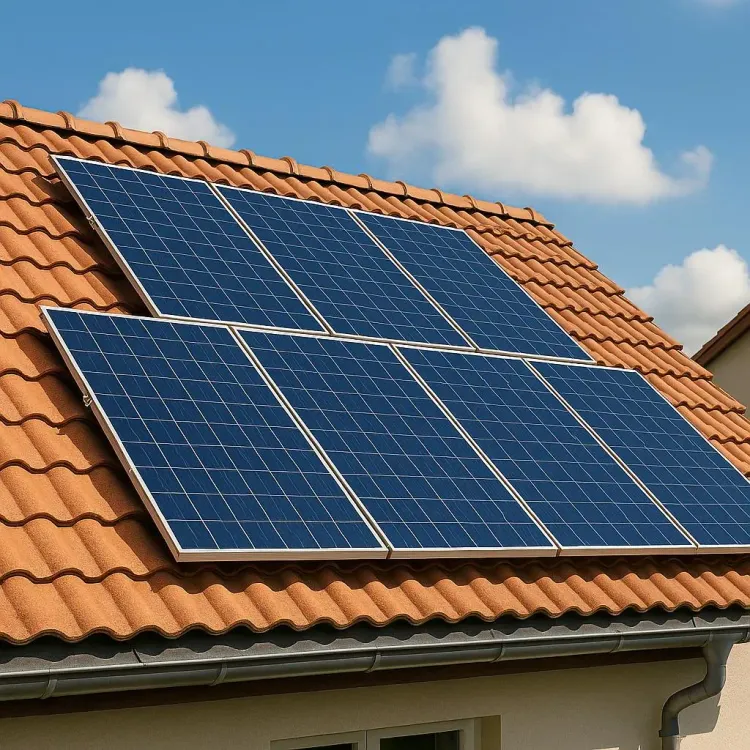
40 lakh homes have been connected to rooftop solar under PM Surya Ghar Muft Bijli Yojana .
Per IEA , nearly half of India's additional electricity demand to 2030 will come from solar.
India's accelerating electrification and renewable energy push could position the country as one of the world's largest markets for power equipment by 2035, with renewable energy gear and high-end cables alone representing a global opportunity of $350-400 billion, according to a new report cited by Asian Power. The findings, drawing on McKinsey estimates, also peg the global power electronics market at over $140 billion by the same year.
Domestic Market Trajectory
India's domestic electrical-equipment consumption touched $59 billion in FY25, expanding at an 11% compound annual growth rate over the past five years, the report said. That figure could swell to between $170 billion and $205 billion by 2035 if current electrification and renewable trends hold.
The Import Dependence Risk
The report flagged a sharp warning: India's import dependence in electrical equipment has already climbed from 22% in 2020 to 33% in 2025. Under a business-as-usual scenario, that share could cross 70% by 2035, creating a potential domestic production shortfall of more than $130 billion.
'The four segments with the greatest localisation urgency are power electronics, batteries, solar photovoltaic cells and modules, and subcomponents,' the report noted.
Where Capacity Must Scale
The consultancy urged a fivefold expansion in domestic capacity across these priority segments, alongside AC compressors, transformers, and cables, to bring overall import dependence below 14% by 2035. Grid stabilisation technologies and power software were highlighted as emerging high-growth verticals, critical for managing the operational complexity of a renewables-heavy grid.
Subsea cables and high-speed rail cables were identified as priority areas where India could build global export competitiveness — a notable pivot from the import-substitution lens that has dominated industrial policy framing so far.
The Renewables Anchor
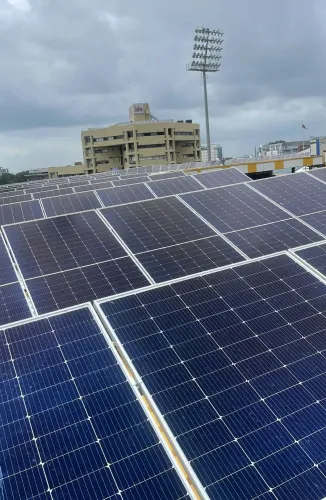
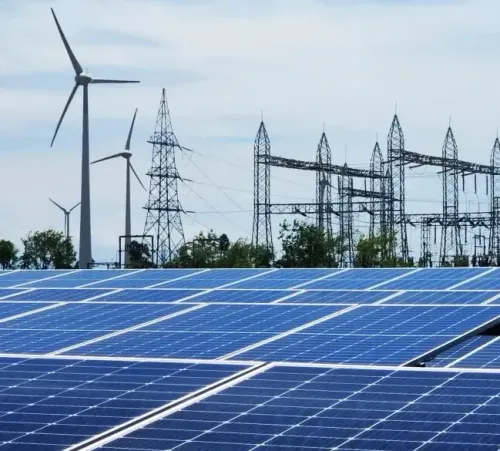
India recently crossed a milestone of connecting 40 lakh homes to rooftop solar under the PM Surya Ghar Muft Bijli Yojana. According to the International Energy Agency (IEA), nearly half of India's additional electricity demand between now and 2030 is expected to be met through solar power, with another quarter coming from wind, hydroelectric, and nuclear sources.
What's Next
The localisation push will hinge on whether existing PLI schemes — particularly in batteries and solar modules — translate into commissioned capacity at scale before the 2030 demand wave hits. Industry watchers say the next 24 months of project commissioning will be a leading indicator of whether India captures the opportunity or imports it.
Point of View
But the buried lede is import dependence rising from 22% to a potential 70%. India has run this play before — solar modules were meant to be a Make in India flagship, yet Chinese cells still dominate procurement. The fivefold scale-up the report demands is not a policy ask, it's an industrial emergency. Without measurable PLI outcomes in batteries and power electronics within 24 months, the energy transition will quietly become a forex drain rather than a manufacturing dividend.
NationPress
19 Sept 2026
Frequently Asked Questions
What is the size of India's power equipment opportunity by 2035?
Renewable energy equipment and high-end cables alone could represent a global opportunity of $350-400 billion by 2035, according to McKinsey estimates cited in the report. The global power electronics market could separately exceed $140 billion.
Why is rising import dependence a concern for India?
India's import dependence in electrical equipment has risen from 22% in 2020 to 33% in 2025, and could cross 70% by 2035 under business-as-usual. That would create a domestic production shortfall of more than $130 billion and undermine the Make in India push in clean energy.
Which segments need the most urgent localisation?
The report identifies four priority segments: power electronics, batteries, solar photovoltaic cells and modules, and subcomponents. A fivefold capacity expansion is recommended across these, along with AC compressors, transformers, and cables.
How is India's rooftop solar push progressing?
India has connected 40 lakh homes to rooftop solar under the PM Surya Ghar Muft Bijli Yojana. The IEA expects nearly half of India's additional electricity demand through 2030 to be met via solar, with another quarter from wind, hydro, and nuclear.