How is India Gaining a Green Energy Edge as Solar Panel and Battery Costs Drop?
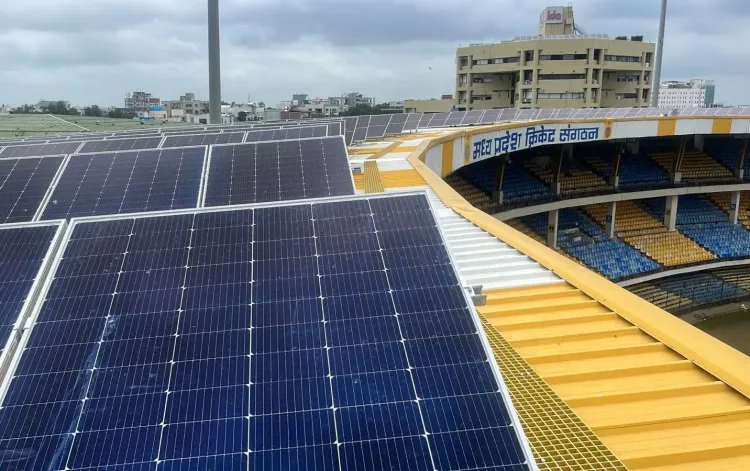
Synopsis
India is experiencing a remarkable transition in its energy sector as the costs of solar panels and batteries plummet, leading to a sustainable future. Unlike China’s past, India’s energy landscape is evolving with economic viability in renewable technologies. This shift promises to reduce pollution and oil dependency while enhancing energy independence.
Key Takeaways
India's energy landscape is shifting towards solar and battery technologies.
Electric vehicles are becoming more cost-effective compared to conventional engines.
India is achieving milestones in renewable energy faster than China did.
Coal demand is projected to decline while solar energy continues to rise.
Economic growth can occur without increasing coal generation levels.
New Delhi, Jan 22 (NationPress) The significant reduction in costs of technologies such as solar panels and batteries has paved the way for a new energy landscape in countries like India, which was previously unattainable a decade ago during China's energy sector expansion.
Back in 2004, when China's electricity consumption per capita exceeded 1,500 kWh, coal generation was approximately ten times more affordable compared to the emerging solar photovoltaics (PV) market. This disparity led to coal contributing to nearly 70% of the increase in China's electricity generation over the course of ten years.
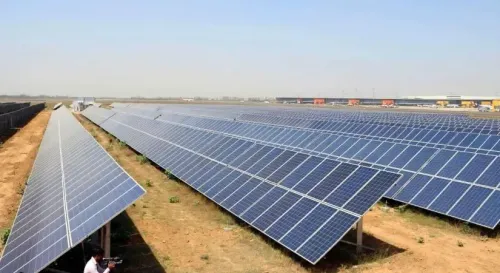
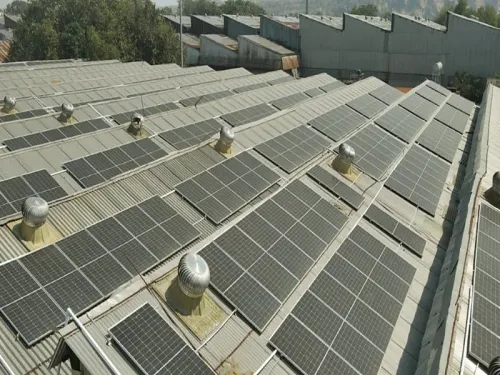
In stark contrast, as India surpasses the 1,500 kWh electricity usage per capita mark today, the costs for solar and storage solutions are around half the price of new coal facilities. This distinction is expected to widen as solar and battery costs continue to decline along well-defined learning curves, while coal power grows costlier with diminishing utilization, as highlighted in an article by Ember, a global energy think tank.
In a similar vein, when considering the transportation sector, in 2011, as China hit a road transport oil demand of 150 liters of gasoline equivalent per capita, battery prices were ten times higher than today, and the electric vehicle sector was virtually non-existent.
Currently, India's road oil demand stands at 96 liters per capita and is unlikely to ever reach the 150 liters per capita threshold. Electric vehicles are already providing a more economical option than traditional internal combustion engines, which is anticipated to lower the nation's oil import expenditures and reduce pollution.
According to the article, "The economic energy pathway that makes sense for India today, as it swiftly industrializes, is markedly different from the one that suited China during its own industrial journey."
The report emphasizes that India is achieving notable advancements in the early stages of renewable energy and electric vehicle development.
In terms of electricity generation, solar energy constituted 5% of India's total generation at a GDP per capita of around $9,000, whereas in China, this milestone was reached at approximately $23,000. As solar energy proliferates, the integration of batteries is accelerating; the proportion of renewable tenders combined with battery storage surged from about 12% in 2021 to 50% by 2024.
Additionally, India’s coal-fired power generation is projected to decline year-on-year by 2025, while solar energy continues its uninterrupted ascent.
According to Ember and TERI's least-cost pathway analysis, coal demand is expected to plateau through to 2030.
In alignment with the IEA’s Stated Policies scenario (which has historically underestimated the growth of electrotechnologies), India’s coal demand is anticipated to remain at current levels by 2035. It is likely that India will achieve a GDP per capita of $20,000 without coal generation ever surpassing the levels China was utilizing at a GDP per capita of $5,000, the article concludes.
Point of View
The evolving energy dynamics in India not only highlight the nation’s commitment to sustainability but also emphasize the importance of innovation in outpacing traditional energy sources. It is essential for India to continue leveraging its advancements in renewable energy technologies to ensure a greener future for all.
NationPress
25 Sept 2026
Frequently Asked Questions
What has caused the drop in solar panel and battery costs?
The reduction in costs is primarily due to advancements in technology, economies of scale in manufacturing, and increased competition in the renewable energy sector.
How does India's energy path differ from China's?
India's current energy pathway focuses on renewable technologies, whereas China's earlier development heavily relied on coal due to its lower costs at that time.
What are the implications of adopting electric vehicles in India?
The rise of electric vehicles is expected to reduce oil import costs and pollution, promoting a cleaner and more sustainable transportation system in India.