Index of Services Production launches July 2026 to track India's services sector
Synopsis
India is set to plug a glaring statistical gap in July 2026: for the first time, the country will have a monthly index tracking real output in the formal services sector — a segment that has driven over half of GVA since 2013-14 yet lacked any high-frequency production measure. The ISP could reshape how the RBI, policymakers, and investors read the Indian economy in real time.
Key Takeaways
MoSPI will launch the Index of Services Production (ISP) in July 2026 , India's first monthly services output tracker.
The ISP will complement the Index of Industrial Production (IIP) , extending high-frequency monitoring to the formal services sector.
India's services sector has contributed over 50% of GVA every year since 2013-14 .
The index will support economic forecasting , business cycle analysis , and evidence-based policy decisions.
MoSPI has released a detailed FAQ booklet to assist users ahead of the launch.
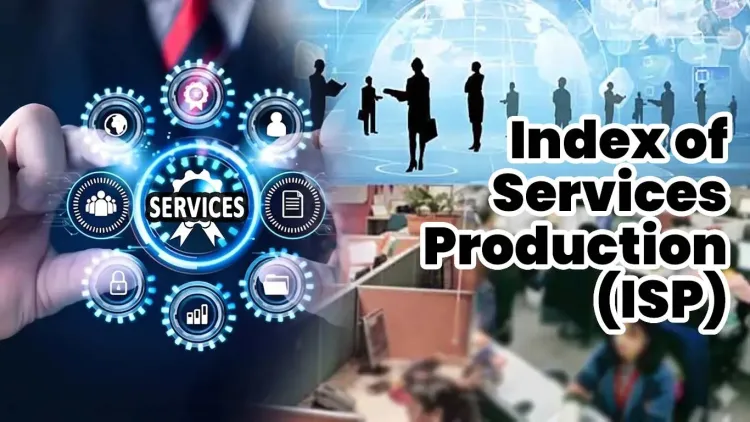
The Ministry of Statistics and Programme Implementation (MoSPI) on Wednesday, 24 June 2026 announced that it will launch the Index of Services Production (ISP) in July 2026, introducing India's first monthly short-term indicator dedicated to measuring output growth in the formal services sector. The ministry also released a detailed FAQ booklet to help users interpret and apply the new index.
What the ISP Measures
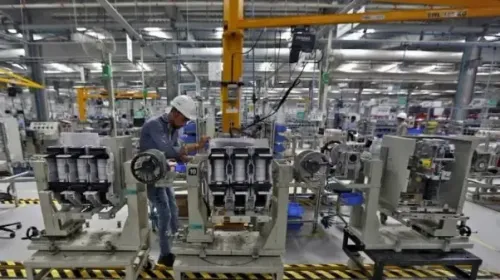
The Index of Services Production is designed to track changes in the real volume of output generated by service-producing industries over time, benchmarked against a specified base period. It will function as a high-frequency counterpart to the existing Index of Industrial Production (IIP), which currently covers only the manufacturing, mining, and electricity sectors.
By extending monthly production tracking to formal services, the ISP fills a long-standing gap in India's statistical architecture, bringing the country in line with global practices already adopted by major economies.
Why India Needs This Index Now
The services sector has been the dominant engine of the Indian economy, contributing over 50 per cent of Gross Value Added (GVA) consistently since 2013-14. Despite this outsized role, policymakers have lacked a timely, high-frequency tool to monitor its short-term performance — a gap that the ISP directly addresses.
According to the ministry's statement, the index will enable planners and policymakers to take evidence-based measures and guide the sector's growth trajectory in a more responsive manner. This is particularly significant as services — spanning finance, IT, trade, and logistics — are increasingly sensitive to global demand shifts and domestic policy cycles.
Key Objectives of the ISP
The ministry outlined several objectives for the new index. First, the ISP will complement the IIP by providing a parallel read on short-term economic movement across the services economy. Second, it will supply high-frequency performance data to strengthen India's existing statistical framework and support analytical and policy decision-making.
Third, the ISP will enable better economic forecasting and business cycle analysis by generating consistent time-series data on services output. Timely monitoring of economic activity — particularly in sectors that move faster than quarterly GDP estimates can capture — is cited as a core use case.
Broader Statistical and Policy Impact
The launch of the ISP represents a structural upgrade to India's national statistical system. Until now, the IIP served as the primary monthly production indicator, leaving services — which account for the majority of formal employment and output — without equivalent real-time tracking.
Economists and policy analysts have long called for such an instrument, arguing that quarterly GDP data alone is insufficient for timely monetary and fiscal calibration. The Reserve Bank of India (RBI) and other institutional forecasters are expected to incorporate ISP readings into their economic assessments once the index becomes operational.
With the July 2026 launch approaching, MoSPI's release of the FAQ booklet signals that the groundwork for user adoption is already underway. The index is poised to become a key input for budget planning, sectoral policy, and investor sentiment tracking in the months ahead.
Point of View
Relying on quarterly GDP estimates that are revised, delayed, and too coarse for real-time policy calibration. The RBI sets rates partly on IIP prints; those prints tell nothing about IT, finance, or logistics. Whether the ISP achieves its potential depends on the breadth of its enterprise coverage and the speed of data release — two areas where India's statistical agencies have historically struggled. If MoSPI can deliver timely, granular data, the ISP could genuinely sharpen monetary and fiscal responses. If it suffers from the same lags that plague other surveys, it risks becoming another index that analysts discount.
NationPress
22 Sept 2026
Frequently Asked Questions
What is the Index of Services Production (ISP)?
The Index of Services Production (ISP) is a new monthly statistical indicator being launched by MoSPI in July 2026 to measure short-term changes in the real output of India's formal services sector. It will function as a services-side counterpart to the existing Index of Industrial Production (IIP).
When will the ISP be launched?
MoSPI has announced that the ISP will be launched in July 2026. The ministry has already released a FAQ booklet to help users understand and apply the index ahead of its debut.
Why does India need a separate index for the services sector?
India's services sector has contributed over 50% of Gross Value Added every year since 2013-14, yet the country lacked any high-frequency monthly measure of services output. The ISP fills this gap, bringing India in line with global statistical practices and giving policymakers a real-time tool to monitor the sector's performance.
How is the ISP different from the IIP?
The Index of Industrial Production (IIP) tracks monthly output in manufacturing, mining, and electricity. The ISP extends equivalent monthly tracking to formal service-producing industries — a segment the IIP does not cover — providing a more complete picture of short-term economic activity.
Who will use the ISP and how?
The ISP is intended for policymakers, planners, economists, and institutional forecasters including the Reserve Bank of India. It will support budget planning, monetary policy calibration, business cycle analysis, and economic forecasting by supplying consistent, high-frequency time-series data on services output.