Are India's Logistics Costs Really Just 7.97% of GDP?
Synopsis
India's logistics costs have been officially reported at just 7.97% of GDP, a stark contrast to previous estimates of 13-14%. This significant reduction is attributed to various innovative initiatives aimed at enhancing the logistics sector's efficiency and competitiveness.
Key Takeaways
Logistics costs in India are at 7.97% of GDP.
Eastern Dedicated Freight Corridor has improved turnaround times.
Inland waterways set a record in cargo transport.
PM GatiShakti Public enhances transparency and collaboration.
Plug-and-play parks offer infrastructure for investors.
New Delhi, Nov 27 (NationPress) Official data revealed that India's logistics expenses are merely 7.97% of the country's gross domestic product (GDP), significantly lower than the frequently mentioned figures of 13% to 14%. This information comes from assessments conducted by the DPIIT and the National Council of Applied Economic Research.
The nation is undergoing a transformation in its logistics sector, evolving from a cost center to a competitive advantage through various initiatives such as PM Gatishakti Public/Offshore, SMILE, LEAPS 2025, LEADS 2025, IPRS 3.0, and LDB 2.0, along with the development of green corridors.
The Strengthening Multimodal and Integrated Logistics Ecosystem (SMILE) program has initiated logistics plans across eight pilot cities in different states to evaluate current logistics infrastructure and enhance efficiency while lowering expenses.
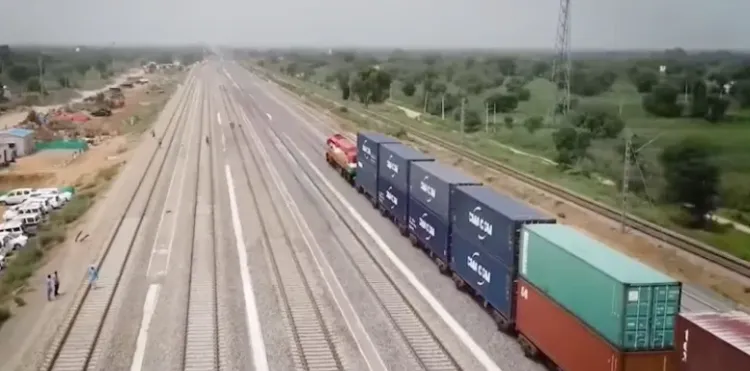
With the establishment of the Eastern Dedicated Freight Corridor, the turnaround time for wagons has drastically decreased from 15–16 days to just 2–3 days, and transit durations have been shortened from over 60 hours to 35–38 hours. Freight operations are now efficiently managed from a central control center located in Prayagraj.
The revival of the Ganga Waterway, which connects to the EDFC in Varanasi, facilitates efficient cargo movement to eastern ports like Haldia.
Inland waterways achieved a record transport of 145.84 million tonnes of cargo last year, while issues of rail congestion are being tackled through dedicated freight corridors.
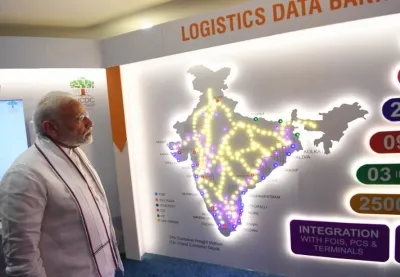
Platforms such as the Unified Logistics Interface Platform and Logistics Data Bank (LDB) 2.0 provide real-time visibility for millions of containers.
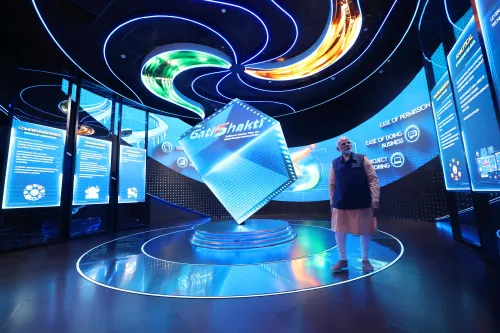
The PM GatiShakti Public platform offers access to 230 non-sensitive datasets for private companies, researchers, and the general public, fostering transparency, data-driven decisions, and inter-sector collaboration.
In industrial zones, plug-and-play parks developed by the NICDC (National Industrial Corridor Development Corporation) present ready-made infrastructure for investors. Additionally, reforms like GST and the e-Way Bill have alleviated longstanding challenges in interstate transport.
Point of View
This development reflects India's proactive approach to enhancing its logistics infrastructure. By focusing on efficiency and cost reduction, the government is positioning the country as a competitive player in the global market. This strategic shift is essential for sustained economic growth and improving trade logistics.
NationPress
26 Sept 2026
Frequently Asked Questions
What are the current logistics costs in India?
India's logistics costs are currently at 7.97% of its GDP, significantly lower than the previously estimated 13% to 14% .
What initiatives are transforming India's logistics sector?
Key initiatives include PM Gatishakti, SMILE, LEADS 2025, and the development of green corridors, among others.
How has the Eastern Dedicated Freight Corridor improved logistics?
The Eastern Dedicated Freight Corridor has significantly reduced wagon turnaround time from 15-16 days to 2-3 days .
What role do inland waterways play in logistics?
Inland waterways have successfully transported a record 145.84 million tonnes of cargo, aiding in efficient logistics.
How does PM GatiShakti Public enhance transparency?
PM GatiShakti Public provides access to 230 non-sensitive datasets , promoting transparency and informed decision-making.