Is India Committing to a Greener, Cleaner Maritime Future?

Synopsis
As India embarks on a new maritime journey, it commits to sustainability and resilience through innovative initiatives. With the National Green Hydrogen Mission leading the charge, India aims to revolutionize its maritime sector, positioning itself as a global leader in green energy. Explore how these efforts will reshape India's maritime landscape for future generations.
Key Takeaways
India is committed to a sustainable maritime future.
Five million tonnes of green hydrogen production target by 2030.
Major ports will be transformed into Green Hydrogen hubs.
Significant investments are earmarked for maritime initiatives.
Innovative programs are set to reshape the maritime landscape.
New Delhi, Dec 15 (NationPress) India is on the brink of a revolutionary maritime journey, leveraging its extensive coastline, expanding industrial capabilities, and strategic location to enhance trade and connectivity while establishing a legacy of sustainability and resilience, as per an official announcement on Monday.
The Ministry of Ports, Shipping and Waterways (MoPSW) has outlined the ‘Maritime India Vision 2030,’ which serves as a framework for empowering India’s maritime sector, aiming for a greener, cleaner, and more sustainable future.
The evolution of maritime transport relies on clean fuels such as green hydrogen, ammonia, biofuels, and LNG.
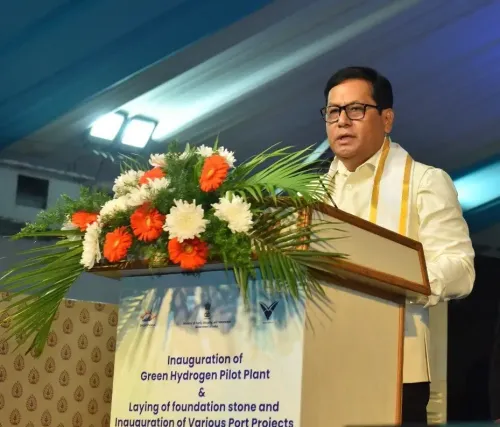
In this regard, India’s National Green Hydrogen Mission is pioneering the shift towards zero-emission fuels, ensuring that our ports contribute not only to trade but also to a sustainable future, according to the statement.
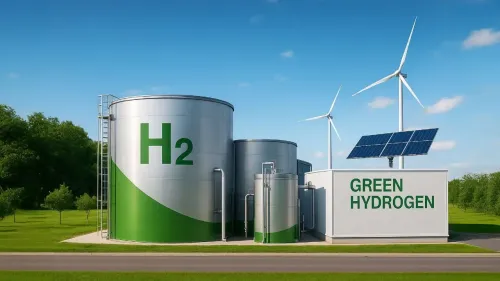
The National Green Hydrogen Mission has been initiated to reduce carbon emissions and position India as a global frontrunner in green hydrogen.
By 2030, the objective is to generate 5 million tonnes of green hydrogen annually, attracting investments of Rs 8 lakh crore, generating 6 lakh jobs, and reducing Rs 1 lakh crore in fossil fuel imports.
This initiative emphasizes production, pilot projects, electrolyser manufacturing, skill development, infrastructure, and research, with plans to phase out fossil fuels in the steel, transport, and fertilizer sectors.
To advance this agenda, three major ports—Kandla, Paradip, and Tuticorin—have been earmarked by the ministry to develop as Green Hydrogen hubs.
Through innovative programs, legislative changes, and green-shipping initiatives, the nation is restructuring its maritime framework for the future: cleaner ports, low-emission fleets, smart infrastructure, and inclusive opportunities. As India navigates towards 2047, it does so not merely as a rising maritime force but as a responsible guardian of the seas, a globally competitive economy, and a partner dedicated to planetary well-being.
Building upon this foundation is the ‘Maritime Amrit Kaal Vision 2047,’ a comprehensive long-term plan for India’s maritime revival, with approximately Rs 80 lakh crore allocated for ports, coastal shipping, inland waterways, shipbuilding, and green shipping initiatives.
The government is promoting sustainable maritime activities by establishing green corridors, implementing green hydrogen bunkering at key ports, and encouraging the use of methanol-powered vessels.
With over 300 actionable initiatives outlined, it envisions India ascending as one of the world’s leading maritime and shipbuilding nations by the centenary of independence.
Through initiatives like the ‘Harit Sagar Green Port Guidelines’, 2023, ‘National Green Hydrogen Mission, 2023’, and the ‘Green Tug Transition Programme’, 2024, India is transforming its ports and shipping sector into models of sustainability.
The recently unveiled Rs 25,000 crore Maritime Development Fund is set to stimulate investments in green infrastructure, alternative fuels, and fleet modernization, ensuring that India stays at the forefront of decarbonization, as highlighted in the statement.
Point of View
It's evident that India is taking substantial strides towards a sustainable maritime future. The initiatives not only aim to enhance trade but also demonstrate a commitment to environmental stewardship. This approach positions India as a responsible global player, ensuring economic growth while safeguarding the planet.
NationPress
24 Sept 2026
Frequently Asked Questions
What are the key goals of India's National Green Hydrogen Mission?
The mission aims to produce 5 million tonnes of green hydrogen annually by 2030, attract Rs 8 lakh crore in investments, create 6 lakh jobs, and reduce fossil fuel imports by Rs 1 lakh crore.
Which ports are being developed as Green Hydrogen hubs?
Kandla, Paradip, and Tuticorin ports have been identified for development as Green Hydrogen hubs.
How will the Maritime Amrit Kaal Vision 2047 impact India's maritime sector?
The vision outlines a long-term roadmap for India’s maritime resurgence with an investment of nearly Rs 80 lakh crore for various maritime initiatives.
What initiatives are being introduced to promote sustainability in the maritime sector?
Initiatives include the establishment of green corridors, green hydrogen bunkering, and the promotion of methanol-fueled vessels.
What is the purpose of the Maritime Development Fund?
The fund aims to catalyze investments in green infrastructure, alternative fuels, and fleet modernization to support India's decarbonization efforts.