Industry-built PSLV launch expected in Q1 2027: ISRO chief
Synopsis
India’s first fully industry-built PSLV is expected to launch in the first quarter of 2027. ISRO chief V. Narayanan says the HAL-L&T consortium is preparing the first of five rockets under a ₹860 crore contract.
Key Takeaways
Narayanan expects the first fully industry-built PSLV to launch in the first quarter of 2027 .
HAL and L&T are producing five PSLV rockets under a ₹860 crore contract awarded by NSIL .
The PSLV first flew in 1993 and weighs around 320 tonnes .
Narayanan said the Gaganyaan orbital module had entered its final stages of work.
Narayanan said India currently has 56 space assets and needs more communication and earth observation satellites.
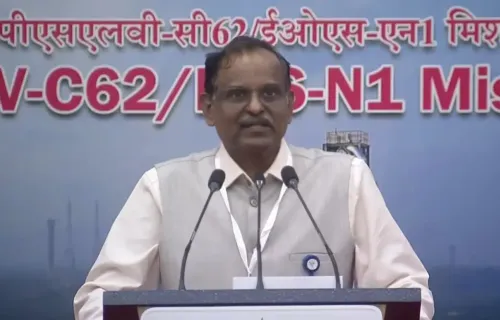
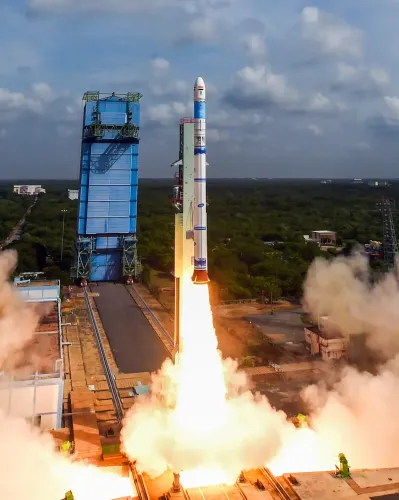
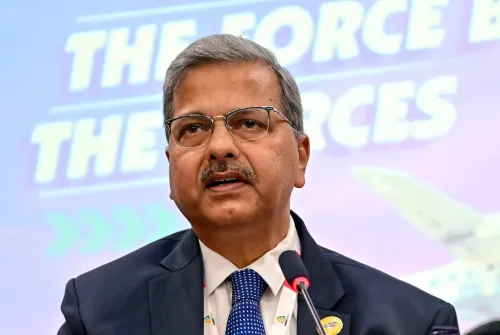
India’s first fully industry-built Polar Satellite Launch Vehicle (PSLV) is expected to launch in the first quarter of 2027, Indian Space Research Organisation (ISRO) Chairman V. Narayanan said in New Delhi on Tuesday. The rocket is being manufactured by a consortium of Hindustan Aeronautics Ltd (HAL) and Larsen & Toubro (L&T) under a contract awarded by ISRO’s commercial arm.
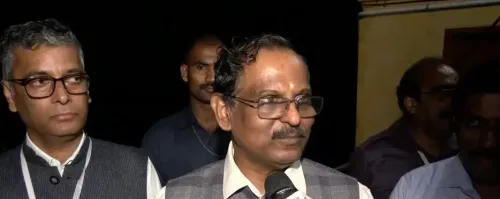
Speaking to reporters on the sidelines of the India International Space Conclave, Narayanan also said work on the orbital module for the Gaganyaan human spaceflight programme had entered its final stages.
Five PSLV rockets under industry contract
NewSpace India Limited (NSIL), ISRO’s commercial arm, awarded the consortium a ₹860 crore contract to produce five PSLV rockets. The first launch is expected in the opening quarter of 2027, according to Narayanan.
Explaining the change in production arrangements, he said: “Earlier it was built only by ISRO through the support of the industry, but now the L&T and HAL consortium has been given five PSLVs and the rocket is getting ready. The first launch is expected next year in the first quarter.”
The arrangement is part of the government’s wider strategy to transfer launch vehicle production to industry and expand private-sector participation in the space ecosystem. It changes the role of the consortium from supporting ISRO’s production work to building the launch vehicles.
PSLV’s launch capability and history
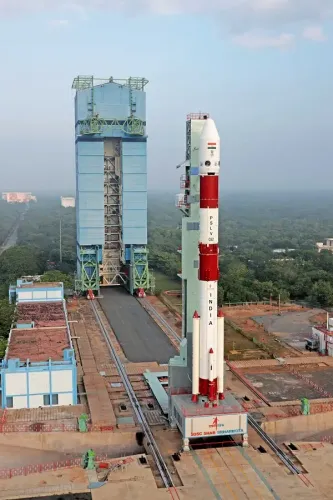
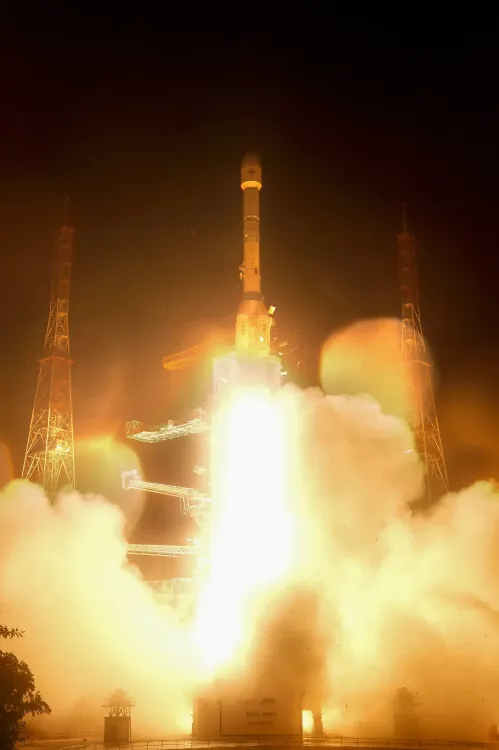
The PSLV is an expendable medium-lift launch vehicle weighing around 320 tonnes. Since its first flight in 1993, it has established a strong reliability record and has been used extensively to launch Indian and foreign satellites.
The vehicle can carry payloads of up to 1,750 kilograms to sun-synchronous polar orbits at an altitude of 600 km. It has also deployed satellites into geosynchronous and geostationary orbits.
The planned industry-built launch concerns a vehicle already used for a range of satellite missions, rather than the introduction of a new rocket type. The production contract covers five vehicles, while Narayanan’s stated launch expectation applies to the first.
Gaganyaan orbital module and safety work
Narayanan said the orbital module for Gaganyaan was progressing through its final stages. He described the human spaceflight programme as highly technology-intensive and said preparations were under way for upcoming mission milestones.
His remarks came a day after ISRO astronaut Prasanth B. Nair said several procedures and operational protocols needed for the mission were being developed from scratch. Nair said a comprehensive system of safety, operational and recovery procedures would be needed to send astronauts to space and bring them back safely.
The first uncrewed mission, Gaganyaan-1, is expected to carry an AI-enabled half-humanoid robot as ISRO validates systems and procedures before a crewed flight. The source did not specify a launch date for that mission.
Industry role in expanding space assets
Narayanan said India currently has 56 space assets and would need many more communication and earth observation satellites in the coming years. He called for greater collaboration between ISRO and private companies to meet those requirements.
“We need to develop a lot of space assets for communication and earth observation. This cannot be done only by the government sector,” he said.
The first industry-built PSLV launch remains expected in the first quarter of 2027, while work continues on the Gaganyaan orbital module and mission procedures.
Point of View
Transparent reporting on milestones and outcomes will help establish whether this model can scale.
NationPress
24 Nov 2026
Frequently Asked Questions
When will India’s first industry-built PSLV launch?
The first fully industry-built PSLV is expected to launch in the first quarter of 2027, according to ISRO Chairman V. Narayanan.
Which companies are building the industry-made PSLV rockets?
A consortium of Hindustan Aeronautics Ltd and Larsen & Toubro is building five PSLV rockets. NewSpace India Limited awarded the ₹860 crore contract.
Why does the industry-built PSLV launch matter?
The launch is expected to mark the first flight of a PSLV fully built by Indian industry. It forms part of the government’s strategy to transfer launch vehicle production to industry and expand private-sector participation.
What did the ISRO chief say about Gaganyaan?
V. Narayanan said work on the Gaganyaan orbital module had entered its final stages. The first uncrewed mission is expected to carry an AI-enabled half-humanoid robot while systems and procedures are validated.
How many space assets does India have?
India currently has 56 space assets, according to Narayanan. He said the country would need many more communication and earth observation satellites in the coming years.