Are Global Investors Making Big Bets on India's Second Infrastructure Wave?
Synopsis
As global investors turn their attention to India, the country stands poised at the brink of a significant infrastructure revolution. With sustainable growth, robust capital expenditure, and a resurgence in private investment fueling optimism, India is set to redefine its role in the global economy. Discover how these factors are reshaping investment narratives and driving development across sectors.
Key Takeaways
India's infrastructure sector is experiencing a significant transformation.
Record government spending is fueling growth and attracting investments.
Private sector investment is making a strong comeback.
Expansion in transportation and energy sectors is underway.
India is poised to become a key global player in infrastructure.
New Delhi, Dec 11 (NationPress) Global investors are increasingly optimistic about India, the world’s fastest growing major economy, as it embarks on what is being referred to as the country’s “second infrastructure wave.”
This favorable investment climate is rooted in India’s sustainable long-term economic growth, predictable policies, and a significant structural investment opportunity that encompasses transportation, energy, digital ecosystems, and innovative industries, as reported by the Greek City Times news portal.
As the fiscal year 2025–26 progresses, India’s infrastructural supercycle is set to reshape global investment perspectives, positioning the nation not only as an appealing destination but also as a pivotal player in the global economy, the report suggests.
The article notes that India’s infrastructure sector has exceeded market expectations for three consecutive years. The Nifty Infrastructure Index has achieved impressive returns of 82.8 percent over the last three years and 181.2 percent over five years, significantly outpacing the Nifty 50.
This consistent outperformance is indicative of more than just cyclical strength; it signals fundamental, structural momentum that investors interpret as the onset of a multi-year expansion from FY26 to FY30, the article points out.
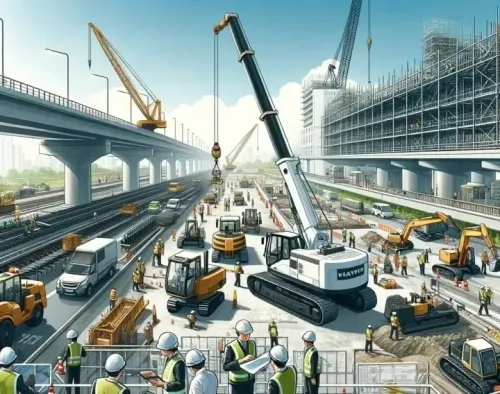
The boost in infrastructure development is supported by the most robust capital expenditure cycle in the history of independent India, a resurgence in private investments, and a swiftly transforming landscape across green energy, logistics, digital infrastructure, and next-generation fuels.
A significant factor driving this optimism is unprecedented government capital expenditure. The fiscal year 2025 saw a historic allocation of Rs 11.11 lakh crore ($131 billion), with FY26 expected to rise even further to Rs 11.21 lakh crore ($132 billion) — representing approximately 3.1 percent of GDP.
From expressways to power corridors, logistics hubs to airport expansions, India’s development pipeline is deeper and more forward-focused than ever before. This momentum offers sustained visibility for EPC (engineering procurement and contract) firms, developers, lenders, and long-term investors, the article highlights.
The resurgence of private capital expenditure is seen as India’s next growth catalyst. Private sector investment, previously viewed as the missing component in India’s growth puzzle, is now making a strong return. Government reforms, production-linked incentive (PLI) schemes, and global supply-chain diversification have collectively enhanced manufacturing competitiveness.
The article also elaborates on the advancements taking place in the highways, aviation, and maritime sectors.
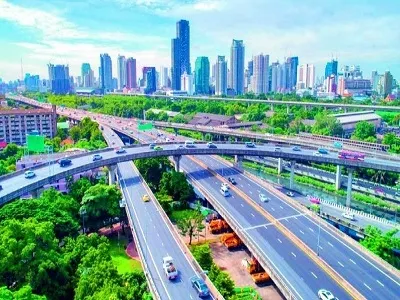
The foundation of India’s infrastructure narrative continues to strengthen. With over 146,000 km of national highways and consistent annual construction of 10,000–11,000 km, initiatives like Bharatmala and expanding expressway networks guarantee steady order inflows.
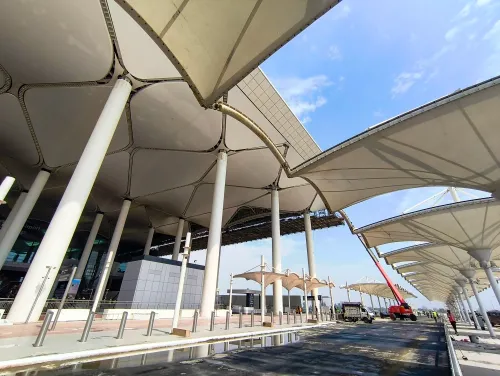
India has emerged as one of the world’s fastest-growing aviation markets. The number of operational airports has more than doubled to over 163, and passenger traffic is reaching record levels. With long-term plans for 350–400 airports, the aviation ecosystem — encompassing terminals, cargo, MRO, and concessions — is entering a major expansion phase.
The maritime sector is undergoing rapid modernization under the Sagarmala programme, with major ports handling nearly 795 MT of cargo, and national capacity on track for 3,300+ MTPA.
Point of View
We maintain a watchful eye on India's evolving infrastructure landscape. The current momentum signifies not just economic growth, but a transformative phase that can redefine the country’s role on the global stage. It is crucial to recognize the long-term implications of these developments, ensuring that India remains a focal point for international investment and innovation.
NationPress
23 Sept 2026
Frequently Asked Questions
What is the second infrastructure wave in India?
The second infrastructure wave in India refers to the ongoing significant investments and developments in various sectors such as transportation, energy, and digital ecosystems, aimed at enhancing the country's infrastructure and economic growth.
Why are global investors interested in India?
Global investors are attracted to India due to its robust economic growth, predictable policies, and abundant investment opportunities across multiple sectors, making it a favorable destination for long-term investment.
What are the key drivers of India's infrastructure growth?
Key drivers include record government capital expenditure, a resurgence in private investments, and initiatives aimed at boosting sectors like green energy, logistics, and digital infrastructure.
How has India's infrastructure sector performed recently?
India's infrastructure sector has consistently outperformed market expectations, with significant returns seen in the Nifty Infrastructure Index, indicating strong growth potential.
What role does private investment play in India's growth?
Private investment is crucial as it fills the gaps in infrastructure development and is supported by government reforms and incentives, enhancing overall economic competitiveness.