Why Did RBI Purchase Bonds Worth Rs 50,000 Crore?

Synopsis
The Reserve Bank of India has purchased government bonds worth Rs 50,000 crore to boost liquidity in the banking system. This strategic move is part of a broader monetary policy initiative aimed at fostering economic growth.
Key Takeaways
RBI's bond purchase: Rs 50,000 crore to boost liquidity.
Monetary policy: Aims to stimulate economic growth.
US dollar sales: To stabilize the rupee.
Open Market Operations: Key tool for liquidity management.
Liquidity levels: Fluctuations impact banking reserves.
Mumbai, December 11 (NationPress): The Reserve Bank of India (RBI) made a significant move on Wednesday by acquiring government bonds valued at Rs 50,000 crore from the market. This action aims to enhance liquidity within the banking sector, promoting economic growth.
This acquisition aligns with the RBI's recent monetary policy strategy, which announced an infusion of Rs 1 lakh crore into the market through government securities purchases, along with an additional $5 billion via a foreign exchange swap.
To stabilize the rupee and prevent its rapid decline, the RBI has been selling US dollars in the market. This strategy has inadvertently led to a significant amount of cash being withdrawn from the banking system, which can drive up market interest rates.
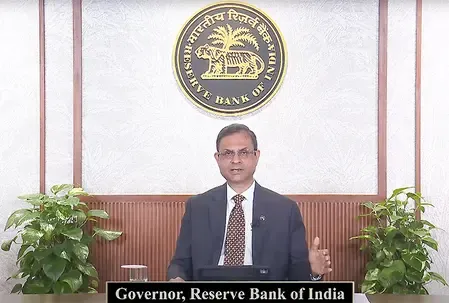
During a statement on Friday, RBI Governor Sanjay Malhotra assured that the bank would maintain adequate liquidity levels without specifically targeting a surplus of around 1 percent of net demand and time liabilities (NDTL).
“We are witnessing effective monetary transmission and will ensure sufficient liquidity to facilitate it,” he stated.
Malhotra noted that the current liquidity in the banking system occasionally surpasses 1 percent of NDTL, fluctuating between 0.6 percent and 1 percent, and sometimes exceeding these thresholds. “The precise figure—whether 0.5, 0.6, or 1 percent—is less important than ensuring banks have adequate reserves to operate effectively,” he added.
The central bank has introduced liquidity measures through open market operations (OMOs) and forex buy-sell swaps. The OMOs will include the acquisition of government securities worth Rs 1 trillion in two installments of Rs 50,000 crore each on December 11 and December 18. Additionally, a USD/INR buy-sell swap valued at $5 billion for three years is scheduled for December 16.
Maintaining banking reserves relies heavily on liquidity, which varies due to factors such as currency circulation, issuance of new currency, and fluctuations in foreign exchange operations like dollar sales, which deplete bank deposits. Changes in reserve requirements due to increased deposits also play a role in liquidity levels.
Point of View
The RBI's recent bond purchase underscores its commitment to maintaining liquidity in the banking sector. This strategic move not only aims to stabilize the rupee but also enhances the overall economic landscape. At NationPress, we believe that understanding these monetary policies is crucial for the public.
NationPress
24 Sept 2026
Frequently Asked Questions
What is the purpose of RBI's bond purchase?
The RBI's bond purchase aims to inject liquidity into the banking system to promote economic growth.
How much did RBI spend on government bonds?
The RBI purchased government bonds worth Rs 50,000 crore.
What measures is the RBI taking to stabilize the rupee?
The RBI is selling US dollars in the market to prevent the rupee from declining significantly.
When will the next bond purchase take place?
The next bond purchase is scheduled for December 18, as part of the ongoing liquidity measures.