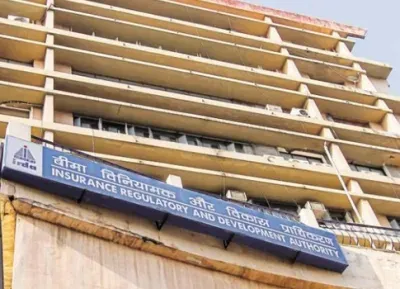
IRDAI proposes commission caps on life insurance policies; stocks fall up to 20%

Synopsis
IRDAI's draft proposal to cap life insurance commissions — scaling them by premium payment term length rather than rewarding first-year payouts — triggered a 10–20% single-session crash in insurance stocks on Thursday. If finalised, the norms would reshape how India's vast agent and distributor network is compensated, potentially ending the long-standing bias toward short-duration and single-premium policies that has kept persistency ratios low.
Key Takeaways
IRDAI released a consultation paper on 24 September 2026 proposing commission caps on individual life insurance policies.
Caps are tiered by premium payment term: from 5%/6.25% (under five years) up to 20%/25% (ten years or more) for distribution entities and agents, respectively.
Single-premium savings policies face the steepest limits: 1% for distributors and 2% for agents on first-year commission.
Multi-year term policies could allow first-year commissions up to 25% for distribution entities and 30% for agents.
Insurance and insurance-linked stocks fell between 10% and 20% on Thursday in response to the draft norms.
The regulator specified commissions must cover all incentives, awards, expense reimbursements, and non-cash benefits comprehensively.
The Insurance Regulatory and Development Authority of India (IRDAI) has floated a draft proposal capping commissions on individual life insurance policies, seeking to redirect sales incentives from upfront payouts toward rewarding agents and distributors who encourage policyholders to stay invested across multiyear payment plans. Insurance and insurance-linked stocks fell between 10% and 20% on Thursday, 24 September 2026, in immediate reaction to the consultation paper.
What IRDAI Has Proposed
The regulator's consultation paper lays out maximum commission limits for individual non-linked and linked life insurance policies, structured by the length of the premium payment term (PPT). For PPTs of fewer than five years, the proposed ceiling is 5% for distribution entities and 6.25% for agents. Policies with a five-year PPT attract higher limits of 10% and 12.5%, respectively.
The caps continue to rise with longer commitment periods: 14% and 17.5% for PPTs of six to eight years; 18% and 22.5% for nine-year terms; and 20% and 25% for PPTs of 10 years or more. A multi-year premium term policy could allow a first-year commission of up to 25% for distribution entities and 30% for agents.
Single Premium and Tax-Linked Products Face Steeper Cuts
The regulator has proposed significantly lower ceilings for single-premium products and policies with embedded tax incentives. First-year commissions for individual savings policies carrying a single premium would be capped at 1% for distribution entities and 2% for agents. Single-premium pure term policies would face caps of 7.5% and 10%, respectively.
IRDAI also specified that commissions must be treated comprehensively — covering incentives, awards, selling expense reimbursements, and non-cash benefits — closing a loophole through which insurers have historically supplemented formal commissions with ancillary perks.
The Regulator's Rationale
'Commission structure for life insurance policies should incentivise distribution persons and entities to nudge policyholders to persist with the multi-year payment plans instead of incentivising first year payment,' IRDAI said in the consultation paper. The move targets a structural problem in the domestic life insurance market: high first-year commissions have long been blamed for encouraging mis-selling, policy lapses, and a preference among agents for short-duration or single-premium products that yield quick payouts rather than sustained coverage.
Market Reaction and What Comes Next
The sharp sell-off in insurance stocks — between 10% and 20% in a single session — reflects investor concern that tighter commission ceilings will compress distributor margins and potentially slow new policy sales in the near term. This comes amid a broader regulatory push by IRDAI to improve persistency ratios, which measure the share of policyholders who continue paying premiums beyond the first year. India's life insurance persistency figures have historically trailed global benchmarks, a gap the regulator has been attempting to close through successive reform rounds. The consultation paper is open for public comment; final norms will follow after stakeholder feedback is incorporated.
Point of View
Widening India's already large protection gap. The real test is whether IRDAI pairs these caps with measures to grow the distributor base and improve consumer financial literacy — without which you are reducing supply without building demand.
NationPress
24 Sept 2026
Frequently Asked Questions
What has IRDAI proposed regarding life insurance commissions?
IRDAI has proposed a tiered cap on commissions for individual life insurance policies, scaling the maximum permissible payout by the length of the premium payment term. The goal is to shift incentives away from first-year sales payouts and toward rewarding agents who encourage policyholders to maintain multiyear payment plans.
How much can agents earn under the new proposed commission structure?
Under the draft proposal, agent commissions can range from 6.25% (for policies with a premium payment term of under five years) up to 25% for PPTs of ten years or more. For multi-year term policies, first-year commissions for agents could go up to 30%, while single-premium products face a much lower ceiling of 2% for individual savings policies.
Why did insurance stocks fall sharply on Thursday?
Insurance and insurance-linked stocks fell between 10% and 20% on Thursday after IRDAI released its consultation paper proposing commission caps. Investors fear that tighter commission ceilings will compress distributor margins and potentially slow new policy sales, squeezing near-term revenue for insurance companies.
What is the problem IRDAI is trying to solve with these caps?
IRDAI is targeting chronically low policy persistency in India — the tendency of policyholders to lapse payments after the first year. High upfront commissions have historically incentivised agents to favour short-duration or single-premium sales over encouraging sustained coverage, contributing to the persistency problem.
Are these commission caps final?
No. The proposals are part of a consultation paper open for public and industry feedback. Final norms will be issued only after stakeholder comments are reviewed and incorporated by the regulator.