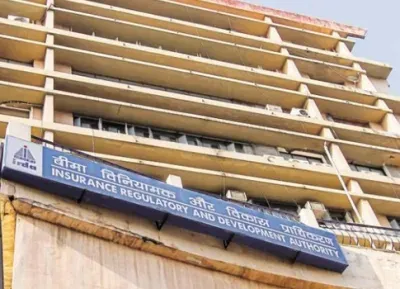
IRDAI links insurer executive pay to customer outcomes from FY27

Synopsis
IRDAI has mandated that at least half of every insurance KMP's performance score — and therefore their pay — must rest on customer outcomes like claims speed and grievance resolution from FY27. Combined with monthly disclosures and a 100% FDI green light, this is the most consequential regulatory reset for India's insurance sector in years.
Key Takeaways
IRDAI has linked KMP bonuses and incentives to customer outcomes including claims settlement speed, grievance redressal, and product performance.
At least 50 per cent of KMP performance evaluation must be based on these core parameters from FY27 .
Insurers must disclose claim responsiveness — settlements within 15, 30, and 60 days — and publish metrics for the preceding three years on their websites.
Financial soundness indicators to be published quarterly ; product performance and grievance metrics monthly .
Elimination of 'dark patterns' in customer interactions carries fixed weightage in KMP assessments.
The Union government has separately notified 100% FDI in insurance under the automatic route , subject to IRDAI approval.
The Insurance Regulatory and Development Authority of India (IRDAI) has overhauled rules governing top executive pay at insurance companies, mandating that bonuses and incentives for Key Management Personnel (KMPs) — including chief executives — be directly tied to measurable customer outcomes, financial soundness, and transparency disclosures. The new framework takes effect from FY27, reshaping how India's insurance sector rewards its leadership.
What the New Framework Requires
Under the revised norms, at least 50 per cent of a KMP's performance evaluation must be anchored to defined customer-centric parameters. These include claims settlement speed, grievance redressal rates, product performance, cost efficiency, policy retention, and complaint resolution rates.
Crucially, compliance with accounting standards and the elimination of misleading 'dark patterns' in customer interactions — deceptive design elements that nudge policyholders into unintended decisions — will carry fixed weightage in assessments. This signals a regulatory intent to clean up sales and onboarding practices that have long drawn consumer complaints.
Disclosure Requirements
The IRDAI circular mandates that insurers publish performance metrics in a simple, accessible format on their company websites, along with corresponding data for the preceding three years. The regulator has specified granular claims disclosure: insurers must report the proportion of claims settled within 15 days, 30 days, 60 days, beyond 60 days, and those remaining unsettled at month-end.
Financial soundness indicators must be published quarterly, while product performance, claims responsiveness, and grievance handling metrics are to be disclosed monthly. The move is explicitly aimed at enabling policyholders to make more informed decisions when choosing or renewing insurance products.
Board Accountability and Benchmarks
The framework places the onus on each insurer's Board of Directors to set improvement benchmarks aligned with the company's business strategy. Critically, the Board may assess KMP performance only when complete and consistent disclosures have been made — creating a compliance prerequisite for pay decisions.
This structural linkage between disclosure and remuneration is a notable departure from earlier norms, where pay structures were largely governed by internal board discretion without mandatory customer-outcome anchoring.
100% FDI in Insurance Cleared
Separately, the Union government has notified 100 per cent foreign direct investment (FDI) in the insurance sector under the automatic route, opening the door to greater participation by overseas investors. Foreign investment will remain subject to compliance with the Insurance Act, 1938, and will require mandatory approval from IRDAI for undertaking insurance and related activities.
Together, the executive pay reform and the FDI liberalisation mark a significant regulatory reset for the Indian insurance sector — one that prioritises customer trust while signalling openness to global capital.
Point of View
Grievance numbers that count acknowledgements as resolutions. The dark-patterns clause is the most consequential line in the circular, because it targets the sales funnel directly, where mis-selling originates. The 100% FDI notification adds a commercial dimension: foreign insurers entering under the automatic route will face these same disclosure obligations from day one, raising the bar on governance in a sector that has historically competed on distribution muscle rather than customer trust.
NationPress
10 Oct 2026
Frequently Asked Questions
What has IRDAI changed about insurer executive pay?
IRDAI has mandated that at least 50 per cent of the performance evaluation of Key Management Personnel — including CEOs — must be based on customer-centric parameters such as claims settlement speed, grievance redressal, product performance, and complaint resolution rates. The framework takes effect from FY27.
What disclosures are now required from insurance companies?
Insurers must publish financial soundness indicators quarterly, and product performance, claims responsiveness, and grievance handling metrics monthly. Claims disclosure must break down settlements within 15, 30, and 60 days, and data must be published on the company website along with figures for the preceding three years.
What are 'dark patterns' in insurance and why does IRDAI target them?
Dark patterns are deceptive design elements in customer-facing interfaces that nudge policyholders into unintended decisions — such as auto-ticking add-on covers or obscuring cancellation options. IRDAI has assigned fixed weightage to their removal in KMP performance assessments, signalling regulatory intent to clean up sales and onboarding practices.
What is the significance of 100% FDI in insurance under the automatic route?
The Union government's notification allows foreign investors to hold up to 100 per cent in Indian insurance companies without prior government approval, only requiring IRDAI clearance for undertaking insurance activities. This is expected to attract greater overseas capital and competition into the sector.
When does the new IRDAI executive pay framework take effect?
The new remuneration framework, requiring at least 50 per cent of KMP evaluation to be based on customer outcome parameters, takes effect from FY27 — the financial year beginning April 2027.