What Are the Key Aspects of the India-US Interim Trade Pact?
Synopsis
On February 7, India and the US announced a promising interim trade agreement, enhancing market access and supply chain resilience. This accord includes tariff reductions on vital goods, a move that could reshape trade dynamics significantly. Discover the implications of this pact for both nations.
Key Takeaways
India and the US have established an interim trade agreement.
Tariffs on aircraft parts from India will be eliminated.
India will receive a preferential tariff rate for automotive parts.
Both nations are committed to addressing non-tariff barriers.
India aims to invest $500 billion in US products over five years.
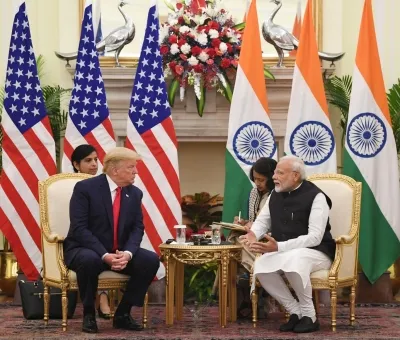
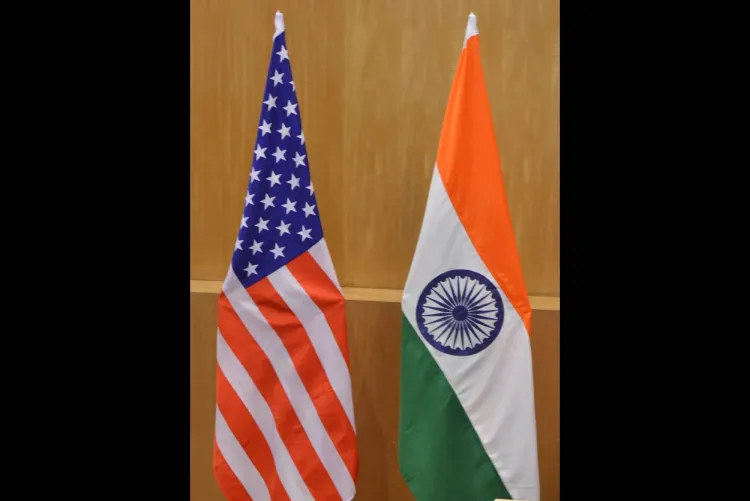
New Delhi, Feb 7 (NationPress) India and the US have successfully established a framework for an interim agreement that fosters reciprocal and mutually beneficial trade. This agreement aims to enhance market access commitments while bolstering more resilient supply chains.
Under this agreement, the US will revoke tariffs on specific aircraft and aircraft parts from India, as outlined in Proclamation 9704 dated March 8, 2018, thereby addressing national security concerns.
In alignment with US national security standards, India will benefit from a preferential tariff rate quota for automotive parts, corresponding to tariffs established in Proclamation 9888 dated May 17, 2019.
According to a joint statement, “Dependent on the outcomes of the US Section 232 investigation into pharmaceuticals and pharmaceutical ingredients, India will achieve negotiated outcomes concerning generic pharmaceuticals and ingredients.”
Additionally, India is set to reduce or eliminate tariffs on a host of US industrial goods and numerous US food and agricultural items, such as dried distillers’ grains (DDGs), red sorghum for animal feed, tree nuts, both fresh and processed fruit, soybean oil, wine, spirits, and more.
The US will implement a reciprocal tariff rate of 18 percent under Executive Order 14257 dated April 2, 2025, on goods originating from India, which includes textiles, leather, footwear, organic chemicals, home décor, artisanal products, and specific machinery.
The statement also indicated that upon successful conclusion of the Interim Agreement, the US will abolish the reciprocal tariff on a broad array of goods specified in the Potential Tariff Adjustments for Aligned Partners Annex to Executive Order 14346 dated September 5, 2025, which encompasses generic pharmaceuticals, gems, diamonds, and aircraft parts.
Furthermore, the US and India are committed to providing each other with preferential market access in sectors of mutual interest on a continuous basis.
Recognizing the significance of collaboration in addressing long-standing issues, India has also pledged to tackle enduring non-tariff barriers affecting trade in US food and agricultural products.
India aims to invest $500 billion in US energy products, aircraft and aircraft parts, precious metals, technology products, and coking coal over the upcoming five years.
Point of View
The interim trade agreement between India and the US marks a significant milestone in fostering economic cooperation. This collaboration emphasizes the importance of addressing trade barriers while ensuring mutual benefits. It reflects a strategic approach to enhancing supply chain resilience and market access, which is crucial for both countries' economic growth.
NationPress
19 Sept 2026
Frequently Asked Questions
What does the interim trade agreement entail?
The interim trade agreement between India and the US includes tariff reductions on specific goods, enhanced market access commitments, and measures to strengthen supply chain resilience.
How will this agreement impact US-India trade relations?
This agreement is expected to enhance US-India trade relations by eliminating tariffs on key goods and promoting a more favorable trading environment.
What sectors are affected by the tariff reductions?
The tariff reductions will affect sectors such as aircraft parts, automotive parts, industrial goods, and a variety of food and agricultural products.
Why is addressing non-tariff barriers important?
Addressing non-tariff barriers is crucial to facilitate smoother trade flows and ensure that both nations can benefit from the agreement effectively.
What is India's investment plan over the next five years?
India plans to invest $500 billion in US energy products, aircraft parts, precious metals, technology products, and coking coal over the next five years.