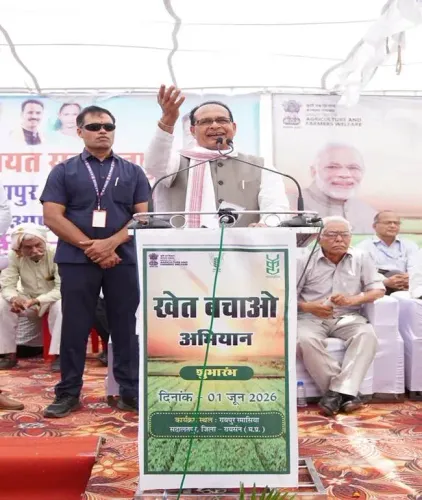
Khet Bachaao Abhiyaan targets 50 lakh farmers across 700 districts for sustainable farming
Synopsis
The Centre has rolled out Khet Bachaao Abhiyaan-Rabi 2026, deploying over 12,000 scientists across 700 districts to reach 50 lakh farmers by 30 November. With more than 46% of India's workforce tied to agriculture, the campaign's push for balanced fertiliser use and natural farming takes on outsized economic importance — and tests whether large-scale awareness drives can actually shift ground-level farming behaviour.
Key Takeaways
The Centre launched Khet Bachaao Abhiyaan (KBA)-Rabi 2026 running from 22 October to 30 November 2026 .
Target outreach: 50 lakh farmers across 700 districts and 50,000 villages .
Over 12,000 scientists and ATMA functionaries deployed across 4,150 teams involving KVKs and ATMA.
50,000 field demonstrations and 11,750 structured training sessions planned; in-person target is 10 lakh farmers .
Digital outreach envisaged to reach 2.5 crore farmers via social media.
100 high fertiliser-consuming districts prioritised for strengthened outreach on balanced nutrient management.
The Central government has launched Khet Bachaao Abhiyaan (KBA)-Rabi 2026, a nationwide campaign running from 22 October to 30 November 2026, with a target outreach of 50 lakh farmers across 700 districts and 50,000 villages. The initiative, confirmed through an official factsheet released on Monday, 2 November, aims to promote soil health, balanced fertiliser use and sustainable agriculture practices during the Rabi cropping season.
What the Campaign Addresses
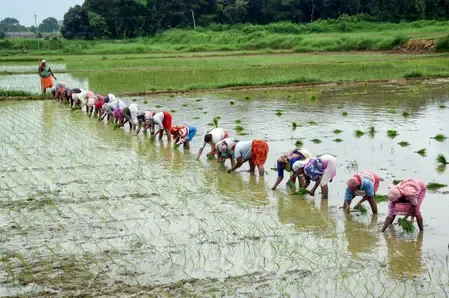
The campaign targets a set of pressing agrarian challenges: imbalanced nutrient application, declining soil organic matter, rising cultivation costs, and degradation of natural resources. It actively encourages natural farming, water conservation and efficient resource use — concerns that have grown more acute as input costs squeeze farmer margins across India's agricultural heartland.
States and Union Territories have been specifically instructed to prioritise 100 high fertiliser-consuming districts, where overuse of chemical inputs has historically caused the greatest soil degradation.
Scale and Deployment
The campaign deploys 4,150 teams involving Krishi Vigyan Kendras (KVKs) and the Agricultural Technology Management Agency (ATMA), backed by more than 12,000 scientists and ATMA functionaries. Each of the 950 ICAR institute teams is assigned three village visits per week, while the 700 KVK teams are expected to conduct four visits per week, with each visit targeting participation from 100 farmers.
Across a five-week period, the campaign envisages 5,650 awareness programmes with an estimated outreach of 28.25 lakh farmers. Additionally, 50,000 field demonstrations and 11,750 structured training sessions are planned, with an intended participation of 20 farmers per demonstration — projecting a combined in-person reach of 10 lakh farmers.
Digital Outreach Component
Beyond on-ground mobilisation, the campaign projects a social media outreach of 1.5 crore farmers, with overall digital outreach envisaged to expand to 2.5 crore. This integrated approach combines farmer awareness drives, capacity building, field demonstrations and digital platforms to accelerate uptake of improved farming practices at scale.
Why Soil Health Matters
With over 46 per cent of India's workforce engaged in agriculture and allied activities, soil health directly influences food systems, rural incomes and broader economic stability. Healthy soils support higher crop yields while reducing farmer dependence on costly external inputs. Notably, decades of heavy fertiliser subsidies have inadvertently incentivised nutrient imbalance, making corrective campaigns like KBA-Rabi 2026 a policy priority as India seeks to simultaneously boost productivity and cut input costs.
The campaign's success will ultimately depend on last-mile execution — whether the targeted village visits and demonstrations translate into measurable changes in farmer behaviour before the Rabi sowing window closes.
Point of View
But ambition and execution are different things. India has a long history of large-format agricultural awareness campaigns that generate impressive headline numbers — teams deployed, villages visited, brochures distributed — without meaningfully shifting fertiliser application ratios at the farm level. The Centre's decision to prioritise 100 high fertiliser-consuming districts is the right instinct, but the campaign lacks any publicly stated mechanism to measure behavioural change post-demonstration. With the Rabi sowing window already open, the five-week timeline is tight. Whether 12,000 scientists can outrun entrenched input habits in that window is the real question — and no factsheet answers it.
NationPress
2 Nov 2026
Frequently Asked Questions
What is Khet Bachaao Abhiyaan-Rabi 2026?
Khet Bachaao Abhiyaan (KBA)-Rabi 2026 is a nationwide campaign launched by the Central government from 22 October to 30 November 2026 to promote soil health, balanced fertiliser use and sustainable agriculture. It targets outreach to approximately 50 lakh farmers across 700 districts and 50,000 villages through field demonstrations, training sessions and digital outreach.
How many farmers does the campaign aim to reach?
The campaign targets a total outreach of 50 lakh farmers through on-ground activities, with an additional digital outreach envisaged to reach up to 2.5 crore farmers via social media platforms. In-person field demonstrations alone aim to cover 10 lakh farmers, with 20 participants per demonstration.
Which districts are being prioritised under the campaign?
States and Union Territories have been directed to prioritise 100 high fertiliser-consuming districts for strengthened outreach and balanced nutrient management. These are districts where overuse of chemical fertilisers has caused the most significant soil health concerns.
How many scientists and institutions are involved?
The campaign deploys more than 12,000 scientists and ATMA functionaries through 4,150 teams involving Krishi Vigyan Kendras (KVKs) and the Agricultural Technology Management Agency (ATMA). Additionally, 950 ICAR institute teams each conduct three village visits per week, while 700 KVK teams conduct four visits per week.
Why is soil health significant for India's agriculture?
Over 46% of India's workforce is engaged in agriculture and allied activities, making soil health central to both food security and economic stability. Declining soil organic matter and imbalanced nutrient application raise cultivation costs and reduce yields, which the campaign seeks to address through awareness, demonstrations and promotion of natural farming practices.