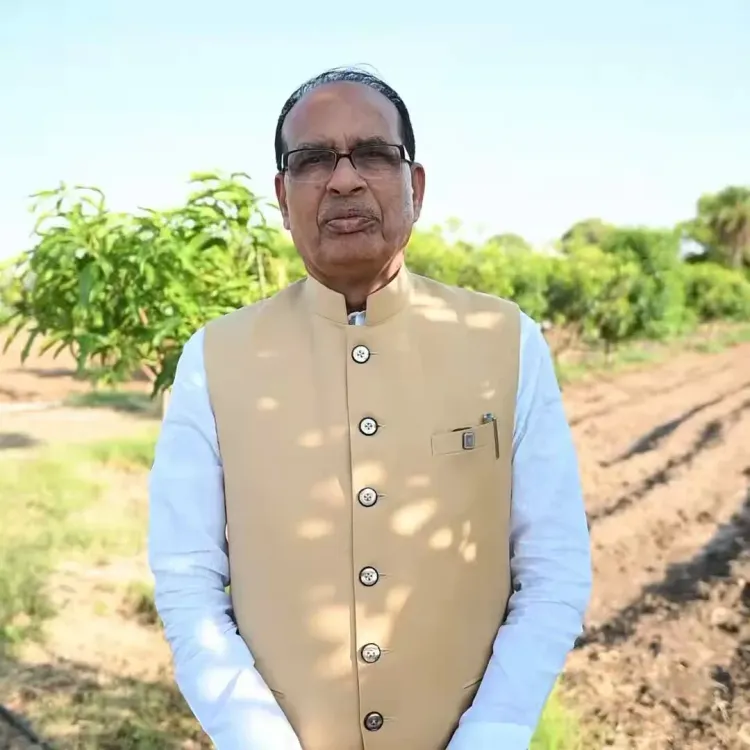
Shivraj Singh Chouhan launches Khet Bachao Abhiyan for soil health
Synopsis
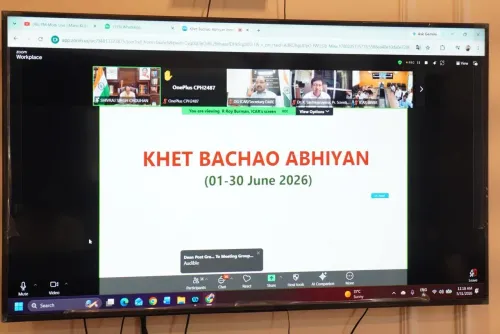
Union Agriculture Minister Shivraj Singh Chouhan has announced 'Khet Bachao Abhiyan', a month-long nationwide campaign from 1–30 June 2026, citing PM Modi's call. Agricultural scientists, KVK experts and officials will visit villages to promote balanced fertiliser use, expose fake pesticides, and encourage natural farming.
Key Takeaways
Khet Bachao Abhiyan will run from 1 June to 30 June 2026 across all of India.
The campaign was announced by Union Agriculture Minister Shivraj Singh Chouhan on 31 May 2026 , citing a call by PM Narendra Modi .
Agricultural scientists, Krishi Vigyan Kendra (KVK) experts, government officials, elected representatives, and progressive farmers will conduct village-level outreach.
Key focus areas include balanced fertiliser use, identification of spurious pesticides, and a gradual shift toward natural farming .
The campaign builds on earlier schemes including the Soil Health Card (2015) and Paramparagat Krishi Vikas Yojana (2015).
Declining soil fertility due to unbalanced chemical input use is cited as the central problem the campaign seeks to address.
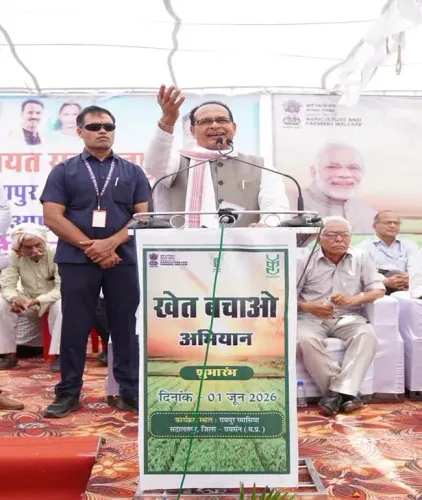
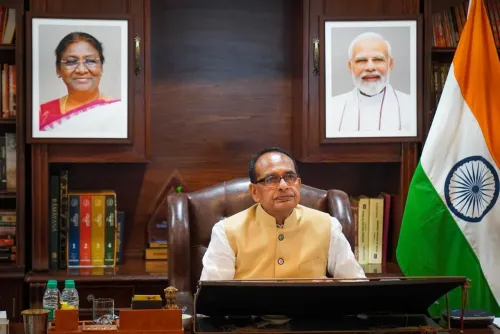
Union Agriculture Minister Shivraj Singh Chouhan on Sunday, 31 May 2026 announced a nationwide campaign called 'Khet Bachao Abhiyan' (Save the Farm Campaign), to be conducted across India from 1 June to 30 June 2026, aimed at educating farmers on balanced fertiliser use, identifying spurious pesticides, and transitioning toward natural farming.
Context
Addressing farmers directly, Chouhan wrote: 'Dharti hamaari maa hai' ('The earth is our mother'), stressing that unbalanced use of chemical fertilisers and pesticides is steadily eroding soil fertility. He framed the campaign as a response to a call by Prime Minister Narendra Modi, positioning it as a people's movement rather than a top-down government directive.
The minister urged farmers to join the campaign, follow scientific advice on fertiliser application, and gradually move toward natural farming practices. The post, written in Hindi, was addressed to 'priya kisaan bahon aur bhaaiyon' — 'dear farmer sisters and brothers' — signalling an outreach tone rather than a policy announcement.
Policy Backdrop
The Khet Bachao Abhiyan sits within a longer arc of central government initiatives targeting soil degradation and chemical overuse. The Soil Health Card scheme, launched in 2015, was designed to encourage balanced fertiliser application based on soil-test results, while the Paramparagat Krishi Vikas Yojana, also introduced in 2015, has supported organic farming clusters and helped farmers reduce dependence on synthetic inputs.
The new campaign extends this policy lineage by deploying a ground-level mobilisation model. Agricultural scientists, experts from agricultural universities, and officials from Krishi Vigyan Kendras (KVKs) — the network of farm science centres under ICAR — will travel village to village alongside government officers, elected representatives, and progressive farmers to deliver hands-on guidance.
Stakeholders and Impact
Small and marginal farmers stand as the primary audience for the campaign, particularly those in regions where decades of heavy chemical application have visibly reduced crop yields and soil organic matter. The village-level outreach model is intended to reach farmers who may have limited access to formal agricultural extension services.
The involvement of KVKs, which operate in nearly every district of the country, gives the campaign significant last-mile reach. Identifying counterfeit and substandard pesticides — one of the campaign's stated goals — addresses a persistent problem that causes both crop losses and unnecessary chemical exposure for farming households.
What's Next
The effectiveness of the June 2026 rollout will likely be measured through farmer participation numbers and any reported shifts in input-use behaviour at the district level. State governments will be expected to coordinate with central officials and KVKs to organise village camps and awareness sessions throughout the month.
If the campaign generates measurable uptake, it could inform budget allocations and programme design for subsequent agricultural seasons, particularly as the government continues to push the natural farming agenda as a long-term complement to food security policy.
Point of View
The Agriculture Ministry is signalling that this cycle's push will lean on political energy and ground-level presence rather than financial incentives alone. The inclusion of fake-pesticide identification as a campaign pillar is a notably practical addition, addressing farmer grievances that have accumulated for years. Whether month-long awareness drives translate into durable changes in input behaviour remains the central test for this and every predecessor scheme.
NationPress
30 Jul 2026
Frequently Asked Questions
What is Khet Bachao Abhiyan?
'Khet Bachao Abhiyan' (Save the Farm Campaign) is a nationwide government campaign announced by Union Agriculture Minister Shivraj Singh Chouhan, running from 1 to 30 June 2026, to educate farmers on balanced fertiliser use, help identify spurious pesticides, and encourage a shift toward natural farming.
When does Khet Bachao Abhiyan start and end?
The campaign runs for the entire month of June 2026, from 1 June to 30 June 2026 , across villages throughout India.
Who will conduct the Khet Bachao Abhiyan outreach?
Agricultural scientists, experts from agricultural universities, Krishi Vigyan Kendra (KVK) staff, central and state government officials, elected representatives, and progressive farmers will together visit villages to deliver guidance to farmers.
Why is the government running a soil health campaign?
Unbalanced use of chemical fertilisers and pesticides has steadily reduced soil fertility across India. The campaign aims to reverse this trend by promoting scientific, balanced input use and a gradual transition to natural farming methods.
How does Khet Bachao Abhiyan relate to earlier farm schemes?
It continues the policy direction of earlier initiatives such as the Soil Health Card scheme and Paramparagat Krishi Vikas Yojana, both launched in 2015, which also aimed to reduce chemical inputs and promote organic and natural farming practices.