Rajnath Singh Meets Philippines Defence Chief at ADMM-Plus in Cebu
Synopsis
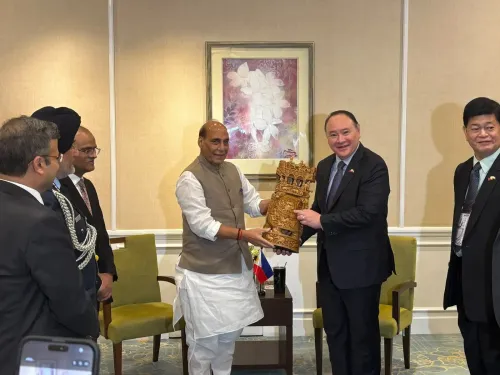
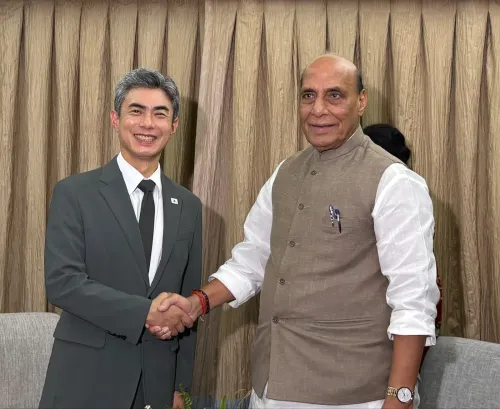
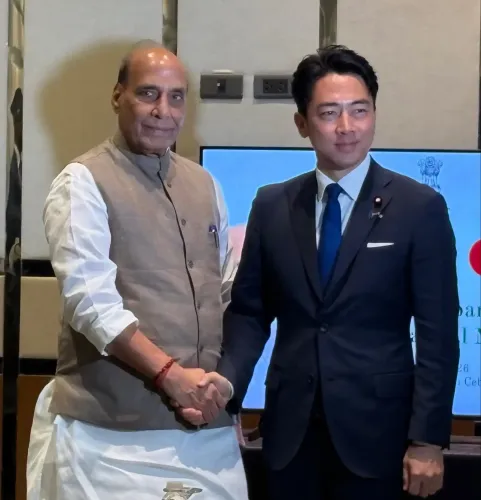
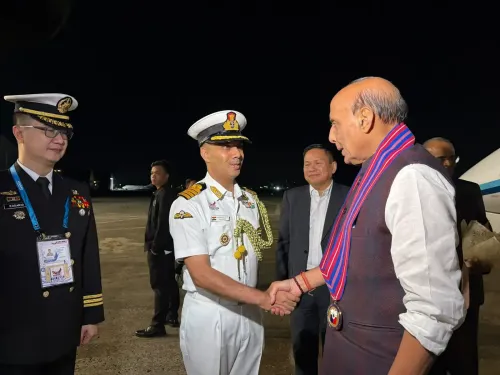
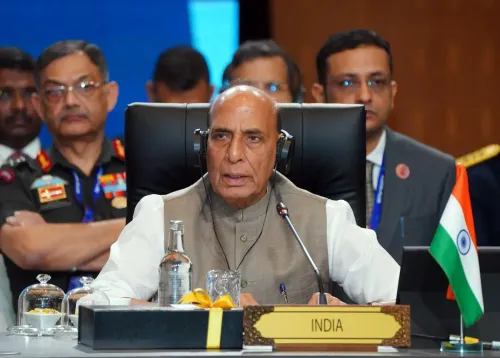
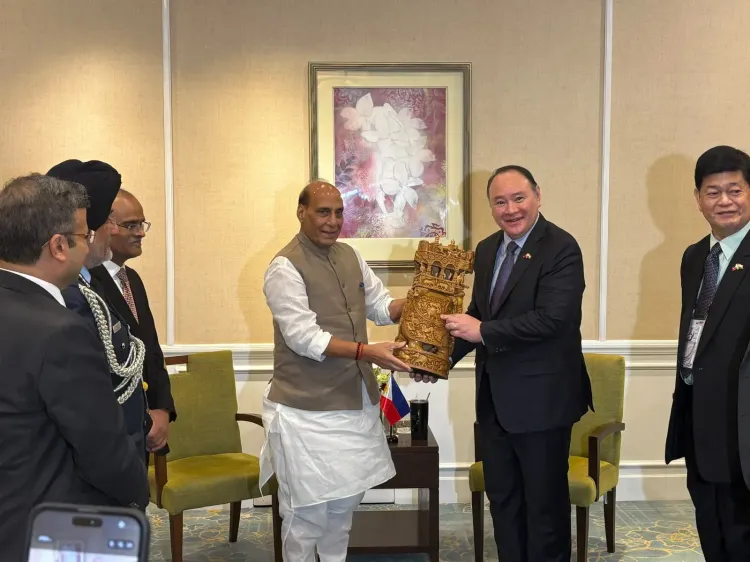
Defence Minister Rajnath Singh met Philippines Secretary of National Defense Gilberto C. Teodoro Jr. on the sidelines of the 13th ADMM-Plus in Cebu on October 28, 2026. The two reviewed ongoing defence cooperation and discussed maritime security and joint defence production, reaffirming India's commitment to a free, open, and inclusive Indo-Pacific.
Key Takeaways
Rajnath Singh met Philippines Defence Secretary Gilberto C.
Teodoro Jr. on October 28, 2026 , on the sidelines of the 13th ADMM-Plus in Cebu .
Talks focused on maritime security and joint defence production , signalling ambitions beyond a standard buyer-seller relationship.
Singh reaffirmed India's commitment to a 'free, open, and inclusive Indo-Pacific region.' The ADMM-Plus , established in 2010 , includes India among eight dialogue partners alongside the 10 ASEAN states.
The meeting fits India's Act East Policy (launched 2014 ) of deepening strategic and defence ties with ASEAN nations.
Follow-up bilateral talks may yield specific announcements on co-production projects or training exchanges.
Maritime security and joint defence production are now firmly on the table between India and the Philippines — and Union Defence Minister Rajnath Singh used the world's most consequential multilateral defence forum to make that point in person. On the sidelines of the 13th ASEAN Defence Ministers' Meeting-Plus (ADMM-Plus) in Cebu, Philippines, Singh met Secretary of National Defense Gilberto C. Teodoro Jr. on Wednesday, October 28, 2026, to take stock of a bilateral partnership that is quietly growing in strategic weight.
What Singh and Teodoro put on the table in Cebu
Singh described the meeting as 'productive,' saying both sides 'reviewed our ongoing defense cooperation and discussed avenues to further strengthen our strategic partnership, particularly focusing on maritime security and joint defense production.' The language is deliberately specific: maritime security nods to shared anxieties about freedom of navigation in the South China Sea, while joint defence production signals ambitions that go well beyond buyer-seller transactions. The Philippines is among a growing cohort of Southeast Asian nations exploring co-development and manufacturing arrangements with India as New Delhi pushes hard to become a credible defence exporter.
Singh closed with a framing that has become a signature of India's Indo-Pacific posture: 'India remains committed to fostering a free, open, and inclusive Indo-Pacific region.' Those three adjectives — free, open, inclusive — are not accidental. They constitute a deliberate counter-narrative to any claim of exclusive dominance over regional sea lanes, and they resonate especially with a nation like the Philippines that faces direct maritime pressure.
ADMM-Plus: the forum that makes this meeting count
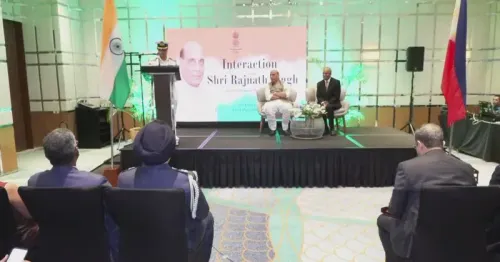
The ADMM-Plus, established in 2010, brings together defence ministers from the 10 ASEAN states plus eight dialogue partners — among them India, the United States, China, Japan, and Australia. It is precisely the kind of multilateral architecture India has sought to embed itself in as part of its Act East Policy, launched in 2014, which repositioned India's engagement with ASEAN from a peripheral relationship to a strategic priority. Bilateral pull-asides on the sidelines of ADMM-Plus are where real business often gets done, away from the constraints of formal plenary communiqués.
Gilberto C. Teodoro Jr., who took charge as the Philippines' Secretary of National Defense in 2023, has overseen an accelerated modernisation of the country's armed forces and an active search for diversified defence partnerships. His engagement with Singh fits that pattern precisely.
India's Act East momentum and the Indo-Pacific stakes
India has steadily deepened defence ties across ASEAN through capacity-building, training exchanges, and — increasingly — hardware and technology transfers. The emphasis on joint defence production in the Singh–Teodoro conversation aligns with India's broader Aatmanirbhar Bharat (self-reliant India) drive, which has set ambitious targets for domestic defence manufacturing and export growth. Pairing that industrial ambition with a partner that shares strategic concerns about regional maritime order gives the bilateral a convergence of interests that is both economic and geopolitical.
Watch for follow-up announcements on specific co-production projects or structured training exchanges in the weeks after Cebu — that is where the diplomatic language of 'avenues to further strengthen' typically translates into signed frameworks.
Point of View
Diversifying defence partnerships beyond its traditional alliances has become a political and operational necessity given its frontline exposure in the South China Sea; India, with growing defence export ambitions and a complementary geopolitical narrative, is a natural fit. The ADMM-Plus sideline format is no accident: India has consistently used multilateral forums to lock in bilateral momentum, converting diplomatic goodwill into structured programmes. If joint production talks advance, it would mark a qualitative step up from the training and capacity-building tier that has defined India–ASEAN defence ties so far.
NationPress
28 Oct 2026
Frequently Asked Questions
What did Rajnath Singh discuss with the Philippines Defence Secretary in Cebu?
Rajnath Singh and Philippines Secretary of National Defense Gilberto C. Teodoro Jr. reviewed ongoing defence cooperation and discussed strengthening their strategic partnership, with a specific focus on maritime security and joint defence production .
What is ADMM-Plus and why is it significant for India?
The ADMM-Plus (ASEAN Defence Ministers' Meeting-Plus), established in 2010 , is a multilateral defence dialogue forum comprising 10 ASEAN states and eight partner nations including India. It is a key platform for India's Act East Policy and allows New Delhi to engage directly with Southeast Asian defence establishments.
Why is India focusing on joint defence production with the Philippines?
India is pushing for joint defence production with partners like the Philippines as part of its broader Aatmanirbhar Bharat initiative to grow domestic defence manufacturing and expand exports, while the Philippines seeks to modernise its armed forces through diversified international partnerships.
What is India's position on the Indo-Pacific?
India advocates for a 'free, open, and inclusive Indo-Pacific' — a formulation that supports rules-based freedom of navigation and opposes exclusive dominance of regional sea lanes, a stance that resonates particularly with nations like the Philippines facing maritime pressure.
Where does the India–Philippines defence relationship stand?
India and the Philippines have been deepening defence ties through engagements like ADMM-Plus and bilateral meetings. The October 2026 Cebu talks mark an escalation in focus toward joint production and maritime security , suggesting the relationship is moving beyond basic capacity-building.