New Labour Codes shift India's workplace rules toward collaboration and social security

Synopsis
India's four Labour Codes are moving from paper to practice — and the government's pitch is ambitious: simplified compliance via e-portals, social security extended to gig and platform workers, and skilling databases linked to jobs. With 316 districts already under awareness drives and most states having pre-published rules, the implementation clock is ticking. Whether MSMEs can actually navigate the new framework without legal hand-holding will determine if the reform delivers or merely reshuffles paperwork.
Key Takeaways
India's new Labour Codes consolidate multiple legacy laws, reduce provisions, and introduce uniform digitalised compliance via e-portals .
Chandra Bhushan Kumar , Secretary of the Ministry of Labour and Employment , confirmed awareness and training programmes are running across 316 districts .
The codes aim to extend social security to gig, platform, and unorganised workers through digital integration of welfare schemes.
Most states have pre-published their rules; floor wage clarity and state-level rule-making are still being finalised.
PHDCCI emphasised that MSMEs need simple, self-navigable compliance frameworks to avoid over-reliance on legal advisors.
India is being positioned as a Global South reference model for modern labour standards.
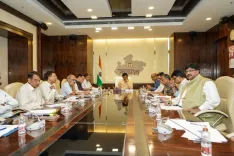
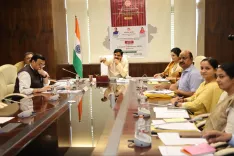
India's four new Labour Codes represent a fundamental departure from a control-driven regulatory model to a collaborative framework engaging government, industry, and workers, senior officials and policy experts said on Thursday, 24 September 2026, at a seminar in New Delhi. The codes are designed to simplify compliance, facilitate employment linkages, and extend social security to workers in the unorganised and gig economy.
Key Provisions and Structural Changes
Chandra Bhushan Kumar, Secretary of the Ministry of Labour and Employment, outlined the core architecture of the reform: consolidation of multiple legacy laws into four codes, a sharp reduction in total provisions, and a shift to digitalised compliance through e-portals and uniform return filing. A standardised definition of wages across the codes was flagged as a particularly significant step toward reducing interpretive ambiguity for employers and workers alike.
Kumar noted that the ministry is running awareness and training programmes across 316 districts with industrial clusters, simultaneously preparing state labour machinery and master trainers for ground-level implementation. He added that most states have pre-published their rules, and work is ongoing to complete state-level rule-making while clarifying floor wages and other implementation details.
Social Protection for Gig and Unorganised Workers
'The new framework provides a stronger basis for extending social protection to gig, platform and unorganised workers, as the ministry works towards connecting government welfare schemes through digital platforms to identify gaps and develop sustainable, long-term labour standards,' Kumar said at the seminar organised by PHDCCI (PHD Chamber of Commerce and Industry).
This is a notable policy signal: India's gig economy — estimated to employ tens of millions — has historically operated outside formal social security structures. The digital-platform integration approach signals an intent to change that systematically rather than through standalone schemes.
Employment, Skills, and India's Global Positioning
Kumar stressed strengthening the connection between employment, skills, and job opportunities through the National Career Service and the integration of employment and skilling databases. He also pointed to growing interest from the Global South in India's labour reform model as an opportunity to position the country as a reference point for a modern labour ecosystem.
MSME Concerns and Implementation Outlook
Dr Ranjeet Mehta, CEO and Secretary General of PHDCCI, underlined the importance of simple, accessible implementation — particularly for MSMEs, which he described as the backbone of the Indian economy. He cautioned that the framework must be easy to understand and navigate without excessive dependence on legal advisors, warning that complexity at the compliance layer could negate the reform's intent.
As India positions itself for leadership in manufacturing and services, the effective rollout of the Labour Codes will be a critical enabler — but the gap between rule publication and on-ground implementation across diverse state capacities remains the central challenge to watch.
Point of View
And the gap between gazette notification and actual implementation has stretched long enough to raise legitimate questions about political will at the state level. The digitalisation thrust — e-portals, uniform returns, integrated skilling databases — is directionally correct, but India has a mixed record of welfare-scheme-to-beneficiary connectivity, especially for unorganised workers who lack stable digital identities. The MSME concern flagged by PHDCCI is not cosmetic: if small employers still need lawyers to decode the 'simplified' codes, the reform has solved a legislative problem while leaving the practical one intact. The Global South positioning is aspirational, but credibility there depends entirely on whether gig workers in India can actually access the social security the codes promise — before the next reform cycle begins.
NationPress
24 Sept 2026
Frequently Asked Questions
What are India's new Labour Codes?
India's new Labour Codes consolidate dozens of central labour laws into four broad codes covering wages, industrial relations, social security, and occupational safety. They were passed by Parliament and are designed to simplify compliance, standardise wage definitions, and extend social protection to gig and unorganised workers.
How do the Labour Codes help gig and platform workers?
The codes provide a legal basis for extending social security to gig and platform workers by enabling the government to connect welfare schemes through digital platforms. The Ministry of Labour is working on identifying coverage gaps and building sustainable long-term standards for this workforce.
What is the current status of Labour Codes implementation across states?
Most states have pre-published their rules under the new Labour Codes, and the Ministry of Labour is working to complete the state-level rule-making process. Awareness and training drives are under way in 316 districts with industrial clusters, along with preparation of state labour machinery and master trainers.
Why are MSMEs singled out in discussions about the Labour Codes?
MSMEs are the largest employers in India's formal and semi-formal economy and have historically struggled with complex, overlapping labour regulations. PHDCCI has stressed that the new framework must be simple enough for small businesses to comply without heavy reliance on legal advisors, or the reform's benefits will not reach them.
What role does the National Career Service play under the new Labour Codes?
The National Career Service is being strengthened to link employment, skills, and job opportunities by integrating employment and skilling databases. This is part of the broader goal of connecting labour market infrastructure to the compliance and social security architecture of the new codes.