LIC posts strong Q2 FY27 results; IDBI Bank sale won't hurt bancassurance: CEO
Synopsis
LIC's CEO R Doraiswamy has confirmed strong Q2 FY27 results with improved VNB margins, even as ULIP sales dipped — partly by design. His assurance that IDBI Bank's pending disinvestment won't hurt LIC's bancassurance business removes a key investor concern, while a sharper pivot toward protection and health signals LIC is finally moving beyond its legacy savings-heavy model.
Key Takeaways
LIC posted strong Q2 and H1 FY27 performance with growth in new business premium, total premium income, and improved VNB margins , according to CEO R Doraiswamy .
ULIP sales declined in Q2 due to both equity market volatility and a deliberate strategic shift toward higher-ticket ULIPs and protection products.
Doraiswamy said the proposed disinvestment of IDBI Bank is unlikely to have any major impact on LIC's bancassurance business .
LIC is broadly within IRDAI 's proposed distribution cost caps and has submitted feedback on specific products to the regulator.
Future strategy focuses on protection, health, annuity, and pension products; recently launched Bima Platinum , Jeevan Raksha , LIC Cancer Cover , and LIC Health Shield .
The Bima Sakhi scheme aims to place at least one woman agent in every gram panchayat as part of the 'Insurance for All by 2047' goal.
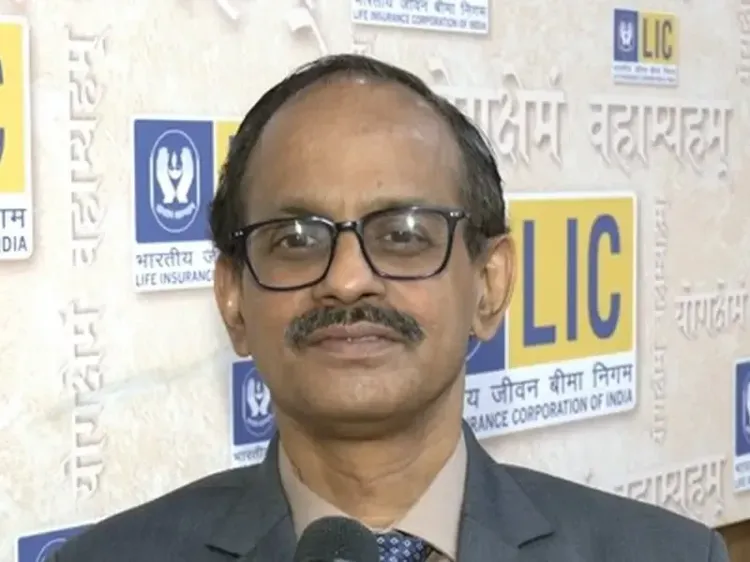
Life Insurance Corporation of India (LIC) delivered robust financial performance in the second quarter and first half of FY27, recording healthy growth in new business premium, total premium income, and other key metrics, Managing Director and CEO R Doraiswamy said on 7 November 2026. The country's largest insurer also reported an improvement in its Value of New Business (VNB) margin compared to the same period last year.
Q2 Performance: What Drove Growth
Doraiswamy attributed the VNB margin improvement to a favourable shift in product mix and enhanced operational efficiency. 'Several positive changes have taken place at the operational level, which have directly contributed to profitability. While there were some adverse effects related to risk-free interest rates, overall, the company managed to record better margins,' he said.
The improvement is notable given an otherwise challenging macro environment marked by equity market volatility, which pressured sales of market-linked products, particularly Unit Linked Insurance Plans (ULIPs). Investor appetite for regular-premium market-linked products moderated, resulting in a decline in ULIP sales during the quarter.
ULIP Decline: Market Conditions and Strategic Pivot
The drop in ULIP sales was not entirely due to market turbulence. Doraiswamy noted that LIC had proactively made strategic changes at the management level, deliberately steering focus toward higher-ticket ULIPs and the protection business — segments that offer superior margins. With market sentiment expected to stabilise, the corporation is hopeful of stronger ULIP performance in the third and fourth quarters of FY27.
This marks a broader strategic repositioning for LIC, which has historically been weighted toward low-margin savings products. The pivot toward protection and health mirrors a trend seen across private-sector peers over the past three years.
IDBI Bank Disinvestment: Bancassurance Partnership to Continue
On the long-pending proposed strategic disinvestment of IDBI Bank — in which LIC holds a significant stake — Doraiswamy expressed confidence that any ownership change would not materially disrupt LIC's bancassurance arrangements. 'IDBI Bank has been a key partner of LIC for a long time, and we expect this partnership to continue in the future, even as the bank has other life insurance partners,' he said.
The reassurance is significant for investors and policyholders who had flagged bancassurance continuity as a risk. IDBI Bank remains one of LIC's primary distribution channels for insurance products, and any disruption could have affected premium volumes.
Regulatory Outlook and Distribution Costs
On proposed changes by the Insurance Regulatory and Development Authority of India (IRDAI) to cap distribution costs, Doraiswamy said LIC was broadly already compliant with the proposed limits across most product categories. The corporation has submitted suggestions to the regulator on specific products and premium payment terms, and he expressed confidence that IRDAI would factor in stakeholder feedback before finalising the norms.
He also emphasised LIC's view of its individual agent network — one of the largest in the world — as long-term strategic partners rather than a mere distribution channel. Efforts are underway to improve agent productivity, training, and capacity building, with a particular emphasis on Tier-2 and Tier-3 cities.
Future Strategy: Protection, Health, Annuity and Digital Security
LIC's forward strategy centres on protection, health insurance, annuity, and pension products. The corporation has recently launched Bima Platinum, Jeevan Raksha, LIC Cancer Cover, and LIC Health Shield, signalling its intent to broaden its product portfolio beyond traditional endowment and savings plans.
On cybersecurity, Doraiswamy said LIC had made substantial investments in AI-based security measures for its IT systems. The company's digital infrastructure is classified as critical information infrastructure, receiving special monitoring and government support.
Aligning with the government's 'Insurance for All by 2047' vision, LIC is pursuing geographic expansion through the Bima Sakhi scheme, which aims to place at least one woman agent in every gram panchayat across India. With Q3 underway and market conditions expected to improve, LIC's ability to sustain margin gains while scaling protection volumes will be the key performance test in the months ahead.
Point of View
But the detail that matters most is the VNB margin improvement — the metric that best captures whether India's largest insurer is becoming a more profitable business or just a bigger one. The strategic de-emphasis of low-ticket ULIPs in favour of protection is the right call, but LIC has made similar pivots before without fully executing them. On IDBI Bank, Doraiswamy's confidence is qualified: the bank already distributes for multiple life insurers, so LIC's bancassurance volumes are not guaranteed regardless of who the eventual owner is. The real test of the CEO's optimism will come in Q3 and Q4 numbers — not in interview remarks.
NationPress
8 Nov 2026
Frequently Asked Questions
How did LIC perform in Q2 FY27?
LIC delivered strong performance in Q2 and the first half of FY27, with healthy growth in new business premium, total premium income, and an improvement in Value of New Business (VNB) margins compared to the previous year. CEO R Doraiswamy attributed the margin gains to a better product mix and improved operational efficiency.
Why did LIC's ULIP sales fall in Q2 FY27?
ULIP sales declined due to two factors: equity market volatility dampening investor appetite for market-linked products, and a deliberate strategic shift by LIC's management to focus more on higher-ticket ULIPs and the protection business. Doraiswamy indicated the company expects ULIP performance to recover as market sentiment improves.
Will the IDBI Bank disinvestment affect LIC's bancassurance business?
LIC's CEO R Doraiswamy said the proposed strategic disinvestment of IDBI Bank is unlikely to have any major impact on LIC's bancassurance operations. He noted that IDBI Bank has been a long-term partner and the relationship is expected to continue even after any ownership change, as the bank already works with multiple life insurance partners.
What is LIC's strategy going forward?
LIC is focusing on protection, health insurance, annuity, and pension products, while pursuing balanced growth across savings, ULIPs, and group insurance. It has recently launched new products including Bima Platinum, Jeevan Raksha, LIC Cancer Cover, and LIC Health Shield, and is expanding its agent network into Tier-2 and Tier-3 cities.
What is the Bima Sakhi scheme and how does it relate to LIC's expansion plans?
The Bima Sakhi scheme is LIC's initiative to place at least one woman agent in every gram panchayat across India, supporting the government's 'Insurance for All by 2047' objective. It is part of LIC's broader strategy to deepen insurance penetration in rural and semi-urban areas.