Anand Mahindra mourns Nana Patekar: 'An original'
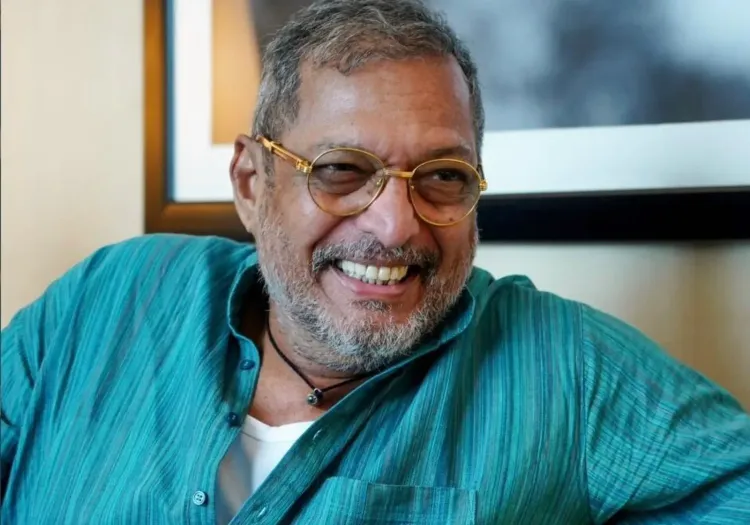
Synopsis
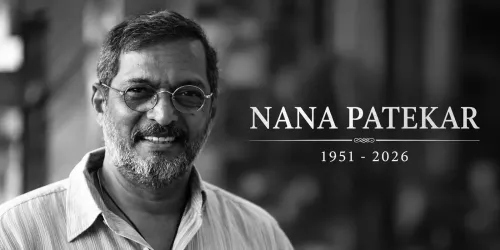
Mahindra Group chairman Anand Mahindra mourned the death of actor Nana Patekar on 8 October 2026, calling him a rare 'original' who transcended cinema to become a cultural sensibility — an individual who, like Marlon Brando, made his very name an attitude.
Key Takeaways
Mahindra Group chairman Anand Mahindra posted a tribute to late actor Nana Patekar on 8 October 2026 .
Mahindra compared Patekar to Marlon Brando — performers whose names evoke an entire attitude, not merely a body of work.
He described Patekar's defining qualities as individuality, authenticity, a refusal to conform, and a wicked sense of humour.
Mahindra distinguished between the loss to Indian cinema (a remarkable actor) and the deeper loss to Indian folklore (a rare original).
He noted he met Patekar only briefly and did not claim personal closeness, lending the tribute unusual candour and credibility.
Indian cinema has lost one of its most singular presences. Mahindra Group chairman Anand Mahindra paid tribute on Thursday, 8 October 2026 to the late actor Nana Patekar, mourning not just the loss of a performer but the disappearance of a rare cultural archetype — one that, as Mahindra put it, had 'become his own adjective.'
The tribute that said more than 'farewell'
Mahindra's tribute was conspicuous for what it refused to do: list films, rattle off awards, cite box-office numbers. Instead, he reached for a global comparison — Marlon Brando — to make the point about a performer so distinctive that a single surname conjures an entire worldview. 'Say 'Brando' and you evoke not just an actor, but a whole attitude, a swagger, a way of looking at the world,' he wrote. 'Nana Patekar belonged to that rare tribe.'
It is a precise and generous framing. Mahindra acknowledged he met Patekar 'only a couple of times and only at large events,' and he was careful not to overstate personal closeness. The tribute's power lay precisely in that honesty: you did not need to know Nana Patekar to feel you knew him. That is the mark of someone who achieved something beyond celebrity.
What 'Nana Patekar' came to mean
Mahindra captured it in four sharp strokes: individuality, authenticity, a refusal to conform, and a wicked sense of humour. These were not merely acting qualities. They were the textures of a public persona so consistent, so unguarded, and so unapologetically itself that the name became shorthand for a certain stance toward life — blunt, warm, fiercely independent.
Patekar spent decades navigating mainstream Hindi cinema without ever quite becoming mainstream in spirit. He was volatile on screen and candid off it, alternating between intense dramatic roles and sharp comedic ones, between big-budget spectacles and quiet, smaller films. That range was part of the mystique. You never fully knew which 'Nana' would show up — and that unpredictability was the point.
'Indian folklore has lost something even rarer'
The sharpest line in Mahindra's post was not about cinema at all. 'Indian cinema has lost a remarkable actor,' he wrote. 'But Indian folklore has lost something even rarer. An original.' The distinction matters. Actors come and go; originals, by definition, do not repeat. Patekar was not a genre, not a school, not an influence that spawned imitators — he was simply and irreducibly himself.
Mahindra closed with a quiet Om Shanti — the traditional Hindu prayer for the peace of a departed soul — paired with a folded-hands gesture. For a tribute from a business leader known for his own carefully cultivated public persona, it was a moment of unaffected simplicity. The kicker wrote itself: when a man who built a global empire pauses to mourn a man who built nothing but himself, that is the truest measure of what was lost.
Point of View
Lifting the tribute above routine celebrity condolence. For brands and institutions watching India's cultural economy, the post underscores how authenticity — the very quality Mahindra attributes to Patekar — is now the scarcest and most valued currency, on screen and off it.
NationPress
8 Oct 2026
Frequently Asked Questions
What did Anand Mahindra say about Nana Patekar?
Anand Mahindra wrote that Nana Patekar belonged to a rare tribe of performers — like Marlon Brando — whose name evokes not just an actor but an entire attitude. He called Patekar 'an original' and said Indian folklore had lost 'a man who became his own adjective.'
When did Nana Patekar pass away?
Based on Anand Mahindra's tribute posted on 8 October 2026, Nana Patekar had passed away around that date. Specific details of the date and cause of death were not confirmed in the post.
Why did Anand Mahindra compare Nana Patekar to Marlon Brando?
Mahindra used the Brando comparison to illustrate how certain performers transcend their craft: hearing the name alone conjures a whole worldview — an attitude, a swagger — rather than merely a list of roles. He argued Nana Patekar had achieved the same in Indian culture.
What was Nana Patekar known for?
Nana Patekar was one of Hindi cinema's most distinctive actors, celebrated for intense dramatic performances, sharp comedic turns, and an unfiltered public persona. He was widely regarded for his individuality and refusal to conform to industry norms.
Is Anand Mahindra personally close to Nana Patekar?
No. Mahindra himself clarified in the post that he met Patekar only a couple of times at large public events and did not claim to have known him personally. His tribute was based on Patekar's public persona and cultural impact.