CM Vishnu Deo Sai Declares Naxalism Ended in Chhattisgarh
Synopsis
Chhattisgarh Chief Minister Vishnu Deo Sai declared on 22 November 2026 that Naxalism — the state's biggest development barrier for decades — has been eliminated, crediting the BJP's 'double engine government' and calling it the start of a new era for the state.
Key Takeaways
CM Vishnu Deo Sai declared on 22 November 2026 that Naxalism in Chhattisgarh has been fully eliminated.
He credited the 'double engine government' — aligned BJP governments at the Centre and in the state since December 2023 — for the breakthrough.
The SAMADHAN doctrine , introduced by the Ministry of Home Affairs in 2017 , provided the national policy framework for countering Left Wing Extremism.
Official data over the past decade showed a consistent decline in LWE violence across Chhattisgarh , Jharkhand and Odisha .
The tribal communities of Bastar stand to gain most from a genuine security transition — opening access to roads, schools and healthcare long delayed by the insurgency.
Independent verification of ground conditions in former Naxal strongholds and state infrastructure rollout announcements are the next key indicators to watch.
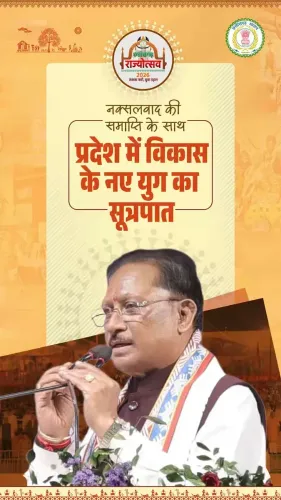
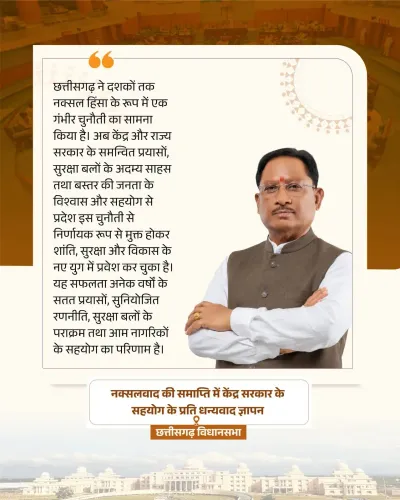
A declaration that would have seemed impossible just a decade ago landed on Sunday: Chhattisgarh Chief Minister Vishnu Deo Sai announced that Naxalism — the state's most stubborn obstacle to development for over five decades — has been eliminated. The claim, made on 22 November 2026, frames this moment as nothing less than a turning point in the state's history.
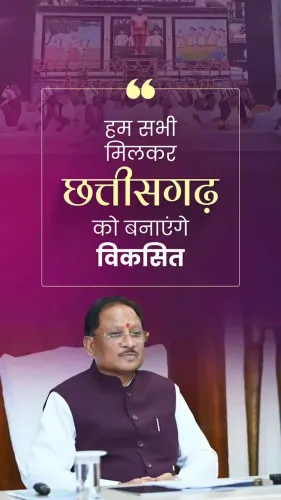
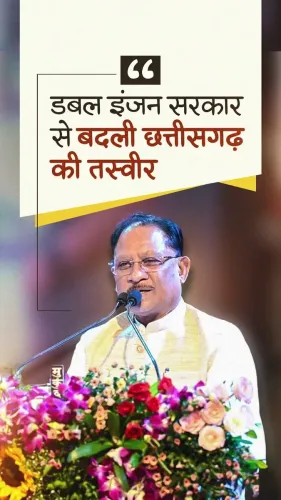
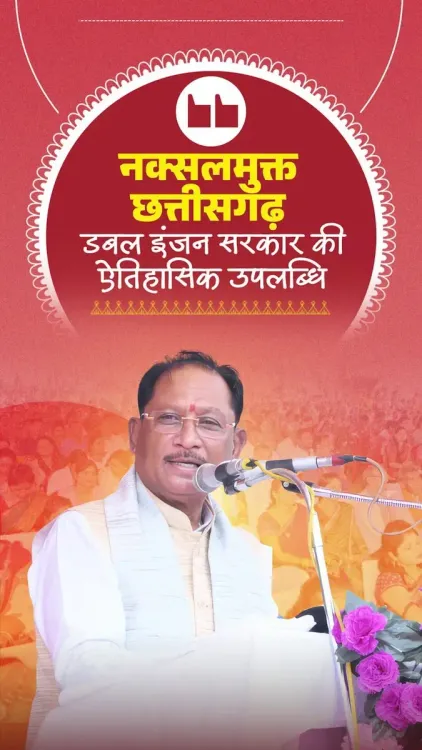
Posting in Hindi, CM Sai wrote: 'डबल इंजन सरकार के दृढ़ संकल्प से आज छत्तीसगढ़ के विकास में सबसे बड़ी बाधा रहा नक्सलवाद समाप्त हो चुका है' — 'With the firm resolve of the double engine government, Naxalism, which was the biggest obstacle to Chhattisgarh's development, has ended today.' He called it a 'yugantakari parivartan' — an epoch-making transformation — and declared the dawn of a new era of 'peace, security and development' for the people of the state.
Five Decades of Left Wing Extremism — and the Push to End It
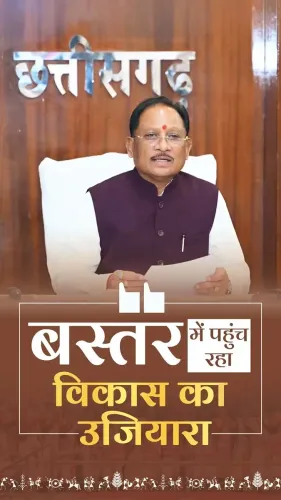
Chhattisgarh, carved out as a separate state in 2000, inherited one of India's most acute Left Wing Extremism crises. The southern districts of Bastar — Dantewada, Sukma, Bijapur — became the heartland of Maoist insurgency, costing hundreds of lives annually among security forces, civilians and tribals alike. For years, the region's mineral wealth sat locked beneath contested, dangerous ground.
The turning point in national policy came in 2017, when the Ministry of Home Affairs unveiled the SAMADHAN doctrine — a multi-pronged framework pairing aggressive security operations with accelerated development spending in affected zones. The doctrine prioritised smart leadership, actionable intelligence, motivation of forces, and dashboard-based monitoring, alongside infrastructure push and local governance.
The 'Double Engine' Factor in Bastar
The BJP's phrase 'double engine government' — meaning aligned ruling parties at the Centre and in the state — has been central to its security pitch in Chhattisgarh since the December 2023 state election that brought Vishnu Deo Sai to power. The argument: coordinated command between New Delhi and Raipur removes the friction that previously slowed operations and development funding.
Official data over the past decade had already shown a consistent decline in violence incidents and the number of districts classified as LWE-affected across Chhattisgarh, Jharkhand and Odisha. The trend accelerated post-2023, with security forces conducting larger, deeper operations into previously inaccessible forest corridors.
What This Means for Tribal Communities and Development
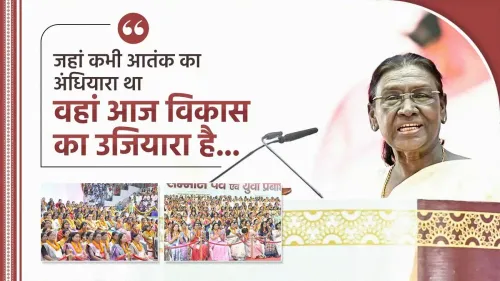
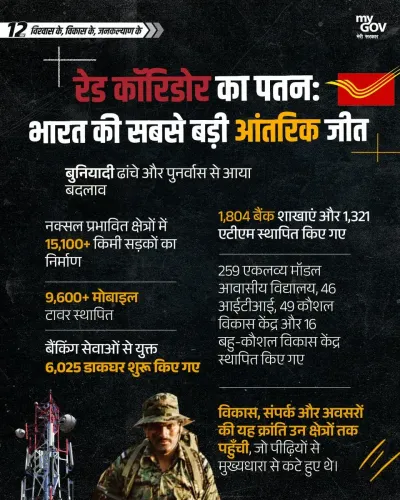
The communities with the most at stake are the tribal populations of Bastar — long caught between insurgent control and state authority, often the first casualties of both. A genuine security transition would open the door to road construction, school access, banking infrastructure and health services that have been delayed for a generation.
What to watch now: state government announcements on infrastructure rollout in former conflict zones, and independent on-ground assessments of security conditions across southern Chhattisgarh districts. The declaration sets an expectation. Meeting it will require sustained administrative follow-through — not just a security dividend, but a development one.
If the claim holds, Bastar's story shifts from India's most enduring insurgency to its most dramatic peacetime comeback. That is the bet CM Sai has just placed — publicly, and in writing.
Point of View
Lending it partial credibility, but complete eradication declarations in insurgency contexts historically carry risk if residual incidents resurface. The real test now shifts from the security domain to the development domain: whether infrastructure, livelihoods and local governance reach Bastar's tribal heartland will determine whether this moment is remembered as a genuine turning point or premature triumphalism.
NationPress
22 Nov 2026
Frequently Asked Questions
Has Naxalism really ended in Chhattisgarh in 2026?
Chief Minister Vishnu Deo Sai declared on 22 November 2026 that Naxalism has been eliminated in Chhattisgarh, crediting coordinated central and state action. Official data over the past decade showed a consistent decline in LWE-related violence, though independent on-ground verification of a complete end to insurgency is still awaited.
What is the 'double engine government' that CM Sai refers to?
'Double engine government' is the BJP's term for having the same party in power both at the Centre and in the state, enabling faster, coordinated policy and security decisions. In Chhattisgarh, this alignment has been in place since CM Vishnu Deo Sai took office in December 2023.
What is the SAMADHAN doctrine for tackling Naxalism?
SAMADHAN is a multi-pronged anti-Left Wing Extremism framework introduced by the Ministry of Home Affairs in 2017. It combines security operations, intelligence sharing, development spending in affected areas and dashboard-based monitoring to systematically reduce Naxal influence.
Which areas of Chhattisgarh were most affected by Naxalism?
The southern districts of Bastar — particularly Dantewada, Sukma and Bijapur — were the epicentre of Naxal activity in Chhattisgarh for decades. These mineral-rich forest areas saw the highest incidence of violence against security forces and civilians.
Who is Vishnu Deo Sai and when did he become Chhattisgarh CM?
Vishnu Deo Sai is a BJP leader who became Chief Minister of Chhattisgarh in December 2023 after the BJP's victory in the state assembly elections. He is the state's first tribal Chief Minister.