Anand Mahindra Pays Tribute to Captain Vikram Batra on Kargil Vijay Diwas

Synopsis
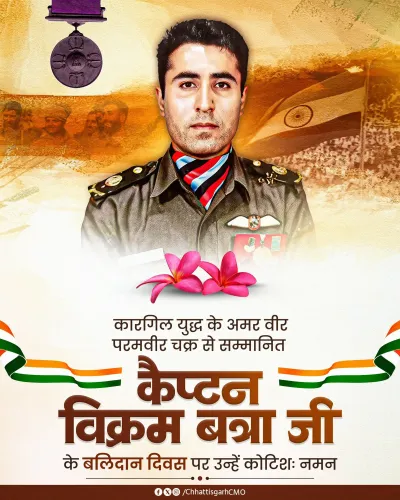
On Kargil Vijay Diwas, July 26, 2026, Mahindra Group chairman Anand Mahindra invoked Captain Vikram Batra's celebrated pre-battle declaration on X, calling it an embodiment of courage, conviction, and duty that continues to shape India's national soul.
Key Takeaways
Mahindra Group chairman Anand Mahindra posted a tribute to Captain Vikram Batra on July 26, 2026 , marking Kargil Vijay Diwas .
He quoted Batra's iconic line: 'Either I will come back after hoisting the Tricolour, or I will come back wrapped in it.
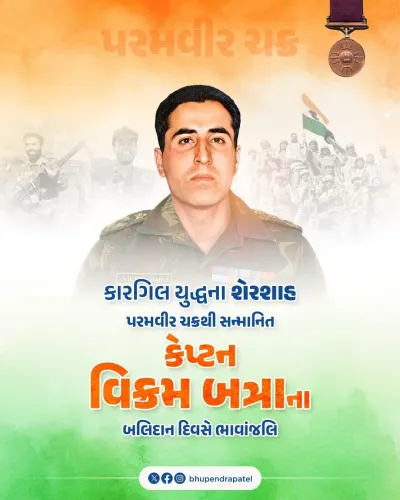
But I will be back for sure.' Captain Vikram Batra was awarded the Param Vir Chakra posthumously for his role in recapturing Point 5140 during the 1999 Kargil War .
Kargil Vijay Diwas has been observed on July 26 every year since 1999 to honour soldiers who died in the conflict with Pakistan.
Mahindra described the words as embodying 'courage, conviction, duty' and said not a day passes without being inspired by Batra.
Mahindra Group chairman Anand Mahindra on Sunday, July 26, 2026 paid tribute to Captain Vikram Batra, the Param Vir Chakra awardee who fell during the 1999 Kargil War, invoking the soldier's iconic words on the occasion of Kargil Vijay Diwas. Mahindra shared a video post on X, quoting Batra's celebrated declaration and reflecting on its enduring resonance for the nation.
Context
In his post, Mahindra quoted Captain Batra's now-legendary words verbatim: 'Either I will come back after hoisting the Tricolour, or I will come back wrapped in it. But I will be back for sure.' He followed the quote with a personal reflection, writing that these were not merely words but embodied 'courage, conviction, duty' — and that 'a nation's soul is shaped by people who speak like this… and then live those words.' Mahindra added that not a day passes without being inspired by Batra.
The post, carrying the hashtag #KargilVijayDiwas, was accompanied by a video and drew on the memory of one of India's most celebrated war heroes. Mahindra's social media following, which numbers in the millions, gives such tributes wide reach beyond formal commemorative circles.
Policy Backdrop
Kargil Vijay Diwas has been observed every year on July 26 since 1999, marking the day India declared victory in the Kargil conflict with Pakistan. The annual commemoration is anchored in official military ceremonies, wreath-laying events, and tributes to the more than 500 Indian soldiers who lost their lives during the operation.
Captain Vikram Batra was awarded the Param Vir Chakra — India's highest wartime gallantry honour — posthumously for his role in recapturing Point 5140 and other strategic positions in the Kargil sector. His words before entering battle have become among the most quoted expressions of soldierly resolve in Indian public memory.
Stakeholders and Impact
Tributes from prominent industrialists such as Mahindra form part of a consistent pattern of annual remembrance that has persisted since the war's conclusion. These public statements serve to amplify themes of national duty and sacrifice within civilian discourse, running parallel to official military commemorations.
For India's armed forces and veterans' communities, acknowledgement from influential business leaders reinforces the cultural salience of Kargil's legacy. For the broader public, such posts keep the memory of individual soldiers alive in everyday conversation, particularly among younger Indians who did not witness the conflict directly.
What's Next
Official Kargil Vijay Diwas ceremonies are held annually at Dras in the Kargil district of Jammu and Kashmir, the site of some of the war's fiercest battles. Policymakers and defence officials typically use the occasion to announce or reiterate commitments on veterans' welfare, war memorials, and border infrastructure. The day also prompts renewed public debate on honouring the families of martyrs and sustaining institutional memory of the 1999 operations.
Point of View
Reflecting a broader trend of prominent industrialists anchoring their public identities to themes of national sacrifice and duty. By centering Captain Vikram Batra's personal declaration rather than aggregate military statistics, Mahindra taps into the individualised, story-driven mode of patriotic remembrance that resonates most powerfully on social media. This approach sits within a wider policy arc in which the government has sought to deepen civilian engagement with military heritage through memorials, films, and digital campaigns. The cumulative effect is a reinforcement of Kargil's place not merely as a historical event but as a living moral reference point in Indian public life.
NationPress
26 Oct 2026
Frequently Asked Questions
Who was Captain Vikram Batra?
Captain Vikram Batra was an Indian Army officer who was awarded the Param Vir Chakra, India's highest wartime gallantry honour, posthumously for his bravery during the 1999 Kargil War, including the recapture of Point 5140.
What is Kargil Vijay Diwas?
Kargil Vijay Diwas is observed every year on July 26 to mark India's victory in the 1999 Kargil conflict with Pakistan and to honour the soldiers who lost their lives during the operations.
What did Captain Vikram Batra say before the Kargil battle?
Captain Vikram Batra is widely remembered for saying: 'Either I will come back after hoisting the Tricolour, or I will come back wrapped in it. But I will be back for sure.' — a declaration he made before entering combat.
Why did Anand Mahindra post about Kargil Vijay Diwas?
Mahindra Group chairman Anand Mahindra shared a tribute on X on July 26, 2026, quoting Captain Vikram Batra's iconic words to mark Kargil Vijay Diwas and reflect on themes of courage, conviction, and national duty.
What is the Param Vir Chakra?
The Param Vir Chakra is India's highest military decoration awarded for the most conspicuous acts of bravery or self-sacrifice in the presence of the enemy. Captain Vikram Batra received it posthumously for his actions in the 1999 Kargil War.