Anand Mahindra salutes India's Glasgow 2026 heroes Asmita Dey and Gulveer Singh

Synopsis
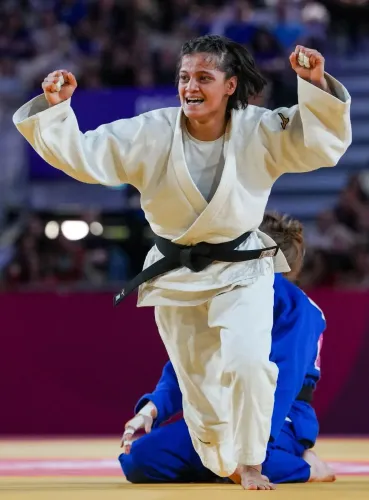
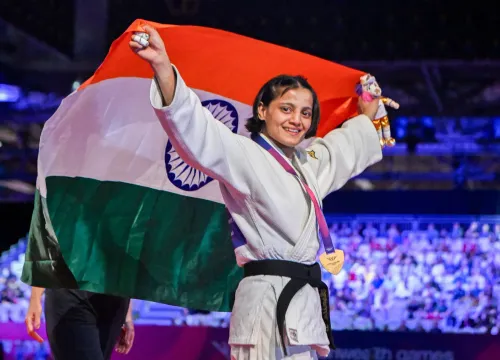
Mahindra Group chairman Anand Mahindra spotlighted judoka Asmita Dey — the first Indian to win Commonwealth Games judo gold — and runner Gulveer Singh, who became the first Indian to claim two track medals at a single Games, as India finished fourth at Glasgow 2026.
Key Takeaways
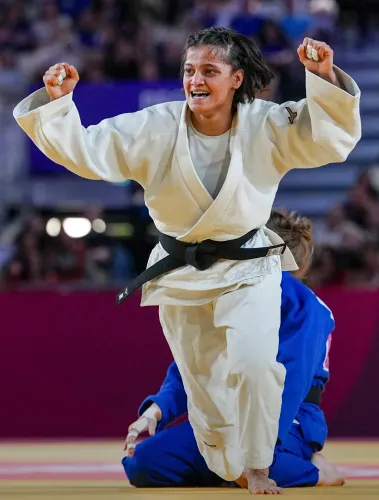
Asmita Dey became the first Indian, man or woman, to win a Commonwealth Games gold medal in judo at Glasgow 2026 .
Her father repaired bicycles for ₹300 a day and did not live to witness her historic win.
Gulveer Singh , a farmer's son from an Aligarh village, became the first Indian to win two track medals at a single Commonwealth Games.
Singh originally ran on dirt trails to pass the Army's physical fitness test — not to pursue athletics professionally.
India finished fourth overall at Glasgow 2026 with a strong medal haul across disciplines.
Mahindra Group chairman Anand Mahindra cited both athletes as the defining human stories of the Games.
A mud house in an unnamed town. A dirt trail outside an Aligarh village. These are not the settings most people associate with Commonwealth Games gold — but they are exactly where India's two most compelling stories from Glasgow 2026 began. Mahindra Group chairman Anand Mahindra took to X on Monday, August 3, 2026, to single out two athletes from the Games — not for their medals alone, but for the ground beneath their feet before they ever stepped onto a podium.
The judoka whose father never saw her make history
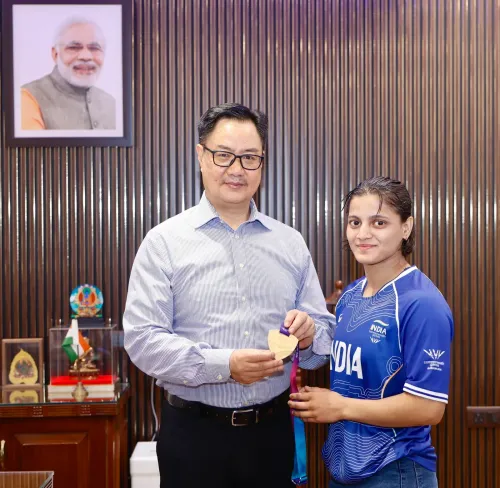
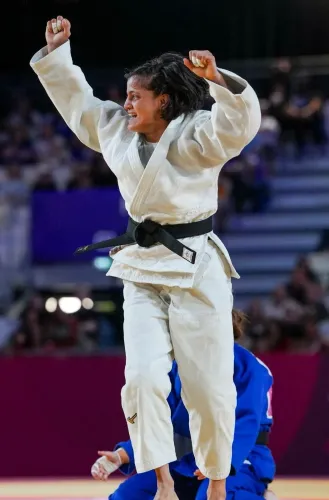
Asmita Dey became the first Indian — man or woman — to win a Commonwealth Games gold medal in judo at Glasgow. But Mahindra's post trained its lens on what came before the gold. Her father repaired bicycles for ₹300 a day, the family lived in a mud house, and he did not live to see his daughter rewrite Indian judo history. That detail — the absence of the one person who perhaps understood the sacrifice most — gives this achievement a particular weight that no medal tally can fully capture.
India has historically struggled to make a mark in combat sports at the Commonwealth level. A judo gold of this kind — the first ever, across all genders — marks a genuine frontier crossed, not a routine podium finish.
Gulveer Singh: from Army fitness trails to two-medal history
The second story belongs to Gulveer Singh, a farmer's son from a village near Aligarh, Uttar Pradesh. He did not begin running to chase glory. He ran on dirt trails to clear the Army's physical fitness test — a common aspiration for young men from rural UP for whom a uniform represents security, not sport. Last week in Glasgow, he became the first Indian ever to win two track medals at a single Commonwealth Games.
The arc is almost cinematic: a young man running to pass a test, ending up rewriting a record no Indian had managed across decades of Commonwealth competition. India's track-and-field story has long been overshadowed by its strength in shooting, wrestling, and weightlifting. Singh's double shifts that narrative — and signals that the country's distance-running pipeline, fed by rural athletes with nothing to lose, may be deeper than previously assumed.
India's fourth-place finish and the faces behind the numbers
India ended Glasgow 2026 in fourth place overall — a creditable finish at a Games where the host nation and traditional powerhouses dominate the top of the standings. Mahindra's post acknowledged the broader medal haul but deliberately stepped past the aggregate to focus on individual journeys. 'No shortcuts, no head starts. Just hunger and the refusal to stay where they started,' he wrote, invoking the Mahindra Group's long-standing brand philosophy of 'Rise' — though here it was deployed not as corporate messaging but as a genuine descriptor of two lives.
India's Commonwealth Games trajectory has been one of steady, if uneven, progress — driven increasingly by athletes from small towns and villages rather than metropolitan academies. Dey and Singh fit that pattern precisely. Their stories also arrive at a moment when Indian sport is under pressure to demonstrate that its grassroots infrastructure — not just its elite pipelines — can produce world-class results.
With the 2028 Los Angeles Olympics now firmly in view, the question these two athletes implicitly pose is whether the system that produced them can be replicated at scale — or whether their rise will remain the exception that proves the rule.
Point of View
Anchoring the 'Rise' philosophy to lived rural experience rather than boardroom aspiration. For brand strategists, the move is instructive: associating an industrial conglomerate's core value with mud houses and dirt trails is far more credible than any campaign spend. More broadly, the spotlight on Dey and Singh reflects a maturing Indian sports ecosystem where grassroots athletes are beginning to outperform the elite-pathway assumption — a trend that sponsors, federations, and policymakers will need to track seriously ahead of the 2028 Olympics.
NationPress
18 Sept 2026
Frequently Asked Questions
Who is Asmita Dey and what did she achieve at Commonwealth Games 2026?
Asmita Dey is an Indian judoka who became the first Indian — man or woman — to win a Commonwealth Games gold medal in judo at the Glasgow 2026 Games. Her father, who repaired bicycles for ₹300 a day, did not live to see her achieve this historic milestone.
What record did Gulveer Singh set at Glasgow 2026?
Gulveer Singh, a farmer's son from a village near Aligarh in Uttar Pradesh, became the first Indian athlete ever to win two track medals at a single Commonwealth Games. He originally took up running to pass the Army physical fitness test.
How did India finish at the Commonwealth Games 2026?
India finished fourth overall at the Commonwealth Games 2026 held in Glasgow, recording a strong medal haul across multiple disciplines.
Why did Anand Mahindra post about Asmita Dey and Gulveer Singh?
Mahindra Group chairman Anand Mahindra said the two athletes' stories — marked by extreme hardship and no institutional head starts — touched him deeply, and he used them to illustrate what the concept of 'Rise' genuinely looks like beyond corporate slogans.
Is Gulveer Singh from Aligarh?
Yes, according to Anand Mahindra's post, Gulveer Singh is a farmer's son from a village near Aligarh in Uttar Pradesh, who ran on dirt trails initially to qualify for the Army before going on to become a record-setting Commonwealth Games track athlete.