Kishan Reddy Hails Women Athletes' Dominance at Glasgow CWG
Synopsis
Union Minister G. Kishan Reddy highlighted that Indian women won 8 of India's 13 gold medals at Glasgow Commonwealth Games 2026, including a historic first judo gold by Asmita De, and noted Cabinet approval of a ₹36,441 crore revamped Khelo India scheme for 2026–31.
Key Takeaways
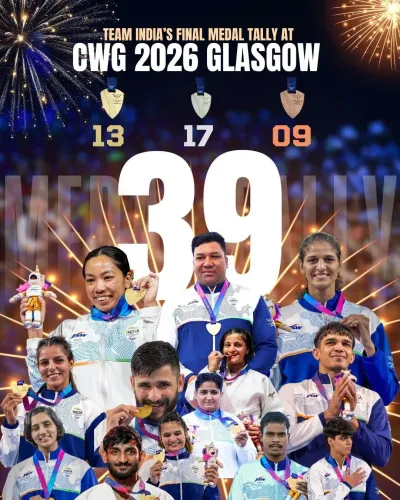
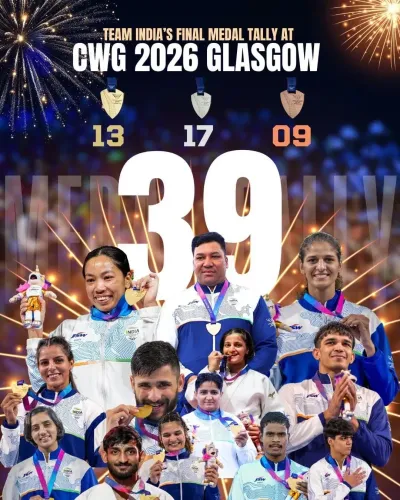
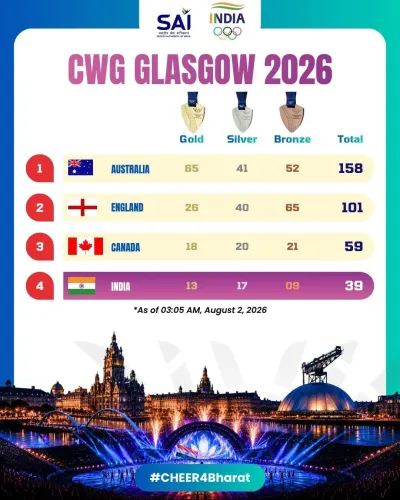
India won 39 medals in total , including 13 gold , at the Glasgow Commonwealth Games 2026 .
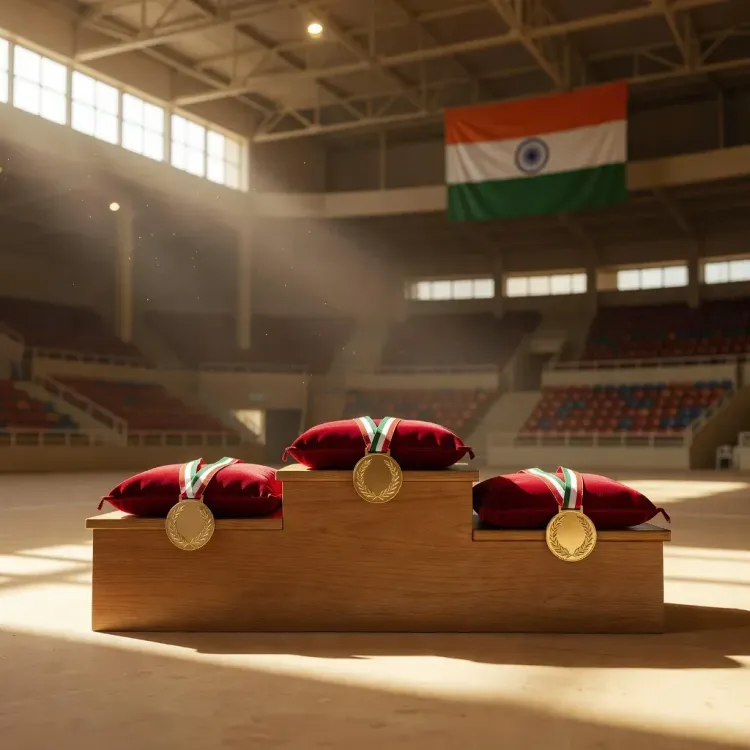
Indian women athletes claimed 8 of the 13 gold medals , the majority of the country's top-of-podium finishes.
Asmita De won India's first-ever Commonwealth Games judo gold .
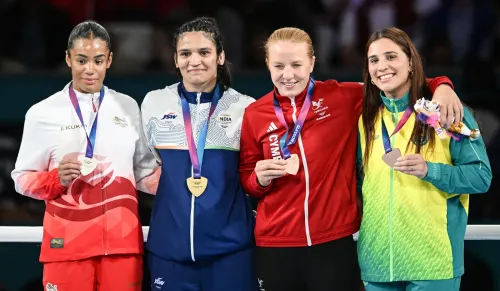
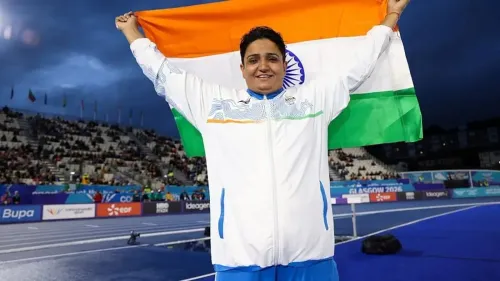
Mirabai Chanu (weightlifting), Sharmila Dhankar (para shot put), and five boxers — Sakshi Chaudhary, Preeti Pawar, Jasmine Lamboria, Priya Ghanghas, and Arundhati Chaudhary — also claimed gold.
The Union Cabinet has approved a revamped Khelo India scheme with an outlay of ₹36,441 crore for 2026–27 to 2030–31 .
Minister Reddy credited Khelo India and TOPS as the structural programmes enabling this medal surge.
Eight gold medals out of thirteen. That is the number that tells India's Commonwealth Games story at Glasgow 2026 — and every one of those eight was won by a woman. Union Coal and Mines Minister G. Kishan Reddy took to X on Monday, 3 August 2026, to salute the women athletes who powered India to a 39-medal haul at the Games, calling their contribution 'the most inspiring' of the entire campaign.
A Historic First and a Podium Full of Daughters
Asmita De made history by delivering India's first-ever judo gold medal at the Commonwealth Games — a breakthrough that rewrites the record books for a discipline India had never conquered on this stage. Mirabai Chanu, already a household name in weightlifting, added another gold to her storied collection. Sharmila Dhankar claimed gold in women's para shot put, extending India's reach into para-sport at the highest level.
The boxing ring produced the most remarkable cluster: Sakshi Chaudhary, Preeti Pawar, Jasmine Lamboria, Priya Ghanghas, and Arundhati Chaudhary all stepped onto the top step of the podium. Five boxing golds from five women — a statement so emphatic it barely needs commentary.
Khelo India and TOPS: The Architecture Behind the Medals
Reddy was explicit about the policy machinery behind these victories. He credited the Khelo India scheme and the Target Olympic Podium Scheme (TOPS) — two central government programmes that have been building India's sports pipeline since 2017 and 2014 respectively — as the structural foundation that made this haul possible. Khelo India was designed to nurture grassroots talent across states; TOPS provides elite athletes with targeted financial and training support in the final stretch toward major international competition.
The minister pointed to a significant new commitment: the Union Cabinet has approved a revamped Khelo India scheme with an outlay of ₹36,441 crore covering the period 2026–27 to 2030–31. That five-year funding envelope signals a deliberate, long-horizon bet on India's sporting future — not a one-Games surge but a structured investment cycle timed to carry athletes toward the next Olympic quadrennial.
Nari Shakti on the World Stage
Reddy framed the women's dominance within the government's broader 'Nari Shakti' (women power) narrative, writing that 'when talent gets the right opportunity and empowered support, Nari Shakti takes India to new heights.' The phrase is deliberate: it connects athletic achievement to a cross-sectoral policy posture that has sought to position women's advancement as a national priority across health, education, and now sport.
For a minister whose primary portfolio sits in coal and mines, the post is also a reminder of the BJP's effort to project a unified government voice on landmark national moments — a gold rush at the Commonwealth Games qualifies as exactly that kind of moment.
With ₹36,441 crore now committed and a generation of women boxers, weightlifters, judokas, and para-athletes having just proved their world-class calibre, the question for Indian sport is no longer whether the investment is justified — it is whether the pipeline can now deliver on the Olympic stage that matters most.
Point of View
Scheme-backed investment in women athletes is now producing measurable podium returns, not just participation numbers. The Cabinet's ₹36,441 crore commitment to the revamped Khelo India scheme — announced in the same breath as the medal tally — is a classic policy-narrative move, tying a feel-good moment to a long-term institutional commitment. For the BJP, the 'Nari Shakti' framing across sport, politics, and social policy has become a consistent brand pillar, and eight gold medals from women athletes is the most tangible proof-point that framing has produced. The real test comes at the Olympics, where the TOPS pipeline will face a far stiffer global field.
NationPress
18 Sept 2026
Frequently Asked Questions
How many medals did India win at the Glasgow Commonwealth Games 2026?
India won a total of 39 medals at the Glasgow Commonwealth Games 2026, including 13 gold medals , according to Union Minister G. Kishan Reddy's post.
How many gold medals did Indian women win at Commonwealth Games 2026?
Indian women athletes won 8 of India's 13 gold medals at the Glasgow Commonwealth Games 2026, making them the dominant contributors to the country's gold tally.
Who is Asmita De and what did she achieve at Commonwealth Games?
Asmita De is an Indian judoka who won India's first-ever Commonwealth Games gold medal in judo at the Glasgow 2026 edition, a historic first for the discipline.
What is the revamped Khelo India scheme and how much funding has been approved?
The revamped Khelo India scheme is a central government sports development programme. The Union Cabinet has approved an outlay of ₹36,441 crore for the period 2026–27 to 2030–31 to continue and expand the programme.
What is the Target Olympic Podium Scheme (TOPS)?
TOPS , introduced in 2014 , provides targeted financial and training support to elite Indian athletes competing at the Olympic and international level, helping them prepare for top global competitions.