Manufacturing sector buffers India's economic slowdown, HSBC report finds
Synopsis
India's manufacturing sector — nearly 20 per cent of GDP — is acting as a shock absorber against a broader economic slowdown, HSBC Global Investment Research says. But the cushion may not hold: a 30-per-cent rainfall deficit, rising rural youth unemployment, and softening GST collections signal that the farm-dependent half of India is already under strain.
Key Takeaways
HSBC Global Investment Research flagged weakening growth momentum in April–May 2025 across its database of 100 indicators .
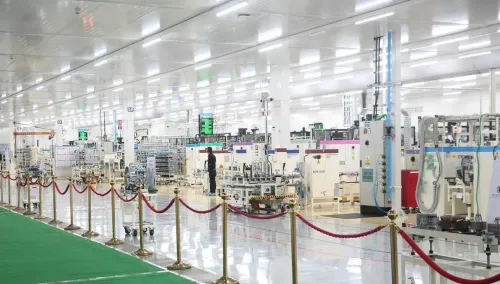
Manufacturing (nearly 20% of GDP ) has remained resilient, supported by export acceleration ahead of Section 301 tariffs and precautionary inventory build-up.
Rainfall is approximately 30% below normal and reservoir levels are below last year's, raising serious risks for agriculture and rural demand.
Rural warning signs include slowing two-wheeler sales , softer GST collections in June, and faster-rising youth unemployment in rural versus urban areas.
Oil price pullback and easier financial conditions are expected to support the trade, transport (15% of GDP) and financial sectors (25% of GDP).
Services (55% of GDP) remains the largest growth pillar and has so far been insulated from rural headwinds.
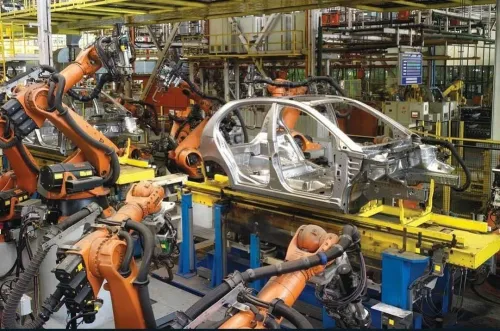
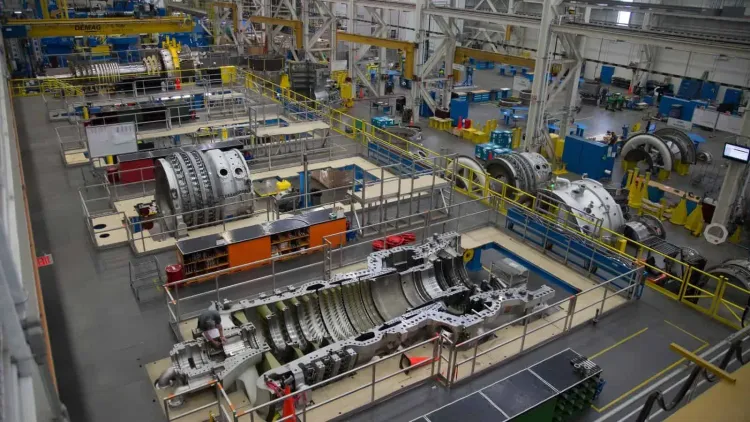
India's manufacturing sector has helped cushion a broader deceleration in economic momentum even as key growth indicators weakened in April–May 2025, according to a report released on Tuesday, 7 July by HSBC Global Investment Research. The sector, which accounts for nearly 20 per cent of GDP, has shown remarkable resilience driven by export acceleration and precautionary inventory build-up.
What Is Driving Manufacturing Resilience
According to the HSBC report, energy-market uncertainty prompted businesses — particularly in consumer goods — to stock up inventories as a buffer against supply disruptions. Separately, lower US tariffs opened a window for Indian exporters to accelerate non-oil exports ahead of potential Section 301 measures, lending additional support to factory activity. The combination of these two forces has kept manufacturing output relatively buoyant even as broader momentum has softened.
Growth Indicators Signal Weakening Momentum
HSBC's database of 100 growth indicators points to easing momentum in the April–May period. The report also flagged the elevated probability of a strong El Niño event and a weak monsoon as material risks to agriculture and rural demand. Temperatures are reportedly trending above normal, rainfall is running approximately 30 per cent below normal, and reservoir levels remain below last year's — a combination that raises concerns for the kharif crop season.
Two Bright Spots Outside Agriculture
The report identified two positive drivers for growth beyond the farm sector. First, a pullback in oil prices toward pre-war levels is expected to lift the trade and transport sector, which contributes roughly 15 per cent of GDP. Second, easier financial conditions — supported by a foreign exchange package that has already begun pushing yields lower across instruments — could stimulate the financial sector, which makes up approximately 25 per cent of GDP. Notably, yield compression was visible even before package-induced capital inflows fully materialised.
Rural Demand Under Pressure
Agriculture, which represents close to 20 per cent of GDP, faces a more difficult outlook. The HSBC report noted that rural demand is already showing early signs of strain: youth unemployment has risen faster in rural areas than in urban ones, two-wheeler sales have slowed, growth in rural bank balances has moderated, and domestic GST collections softened in June. 'Rural demand is already showing early signs of strain,' the report stated, pointing to these indicators as a cluster of warning signals rather than isolated data points.
Outlook and Key Risks
India's services sector, which accounts for 55 per cent of GDP, remains the largest single pillar of growth and has so far been insulated from the agricultural and rural headwinds. The near-term trajectory of the economy will hinge on monsoon performance, the pace of capital inflows following the FX package, and whether the export window ahead of Section 301 tariffs remains open. With manufacturing providing a floor and services holding steady, the broader slowdown appears contained for now — though the agricultural outlook introduces meaningful downside risk into the second half of the year.
Point of View
And a rural, agriculture-dependent economy that is quietly fraying. The danger is that policymakers focus on the resilient headline and underestimate how quickly softening rural demand — already visible in GST data and two-wheeler sales — can feed back into consumption. With a 30-per-cent rainfall deficit and El Niño risks still live, the agricultural drag could arrive faster than the export tailwind can compensate. The FX package and oil price relief are real positives, but they are financial-sector and urban-economy stories. The rural stress is structural and seasonal — and it is already showing up in the data.
NationPress
6 Oct 2026
Frequently Asked Questions
What did the HSBC report say about India's economy?
The HSBC Global Investment Research report, released on 7 July 2025, said India's economic momentum weakened in April–May 2025 based on a database of 100 growth indicators. However, a resilient manufacturing sector — driven by export acceleration and inventory build-up — has helped cushion the broader slowdown.
Why is India's manufacturing sector holding up despite the slowdown?
Two factors are supporting manufacturing: energy-market uncertainty has prompted precautionary inventory build-up, especially in consumer goods, and lower US tariffs created a window to accelerate non-oil exports ahead of potential Section 301 measures. Both trends have kept factory activity relatively buoyant.
What risks does the monsoon pose to India's economy?
The report flagged a strong El Niño probability, with rainfall running approximately 30 per cent below normal and reservoir levels below last year's. Agriculture accounts for nearly 20 per cent of GDP, and a weak monsoon could significantly damage kharif output and rural demand.
What are the early signs of rural demand stress in India?
According to the HSBC report, youth unemployment has risen faster in rural areas than urban ones, two-wheeler sales have slowed, rural bank balance growth has moderated, and domestic GST collections softened in June — all pointing to early-stage rural demand strain.
Which sectors could provide positive offsets to India's slowdown?
The report identified two positive offsets: a pullback in oil prices toward pre-war levels should support the trade and transport sector (about 15% of GDP), and easier financial conditions from the FX package are expected to stimulate the financial sector (roughly 25% of GDP), with yields already falling ahead of full capital inflow materialisation.