MeitY Secretary: 15% of government IT budget must go to cybersecurity
Synopsis
India’s top IT ministry official has put a number on national cyber ambition: at least 15 per cent of every government IT rupee must go to cybersecurity. With DRDO already scouting foundational AI models and quantum computing threatening to break current encryption, the Cybersecurity 360 Summit signalled that India’s digital security posture is shifting from reactive to by-design.
Key Takeaways
Krishnan called for a minimum 15 per cent of the government IT budget to be allocated to cybersecurity at the CII Cybersecurity 360 Summit on 3 July .
Krishnan urged industry to adopt ‘security by design’ and report incidents promptly to CERT-In .
DRDO has issued an RFI for foundational AI models, as the Ministry of Defence flags the geopolitical stakes of the AGI race.
Transition to post-quantum cryptography was flagged as a national priority, given quantum computing’s threat to conventional encryption.
Expansion of 5G and upcoming 6G networks has widened the cyberattack surface for enterprises and small businesses alike, according to former National Cyber Security Coordinator Dr Gulshan Rai .
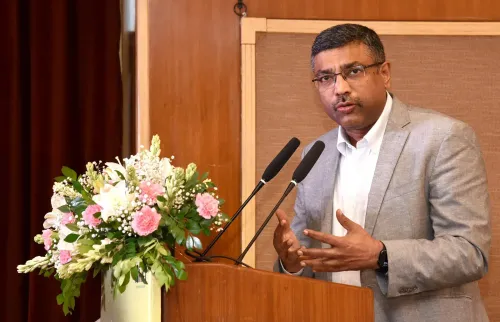
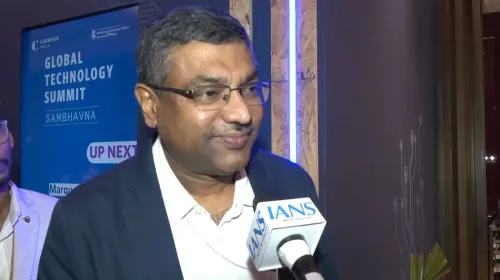
S. Krishnan, Secretary of the Ministry of Electronics and Information Technology (MeitY), on Friday, 3 July called for a minimum of 15 per cent of the government's IT budget to be ring-fenced for cybersecurity, warning that digital systems can no longer treat security as an afterthought. Krishnan made the remarks at the Cybersecurity 360 Summit in New Delhi, organised by the Confederation of Indian Industry (CII) in partnership with MeitY and CERT-In.
Key Directive from MeitY
Krishnan underscored that ‘security by design’ must become a foundational principle in every stage of technology development and deployment. “When the government spends on IT, at least 15 per cent of the IT budget should go towards cybersecurity,” he said. He also urged industry stakeholders to invest at an optimum level in cybersecurity, actively support domestically developed cybersecurity products, and promptly report cyber incidents to the Indian Computer Emergency Response Team (CERT-In) to reinforce collective defence and information sharing.
Defence Ministry Flags AGI and Quantum Threats
Dr Amit Sharma, Additional Director General and Advisor at the Department of Defence, Ministry of Defence, warned that the global race toward Artificial General Intelligence (AGI) represents a significant geopolitical shift. He called for a proactive national roadmap to develop frontier AI models within India. Sharma disclosed that the Defence Research and Development Organisation (DRDO) has already issued a Request for Information (RFI) under its technology development programme for foundational AI models in the research domain. He further cautioned that the rise of quantum computing would eventually render conventional cryptographic systems obsolete, making the transition to post-quantum cryptography a national security priority.
Expanding Attack Surface: 5G, 6G and Beyond
Dr Gulshan Rai, Chairman of the CII Cybersecurity Task Force and former National Cyber Security Coordinator, highlighted that the rapid rollout of 5G networks and the anticipated arrival of 6G have significantly widened the cyberattack surface. He noted that this vulnerability extends not just to large enterprises but also to small and medium businesses, which often lack dedicated security infrastructure.
Summit Context and Broader Significance
The Cybersecurity 360 Summit brought together policymakers, industry leaders, and security experts to chart strategies for strengthening India’s digital resilience amid a rapidly evolving global threat landscape. This comes amid a sharp global uptick in state-sponsored cyberattacks and ransomware incidents targeting critical infrastructure. India’s push to embed security into digital governance aligns with its broader ambition to position itself as a trusted digital economy. With the government scaling up digital public infrastructure at pace, the call to institutionalise a 15 per cent cybersecurity budget floor marks a notable policy signal.
The next steps will depend on whether this recommendation is formalised into procurement guidelines or remains advisory, a distinction that will determine its real-world impact across central ministries and state departments.
Point of View
But the critical question is enforcement: is this a binding procurement mandate or a high-profile advisory that ministries can quietly ignore? India has a pattern of issuing digital governance directives that lack implementation teeth. Meanwhile, the DRDO’s RFI for foundational AI models and the post-quantum cryptography warning signal that the threat landscape is evolving faster than policy. If the Centre does not convert Krishnan’s call into a measurable compliance requirement with audit trails, the 15 per cent figure risks becoming another aspirational benchmark that looks good in a summit deck but does not move the needle on actual security posture.
NationPress
2 Oct 2026
Frequently Asked Questions
What did MeitY Secretary S. Krishnan say about the cybersecurity budget?
Krishnan said at least 15 per cent of the government’s IT budget should be allocated to cybersecurity, stressing that security must be built into digital systems by design rather than added as an afterthought. He made the remarks at the CII Cybersecurity 360 Summit in New Delhi on 3 July.
What is the CII Cybersecurity 360 Summit?
It is a summit organised by the Confederation of Indian Industry (CII) in partnership with MeitY and CERT-In, bringing together policymakers, industry leaders, and cybersecurity experts to strengthen India’s digital resilience against evolving global threats.
Why did the Defence Ministry raise concerns about AGI and quantum computing?
Dr Amit Sharma of the Ministry of Defence said the global race toward Artificial General Intelligence represents a major geopolitical shift, requiring a proactive national AI roadmap. He also warned that quantum computing will eventually break conventional cryptographic systems, making post-quantum cryptography a national priority.
How does 5G and 6G expansion affect India’s cybersecurity risk?
According to Dr Gulshan Rai, former National Cyber Security Coordinator, the rapid rollout of 5G and the anticipated arrival of 6G have significantly widened the cyberattack surface, exposing both large enterprises and small businesses to greater risk.
What action has DRDO taken on artificial intelligence?
DRDO has issued a Request for Information (RFI) under its technology development programme for the creation of foundational AI models in the research domain, signalling early-stage government investment in frontier AI capabilities.