Microsoft Ignite 2026: Copilot Workspaces, AI models and Azure upgrades unveiled

Synopsis
At Ignite 2026, Microsoft launched Copilot Workspaces for human-AI collaboration, rolled out new proprietary models including Cyber 2 Flash, integrated OpenAI's GPT-6.2 into Azure Foundry, and unveiled the AI Transparency Initiative with 40-plus partners — all days after a global Microsoft 365 outage exposed the fragility of the very infrastructure these new agentic tools will depend on.
Key Takeaways
Microsoft launched Copilot Workspaces at Ignite on 18 November , enabling collaborative human-AI agentic workflows.
New AI models introduced: Microsoft-Decision 1.1 , Code 2 , and Cyber 2 Flash , with the latter claiming to outperform frontier models on security at lower cost.
OpenAI GPT-6.2 and Meta 's latest models added to the Azure AI Foundry platform.
Agent 365 Business Analytics positions as an 'ERP system for AI', linking AI spend to business outcomes.
The AI Transparency Initiative launched with more than 40 organisations to develop open AI standards.
Announcements follow a major Microsoft 365 outage caused by a software flaw, traffic surge and reduced server capacity.
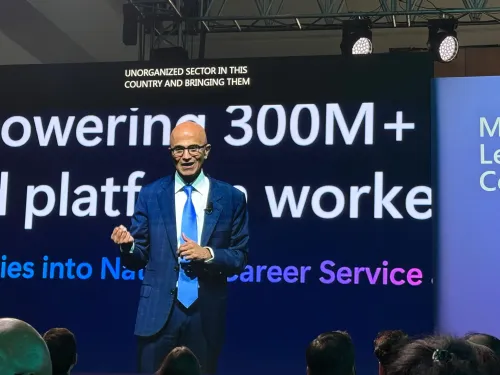
Microsoft on Wednesday, 18 November unveiled a sweeping range of artificial intelligence (AI) products, new models, and infrastructure upgrades at Ignite, its annual technical conference, signalling a deepened push to embed AI agents across enterprise workflows. Chief Executive Satya Nadella outlined the company's direction on social media platform X, framing the announcements as a bid to convert technological advances into measurable business outcomes.
'Our ambition with everything we are announcing at Ignite today is to parlay technological advances into real outcomes and new points of leverage for people, organisations and society at large,' Nadella wrote.
Copilot Workspaces at the Centre
The headline launch was Copilot Workspaces, a collaborative platform designed to let people and AI agents operate together using shared context toward common objectives. The product is Microsoft's clearest signal yet of its vision for 'agentic AI' — systems that do not merely respond to prompts but act autonomously within defined goals.
Alongside Copilot Workspaces, Microsoft introduced a series of new proprietary AI models: Microsoft-Decision 1.1, Code 2, and Cyber 2 Flash. The company said Cyber 2 Flash delivers security capabilities that outperform frontier models at a lower cost — a claim that, if borne out, could shift enterprise security procurement away from standalone AI vendors.
Model Ecosystem Expands with OpenAI and Meta
Microsoft also broadened its model roster on the Azure AI Foundry platform by integrating OpenAI's GPT-6.2 and the latest models from Meta. The move reinforces Azure's positioning as a multi-model cloud destination rather than a single-vendor environment, a strategy the company has pursued consistently since its landmark OpenAI partnership.
New Products: Agent 365, Perception and HorizonDB
Nadella described Agent 365 Business Analytics as an 'ERP system for AI' — a platform intended to help companies link AI expenditure to concrete business outcomes and optimise their return on investment. This is notably distinct from productivity-layer AI tools; it targets the C-suite's growing demand for AI accountability.
Microsoft Perception, which is now generally available, enables security teams and AI agents to collaborate in identifying and responding to threats at machine speed. Separately, Microsoft announced the general availability of HorizonDB, a distributed PostgreSQL database service on Azure that the company said delivers up to eight times the performance of self-managed PostgreSQL deployments.
AI Transparency Initiative and Infrastructure Overhaul
In a move aimed at addressing growing regulatory and public scrutiny of AI systems, Microsoft launched the AI Transparency Initiative, partnering with more than 40 organisations to develop open standards for accountable, verifiable, and safe AI. This comes amid intensifying global debate over AI governance, making the initiative as much a reputational play as a technical one.
On the infrastructure front, Nadella said Microsoft is rearchitecting core Azure computing, storage, and networking layers to support AI agents operating at scale. Industry collaborations highlighted at the event include Alaska Air, AT&T, BlackRock, BNY, Chevron, Epic, Publicis Groupe, Salesforce, and Unilever.
Shadow of the Microsoft 365 Outage
The Ignite announcements come less than a week after a major Microsoft 365 disruption that affected Teams, OneDrive, SharePoint, and Office applications worldwide. Microsoft attributed the outage to a combination of a hidden software flaw, a surge in traffic, and a reduction in available server capacity. That the company chose to push forward with an ambitious AI showcase so soon after a high-profile reliability failure will draw scrutiny — particularly given that the new agentic workloads announced at Ignite are even more infrastructure-dependent than existing services.
How Microsoft balances the accelerating pace of AI product launches with the operational resilience its enterprise customers demand will be a central question heading into 2027.
Point of View
Given competitor pressure from Google and AWS. But Copilot Workspaces and the new Azure agent infrastructure are more infrastructure-intensive than any product Microsoft has shipped before, which means reliability risk scales up, not down. The AI Transparency Initiative is a smart pre-emptive move ahead of likely EU and US federal AI regulation, but partnering with 40 organisations to write open standards is not the same as being held to them. Nadella's 'real outcomes' framing also signals a pivot from selling AI access to selling AI accountability — a harder promise to walk back if enterprise ROI data disappoints.
NationPress
18 Nov 2026
Frequently Asked Questions
What is Copilot Workspaces, announced at Microsoft Ignite?
Copilot Workspaces is a new Microsoft platform that lets people and AI agents collaborate using shared context to work toward common objectives. It was unveiled at the Ignite conference on 18 November as the centrepiece of Microsoft's agentic AI strategy.
What new AI models did Microsoft launch at Ignite 2026?
Microsoft introduced three new proprietary AI models: Microsoft-Decision 1.1, Code 2, and Cyber 2 Flash. The company said Cyber 2 Flash delivers security capabilities that outperform frontier models at a lower cost.
What is the Microsoft AI Transparency Initiative?
The AI Transparency Initiative is a programme Microsoft launched at Ignite in partnership with more than 40 organisations to develop open standards for accountable, verifiable, and safe AI systems. It is seen as a pre-emptive step ahead of tightening global AI regulation.
How does the Microsoft 365 outage relate to the Ignite announcements?
The Ignite product launches came less than a week after a major Microsoft 365 outage that disrupted Teams, OneDrive, SharePoint and Office globally. Microsoft said the outage stemmed from a hidden software flaw, a traffic surge, and reduced server capacity — raising questions about infrastructure resilience for the more demanding agentic workloads now being launched.
What is Agent 365 Business Analytics?
Agent 365 Business Analytics is a new Microsoft product described by CEO Satya Nadella as an 'ERP system for AI'. It is designed to help companies connect their AI spending to measurable business outcomes and optimise returns on AI investment.