President Murmu urges doctors: Quality healthcare must reach remote India
Synopsis
At the ABVIMS convocation in New Delhi, President Droupadi Murmu called on fresh doctors to prioritise remote and underserved India — not just urban centres. With 1.75 lakh Ayushman Arogya Mandirs operational and over 19 lakh OPD patients at RML Hospital in 2025, she framed healthcare equity as the defining responsibility of the next generation of medical professionals.
Key Takeaways
President Droupadi Murmu addressed the 12th Convocation of ABVIMS and Dr.
Ram Manohar Lohia Hospital at Vigyan Bhawan on 20 November 2026 .
Ram Manohar Lohia Hospital recorded more than 19 lakh outpatient visits in 2025 , providing vast clinical exposure to students.
Around 1.75 lakh Ayushman Arogya Mandirs are operational nationwide, expanding primary healthcare access.
Ayushman Bharat PM-JAY provides health coverage of up to ₹5 lakh per family annually , targeting economically weaker sections.
Murmu called for integrating Ayurveda and Yoga with modern medicine and endorsed the One Health approach linking human, animal, and environmental health.
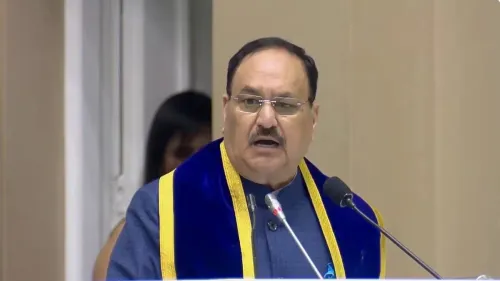
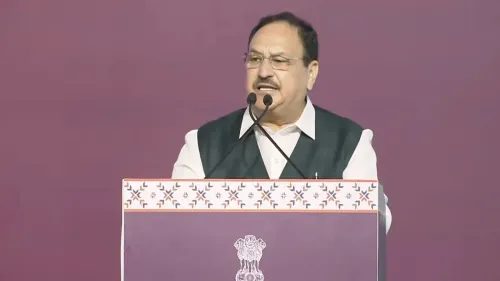
Union Health Minister J.P.
Nadda praised ABVIMS as a centre of excellence in medical research and specialised clinical services.
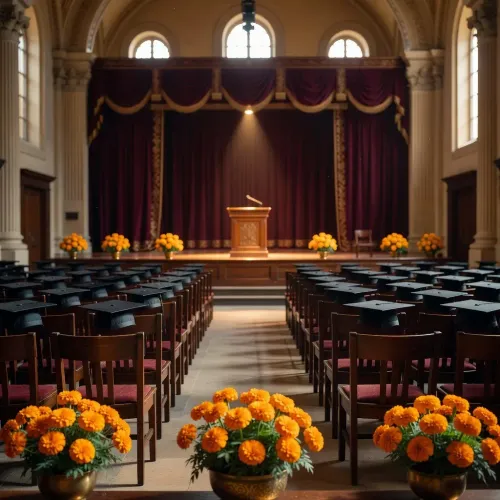
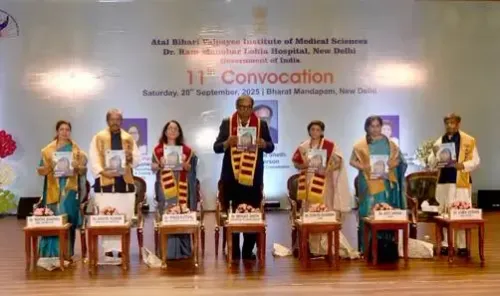
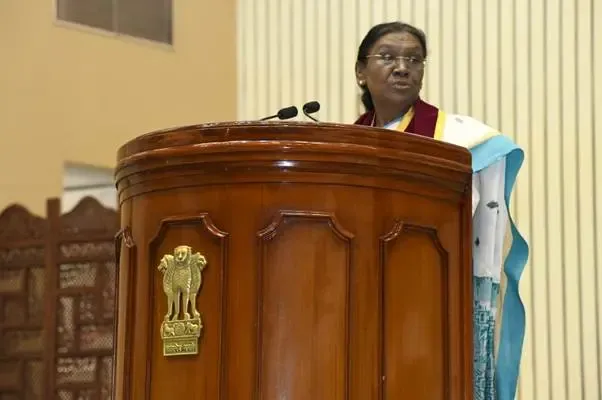
President Droupadi Murmu on Friday, 20 November 2026, called on young medical graduates to make quality healthcare accessible to every section of society — especially those living in remote and underserved areas — while addressing the 12th Convocation Ceremony of the Atal Bihari Vajpayee Institute of Medical Sciences (ABVIMS) and Dr. Ram Manohar Lohia Hospital in New Delhi. The ceremony, held at Vigyan Bhawan, was attended by Union Health and Family Welfare Minister J.P. Nadda and marked a milestone for the graduating medical cohort.
Recognition of Women in Medicine
Congratulating the outgoing batch, Murmu specifically lauded the significant representation of women among the graduates, stating that their achievements reflected the growing participation of women in both medical education and the broader healthcare sector. She described the trend as a positive indicator for a more inclusive health workforce in India.
Key Healthcare Milestones Cited
Dr. Ram Manohar Lohia Hospital was singled out for the extensive clinical exposure it provides to students. The President noted that more than 19 lakh patients availed outpatient services at the hospital in 2025, giving graduates rare and wide-ranging practical experience. Murmu also highlighted that around 1.75 lakh Ayushman Arogya Mandirs are currently operational across the country, bolstering access to primary healthcare at the grassroots level.
She emphasised ongoing efforts to expand advanced healthcare and medical education beyond major cities into Tier-2 and Tier-3 centres, enabling citizens to access specialised treatment without travelling to metropolitan hubs. The growing role of telemedicine in bridging geographical barriers was also underscored as a critical tool for improving access in remote regions.
Financial Protection and Ayushman Bharat
The President highlighted the Ayushman Bharat Pradhan Mantri Jan Arogya Yojana, which provides health coverage of up to ₹5 lakh per family annually. Murmu said the scheme has meaningfully reduced the burden of hospitalisation expenses for economically weaker sections and improved their access to quality treatment. This comes amid persistent concerns from public health experts about out-of-pocket expenditure remaining high for lower-income households in India.
Integrating Traditional Medicine and the One Health Approach
On innovation, Murmu stressed the need to integrate traditional systems — including Ayurveda and Yoga — with modern allopathic practices, describing these efforts as central to India's holistic healthcare approach. She further underlined the One Health approach, noting that human health is closely interlinked with animal health, vegetation, and the broader environment — an alignment gaining traction in global health policy.
What the Health Minister Said
Union Health Minister J.P. Nadda described ABVIMS and Dr. Ram Manohar Lohia Hospital as a pioneering institution and a centre of excellence in medical education and healthcare. He praised its contributions to medical research, infrastructure development, and specialised clinical services. Nadda's presence at the convocation signalled the Centre's continued emphasis on bolstering public-sector medical institutions.
As India's healthcare ambitions scale up, the President's address reflects a broader push to ensure that the expansion of medical talent translates into tangible outcomes for the most vulnerable — not just urban India.
Point of View
And another, still unfinished, in underserved districts. With 1.75 lakh Ayushman Arogya Mandirs operational, the infrastructure argument is becoming harder to dismiss, but the gap between facility availability and quality of care in remote areas remains wide. Murmu's call to new doctors to work beyond urban comfort zones is well-meaning, yet structural incentives — posting policies, salary parity, rural service requirements — matter far more than exhortation. The One Health framing, while progressive, risks being treated as rhetorical garnish unless it is embedded in medical curricula and resource allocation.
NationPress
20 Nov 2026
Frequently Asked Questions
What did President Droupadi Murmu say at the ABVIMS convocation?
President Murmu urged graduating medical professionals to ensure quality healthcare reaches remote and underserved areas, not just urban centres. She also highlighted government schemes like Ayushman Bharat and the expansion of Ayushman Arogya Mandirs as key pillars of India's healthcare progress.
What is the Ayushman Bharat Pradhan Mantri Jan Arogya Yojana?
It is a government health insurance scheme that provides coverage of up to ₹5 lakh per family annually, primarily targeting economically weaker sections. The scheme aims to reduce out-of-pocket hospitalisation expenses for low-income households across India.
How many Ayushman Arogya Mandirs are operational in India?
According to President Murmu's address, around 1.75 lakh Ayushman Arogya Mandirs are currently operational across the country. These centres are designed to expand access to primary healthcare at the grassroots level.
What is the One Health approach mentioned by President Murmu?
The One Health approach recognises that human health is closely interconnected with animal health, vegetation, and the environment. Murmu stressed this framework as essential for a comprehensive and sustainable healthcare strategy in India.
Who else spoke at the ABVIMS 12th Convocation Ceremony?
Union Health and Family Welfare Minister J.P. Nadda also addressed the convocation at Vigyan Bhawan. He described ABVIMS and Dr. Ram Manohar Lohia Hospital as a pioneering institution and praised its work in medical research, infrastructure, and specialised clinical services.