Nadda attends 12th Convocation of ABVIMS & RML Hospital
Synopsis
Union Health Minister J. P. Nadda joined President Droupadi Murmu at the 12th Convocation of Atal Bihari Vajpayee Institute of Medical Sciences and Dr. Ram Manohar Lohia Hospital in New Delhi on 20 November 2026, marking the graduation of a new cohort of doctors from a key central government medical institution.
Key Takeaways
The 12th Convocation Ceremony of ABVIMS and Dr.
Ram Manohar Lohia Hospital was held in New Delhi on 20 November 2026 .
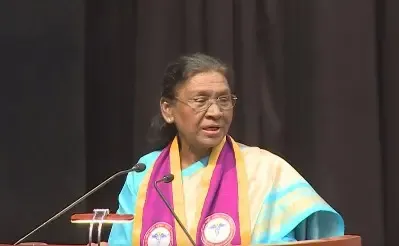
President Droupadi Murmu presided over the event as the chief guest.
Union Health Minister J.
Nadda attended, reflecting the Ministry's direct oversight of centrally funded medical institutions.
ABVIMS is a central government medical college offering MBBS and postgraduate programmes, attached to the tertiary-care Dr.
Ram Manohar Lohia Hospital .
The event highlights India's continuing focus on expanding the pipeline of trained doctors through government medical colleges.
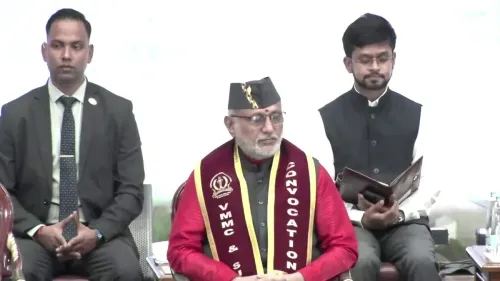
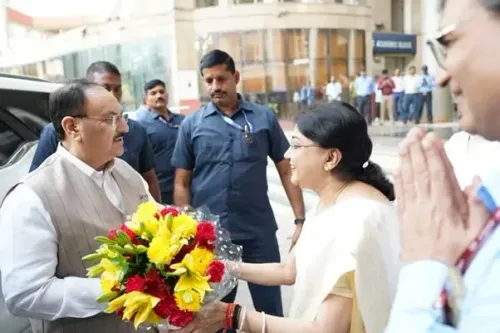
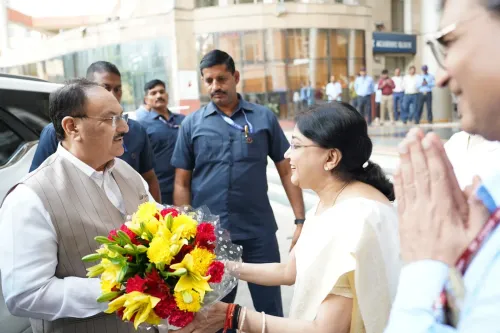
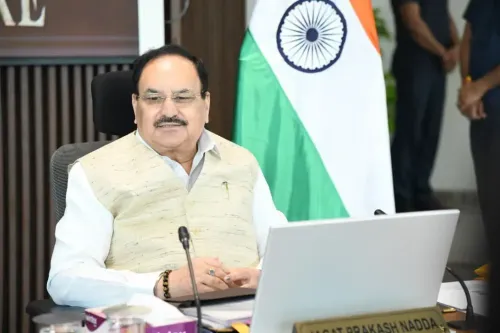
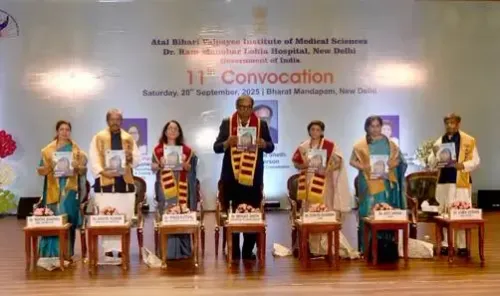
Doctors earned their degrees under the gaze of the nation's highest office on Friday, 20 November 2026, as President Droupadi Murmu presided over the 12th Convocation Ceremony of Atal Bihari Vajpayee Institute of Medical Sciences (ABVIMS) and Dr. Ram Manohar Lohia Hospital in New Delhi. Union Health Minister J. P. Nadda was present at the ceremony, marking the government's high-level attention to one of the capital's flagship central institutions.
ABVIMS and RML: a central government medical powerhouse
Attached to the sprawling Dr. Ram Manohar Lohia Hospital in New Delhi, the Atal Bihari Vajpayee Institute of Medical Sciences offers both MBBS and postgraduate medical programmes, making it among the key central government institutions producing specialist doctors for India's public health system. The hospital itself is a tertiary-care referral centre, bearing decades of institutional weight in the capital's healthcare landscape.
President Murmu and Nadda on the dais
Convocation ceremonies at central government medical colleges routinely draw senior constitutional and ministerial figures — a signal that the state takes the conferment of medical degrees as a matter of public consequence, not mere ceremony. President Murmu's presence as the chief guest placed the event in the highest ceremonial register, while Nadda's attendance underlined the Health Ministry's direct stake in the pipeline of doctors graduating from centrally funded institutions. The occasion brings into sharp focus an ongoing national priority: expanding the number of trained medical professionals through government-run colleges at a time when India is steadily scaling up medical seat capacity across public institutions.
A milestone for a graduating cohort
For the medical graduates receiving their degrees, the moment carries weight that extends well beyond the auditorium. Doctors trained at central government hospitals step into a system that remains the primary healthcare provider for millions of Indians who depend on public facilities. Each convocation marks not just the end of an academic journey but the formal entry of a fresh cohort into that system — a cycle the government has an interest in sustaining and expanding.
With India's medical education infrastructure continuing to grow, ceremonies like this serve as annual checkpoints — moments when policy intent and human achievement briefly occupy the same stage.
Point of View
Who steers both health and chemicals portfolios, being present at RML's convocation reinforces the BJP-led government's ownership of the narrative around doctor production in public institutions. The optics of the President conferring degrees aligns with a broader pattern of lending constitutional prestige to events that mark milestones in human capital development. Watch whether such ceremonies are accompanied by formal policy announcements on seat increases or faculty appointments at central institutions.
NationPress
20 Nov 2026
Frequently Asked Questions
What is ABVIMS and where is it located?
The Atal Bihari Vajpayee Institute of Medical Sciences (ABVIMS) is a central government medical college attached to Dr. Ram Manohar Lohia Hospital in New Delhi, offering MBBS and postgraduate medical programmes.
Who attended the 12th Convocation of ABVIMS and RML Hospital?
President Droupadi Murmu presided over the ceremony, and Union Health Minister J. P. Nadda was also present at the 12th Convocation held on 20 November 2026.
What is Dr. Ram Manohar Lohia Hospital known for?
Dr. Ram Manohar Lohia Hospital is a major central government tertiary-care referral hospital in New Delhi, affiliated with ABVIMS and serving as a key public healthcare institution in the capital.
Why does the President attend medical college convocations?
The President of India traditionally presides over convocation ceremonies at major central government institutions as a mark of constitutional recognition for academic and professional achievement.
What is J. P. Nadda's role in India's health sector?
J. P. Nadda is the Union Minister of Health and Family Welfare and Minister of Chemicals and Fertilizers, responsible for overseeing India's public health policy, central hospitals, and medical education infrastructure.