Nadda Chairs 15th RIMS Imphal Board Meeting, Reviews Healthcare Roadmap
Synopsis
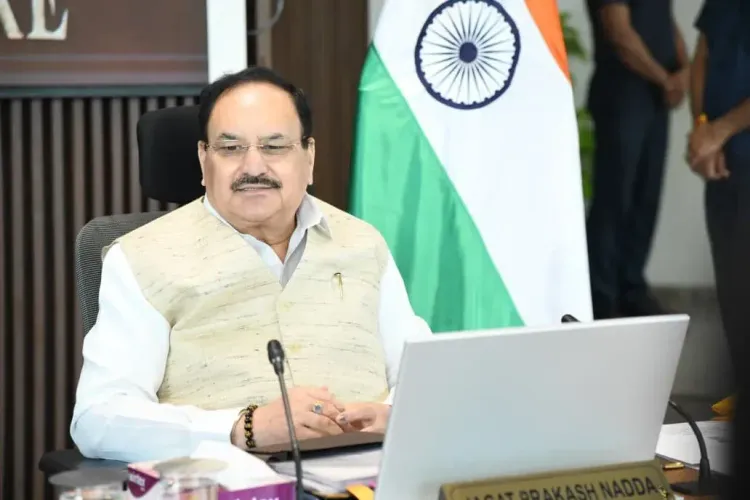
Union Health Minister J. P. Nadda chaired the 15th Board of Governors meeting of RIMS Imphal on 18 June 2026, reviewing the institute's healthcare delivery, academic excellence, and research roadmap, reaffirming the Centre's commitment to equitable healthcare in the Northeast.
Key Takeaways
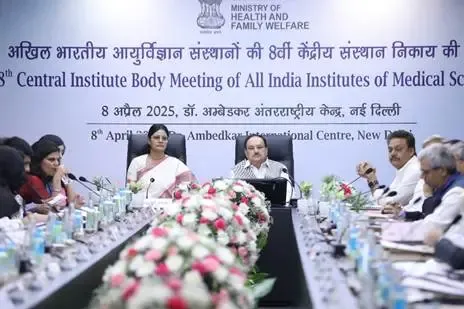
Nadda chaired the 15th Meeting of the Board of Governors of RIMS Imphal on 18 June 2026 .
RIMS Imphal serves the entire North-Eastern region and adjoining states as a tertiary healthcare and medical education hub.
The meeting reviewed ongoing initiatives and the institute's future roadmap covering healthcare delivery, academic excellence, research, and patient-centric services.
RIMS Imphal was established as an autonomous institute under the Ministry of Health and Family Welfare in 2002 .
The Centre's healthcare strategy for the Northeast aligns with the Act East Policy and schemes such as Ayushman Bharat .
Future budget allocations and possible announcements on new super-speciality blocks or research centres at RIMS are being closely watched.
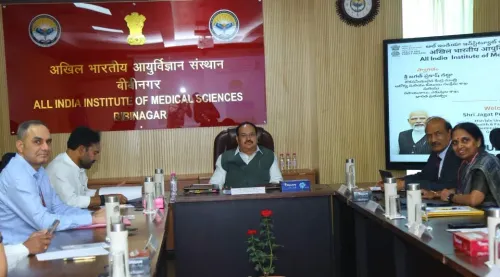
Union Health Minister J. P. Nadda chaired the 15th Meeting of the Board of Governors of the Regional Institute of Medical Sciences (RIMS), Imphal on 18 June 2026, reviewing the institution's ongoing initiatives and charting its future course in healthcare delivery, academic excellence, and research.
Context
Nadda described RIMS Imphal as 'a premier institution and a beacon of excellence in healthcare, medical education, and research,' noting that it serves 'not only the North-Eastern region but also the adjoining states.' The meeting provided a platform to assess the institute's performance and align its roadmap with the Centre's broader health policy objectives.
The Board reviewed the institution's capacity-building efforts and patient-centric services, with Nadda emphasising the institute's role in strengthening the region's 'public health ecosystem.' Exact agenda items and numerical targets discussed at the meeting have not been made public.
Policy Backdrop
RIMS Imphal was upgraded to an autonomous institute under the Ministry of Health and Family Welfare in 2002, with a mandate to provide tertiary healthcare, medical education, and research for the North-Eastern states. The National Health Policy 2017 further emphasised the development of tertiary-care institutions and equitable access in underserved regions, including the Northeast.
The Ayushman Bharat Pradhan Mantri Jan Arogya Yojana, launched in 2018, extended health coverage linkages to premier institutes such as RIMS, broadening access to advanced medical services for residents of the region. Successive Union budgets have allocated resources for infrastructure upgrades, faculty recruitment, and super-speciality services at institutes like RIMS, AIIMS-Guwahati, and other medical colleges across the Northeast.
Nadda invoked the leadership of Prime Minister Narendra Modi, stating that the government remains 'steadfast in our commitment to building robust healthcare institutions and ensuring equitable, affordable, and quality healthcare for every citizen.'
Stakeholders and Impact
Residents across Manipur, Nagaland, Mizoram, and neighbouring states depend on RIMS Imphal for advanced medical care that would otherwise require travel to metropolitan hospitals. Medical students, faculty, and healthcare workers in the region stand to benefit directly from any improvements in the institute's academic and clinical infrastructure.
The government's consistent focus on upgrading regional medical institutes is part of a broader strategy aligned with the Act East Policy, which prioritises social-sector development and connectivity in border states. Strengthening institutions like RIMS reduces the healthcare burden on patients who would otherwise seek treatment far from home.
What's Next
Attention will now turn to the next Union Budget cycle and scheme guidelines for RIMS under the Ministry of Health and Family Welfare, where allocations for infrastructure expansion, new super-speciality blocks, or dedicated research centres could translate the Board's deliberations into concrete outcomes. The government's track record of sustained investment in Northeast medical infrastructure suggests that the institution's roadmap, as reviewed at this meeting, will inform future funding priorities. How quickly those commitments materialise on the ground will determine RIMS Imphal's ability to fulfil its role as the region's foremost centre of medical excellence.
Point of View
The Health Ministry is reinforcing a political narrative of inclusive development in border states ahead of potential electoral cycles in the region. The meeting also reflects a broader administrative pattern: using high-profile ministerial engagement with regional institutes to signal intent and maintain institutional accountability. Whether this translates into measurable improvements — in super-speciality capacity, research output, or patient outcomes — will be the real test of the government's stated commitment.
NationPress
19 Sept 2026
Frequently Asked Questions
What is RIMS Imphal and why is it important?
RIMS Imphal (Regional Institute of Medical Sciences, Imphal) is an autonomous medical institute in Manipur under the Ministry of Health and Family Welfare , established in 2002 to provide tertiary healthcare, medical education, and research for the North-Eastern states and adjoining regions.
What was discussed at the 15th RIMS Board of Governors meeting?
Union Health Minister J. P. Nadda reviewed the institution's ongoing initiatives and future roadmap covering healthcare delivery, academic excellence, research capabilities, and patient-centric services. Specific agenda items and numerical targets have not been made public.
Who chairs the Board of Governors of RIMS Imphal?
The Union Minister of Health and Family Welfare chairs the Board of Governors of RIMS Imphal . J. P. Nadda , in his capacity as Union Health Minister, chaired the 15th meeting on 18 June 2026 .
How does the Centre support healthcare in Northeast India?
The Centre supports Northeast healthcare through autonomous institutes like RIMS Imphal and AIIMS-Guwahati , successive budget allocations for infrastructure and faculty, and schemes such as Ayushman Bharat Pradhan Mantri Jan Arogya Yojana , launched in 2018 .
What is the significance of the Act East Policy for healthcare in the Northeast?
The Act East Policy prioritises connectivity and social-sector development in border states, and the government's consistent investment in regional medical institutes like RIMS Imphal is seen as part of this broader strategy to reduce dependence on metropolitan hospitals.