Should New AIIMS Set Global Standards in Patient Care and Medical Education?

Synopsis
Union Health Minister J.P. Nadda urges newly established AIIMS to become global leaders in patient care and medical education while reinforcing their unique ethos. With a focus on patient satisfaction, collaboration, and modern technology integration, he outlines a comprehensive plan for AIIMS to thrive in the healthcare landscape.
Key Takeaways
Global Standards : New AIIMS to set benchmarks in healthcare.
Patient-Centric Focus : Emphasis on enhancing patient satisfaction.
Collaboration : Institutions encouraged to work together for coordinated growth.
Technology Adoption : Integration of AI and telemedicine in diagnostics.
Research Consortium : 20 AIIMS collaborate on national health priorities.
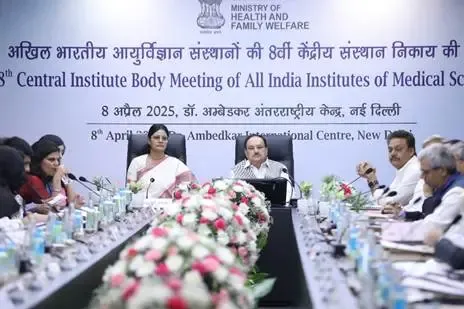
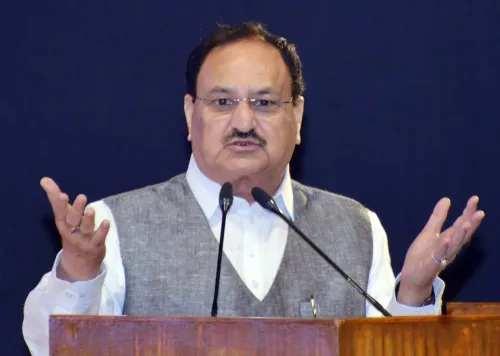
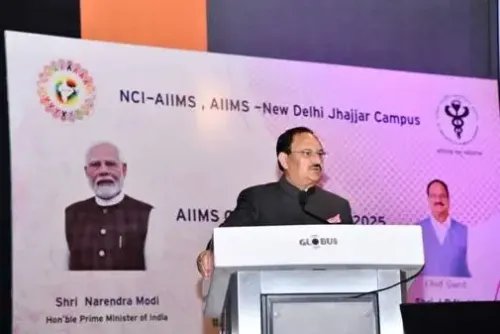
New Delhi, Feb 20 (NationPress) The newly established All India Institutes of Medical Sciences (AIIMS) are expected to set global benchmarks in patient care and medical education, while ensuring the preservation of the unique institutional ethos associated with the AIIMS network, stated Union Health and Family Welfare Minister J.P. Nadda on Friday.
Speaking at the 'Leadership Conclave' for the Presidents and Executive Directors of the new AIIMS, organized by the Ministry of Health and Family Welfare, the minister highlighted the significance of the conclave, especially during this period of expansion within the AIIMS framework.
He emphasized the need for a balanced approach that integrates patient care, education, and research, with a strong emphasis on enhancing a patient-centric model.
Nadda pointed out the necessity to implement structured patient feedback systems and take actionable steps to improve patient satisfaction.
The minister further highlighted the value of collective support and structured collaboration among institutions to promote coordinated growth.
He expressed pride in the formation of a collaborative research consortium among 20 AIIMS aimed at advancing health research that aligns with national priorities. According to him, institutional leadership should merge administrative efficiency with academic excellence to effectively guide this initiative.
Moreover, Nadda called for a shift away from traditional practices towards greater transparency, accountability, and objectivity in decision-making.
He advocated for the integration of modern technologies, particularly the use of Artificial Intelligence in diagnostics and clinical decision-making, and emphasized the need to institutionalize telemedicine services as a routine aspect of AIIMS operations.
According to a statement from the Health Ministry, the minister reiterated that structured mechanisms such as the NORCET and the Common Recruitment Examination (CRE) for nursing and non-faculty staff should be conducted consistently, prioritizing timely appointments.
"Facilities like Jan Aushadhi Kendras and AMRIT Pharmacies must be established and maintained in every AIIMS to guarantee affordable access to medications," Nadda remarked.
He also called for the creation of a structured mechanism for faculty and student exchange between AIIMS and other Institutes of National Importance, positioning AIIMS as a leader in teaching and nursing capacity development.
Point of View
It is imperative to recognize the ambitious goals set forth by Union Minister J.P. Nadda for the new AIIMS. This initiative not only aims to enhance patient care and education but also seeks to elevate India's standing in global healthcare. This holistic approach aligns with national priorities and promises to foster a robust healthcare system that prioritizes patient satisfaction and institutional collaboration.
NationPress
29 Sept 2026
Frequently Asked Questions
What are the primary goals for the new AIIMS?
The main objectives for the new AIIMS include establishing global standards in patient care and medical education, enhancing patient satisfaction through feedback mechanisms, and promoting collaborative research aligned with national health priorities.
How will technology be integrated into AIIMS?
AIIMS plans to adopt cutting-edge technologies, particularly Artificial Intelligence for diagnostics and clinical decision-making, while also institutionalizing telemedicine services for better healthcare access.
What role will patient feedback play in AIIMS?
Structured patient feedback mechanisms will be critical in improving patient satisfaction and ensuring that healthcare services are tailored to meet the needs of patients effectively.
Will AIIMS collaborate with other institutes?
Yes, AIIMS aims to develop structured mechanisms for faculty and student exchanges with other Institutes of National Importance, facilitating knowledge sharing and capacity building.
What initiatives will ensure affordable access to medicines?
The establishment of facilities such as Jan Aushadhi Kendras and AMRIT Pharmacies at every AIIMS will guarantee affordable access to essential medications for patients.