Dr. Jitendra Singh on Modi govt's governance reform push
Synopsis
Union Minister Dr. Jitendra Singh underscores the Modi government's three-track governance push — civil-service capacity building via Mission Karmayogi, pensioner welfare simplification, and faster CPGRAMS grievance redressal — framing it as foundational infrastructure for India's Viksit Bharat 2047 vision.
Key Takeaways
Jitendra Singh posted on 20 November 2026 outlining the Ministry of Personnel, Public Grievances and Pensions' reform agenda under PM Modi.
Mission Karmayogi , approved in 2020 , is the government's flagship programme to build a competency-based, future-ready civil service through the iGOT digital platform.
The CPGRAMS portal, managed by DARPG , has been integrated with state portals and operates on time-bound redressal targets to improve citizen grievance resolution.
Pensioner welfare measures include digital life-certificate submission and doorstep banking, reducing paperwork and delays for elderly recipients.
All three pillars — trained bureaucracy, pensioner welfare, and grievance redressal — are framed as enablers of the Viksit Bharat 2047 developed-economy goal.
The next benchmarks include Mission Karmayogi module rollouts and any new governance dashboards expected in the upcoming budget or parliamentary session.
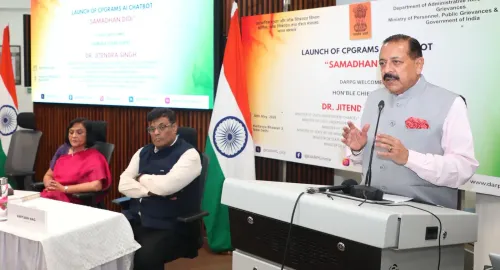
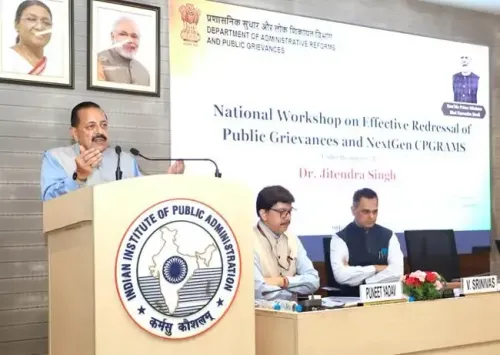
India's civil service, its pensioners, and every citizen who has ever filed a government grievance are the intended beneficiaries of a sweeping administrative overhaul — and on Friday, 20 November 2026, Union Minister of State (Independent Charge) for Science and Technology and Personnel, Public Grievances and Pensions, Dr. Jitendra Singh, laid out the government's scorecard in a pointed social media post, framing the effort as governance 'transformed' under Prime Minister Narendra Modi.
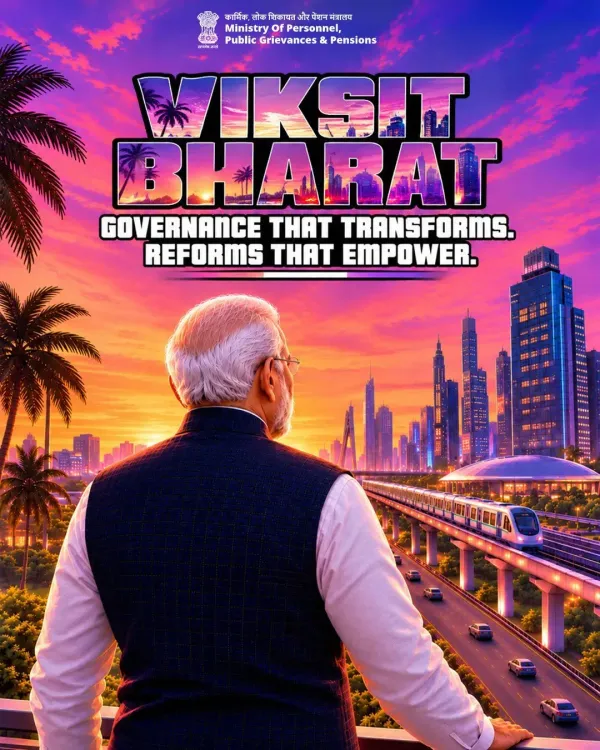
Dr. Singh wrote that the Ministry of Personnel, Public Grievances and Pensions is 'advancing a more efficient, responsive and accessible governance ecosystem for Viksit Bharat' — the government's shorthand for its developed-India target by 2047 — anchoring the claim on three pillars: a future-ready civil service, pensioner welfare, and faster grievance redressal.Mission Karmayogi and the civil-service capacity push
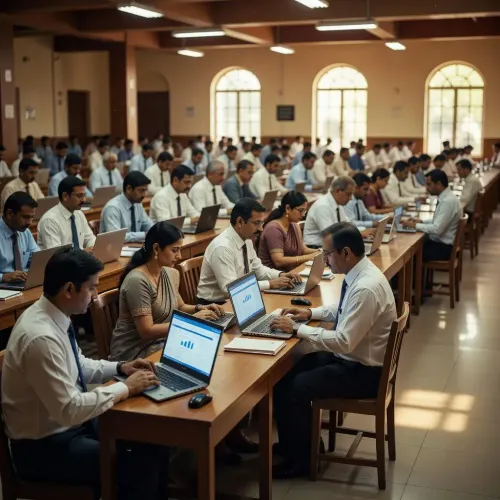
At the heart of the civil-service reform arm sits Mission Karmayogi, the National Programme for Civil Services Capacity Building approved in 2020. The programme moved away from rules-based training toward competency-based learning, pushing digital modules through the iGOT (Integrated Government Online Training) platform to reach officers across cadres and ranks.
The Department of Personnel and Training (DoPT) anchors these efforts, shaping recruitment policy, service rules, and lateral-entry norms that have drawn periodic political debate but represent a consistent thread in the government's vision of a leaner, more outcome-oriented bureaucracy.
CPGRAMS and the grievance redressal clock
On the citizen-facing side, the Centralised Public Grievance Redress and Monitoring System (CPGRAMS) — managed by the Department of Administrative Reforms and Public Grievances (DARPG) — has been progressively tightened since 2014: state portals integrated, time-bound redressal targets set, and dashboards made public. The system handles millions of complaints a year, making turnaround time a visible, trackable metric of government responsiveness.
Pensioner welfare, the third pillar Dr. Singh cited, has been addressed through simplified digital life-certificate submissions, doorstep banking for elderly pensioners, and rule rationalisations that cut paperwork from the disbursement chain.
Viksit Bharat: governance as an enabler, not just an apparatus
The minister's framing is deliberate — positioning administrative reform not as bureaucratic housekeeping but as a strategic input into the 2047 developed-economy goal. Faster grievance disposal, trained civil servants, and streamlined pension payouts together reduce friction for citizens and free up government bandwidth for execution. The #ViksitBharat, #DoPT, #DoPPW, and #DARPG hashtags in the post signal a coordinated communications push across ministries.
The next concrete milestones to watch: the rollout progress of pending Mission Karmayogi competency modules and any new performance dashboards or pension reforms that could surface in the upcoming budget cycle or parliamentary session.
The machinery of government rarely makes headlines — but when it works, it is the invisible infrastructure on which every other reform rides.
Point of View
Inside-the-Beltway subject — as a voter-visible deliverable tied to the emotionally resonant Viksit Bharat narrative. By bundling civil-service training, pensioner welfare, and grievance redressal under one umbrella, the ministry is making the case that back-office efficiency translates directly into citizen experience. The Mission Karmayogi and CPGRAMS frameworks give the government measurable, dashboard-trackable outputs rather than vague intent, which matters as the 2047 target approaches milestone reviews. Watch for whether these reform threads accelerate or stall in the next budget cycle, as fiscal allocations to DoPT and DARPG will signal the government's true prioritisation.
NationPress
20 Nov 2026
Frequently Asked Questions
What is Mission Karmayogi?
Mission Karmayogi is the National Programme for Civil Services Capacity Building, approved by the Indian government in 2020. It shifts bureaucratic training from rules-based to competency-based learning, delivered through the iGOT digital platform to civil servants across all cadres.
What is CPGRAMS and how does it work?
CPGRAMS (Centralised Public Grievance Redress and Monitoring System) is an online portal managed by DARPG that allows Indian citizens to file complaints against government departments. It operates on time-bound redressal targets and has been integrated with multiple state-level grievance portals since 2014.
What is Viksit Bharat and when is the target year?
Viksit Bharat is the Indian government's vision for a fully developed economy and society by the year 2047, coinciding with 100 years of independence. It serves as an overarching policy goal across ministries, including governance and administrative reforms.
What does the Ministry of Personnel, Public Grievances and Pensions do?
The ministry oversees three key functions: civil service recruitment, training and service rules (through DoPT), administrative reforms and citizen grievance redressal (through DARPG), and pension policy and welfare for retired government employees (through DoPPW).
What pension reforms has the Modi government introduced for central government employees?
Key measures include the rollout of digital Jeevan Pramaan (life certificates) to eliminate in-person verification, doorstep banking services for elderly pensioners, and rule simplifications to reduce paperwork and processing delays in pension disbursement.