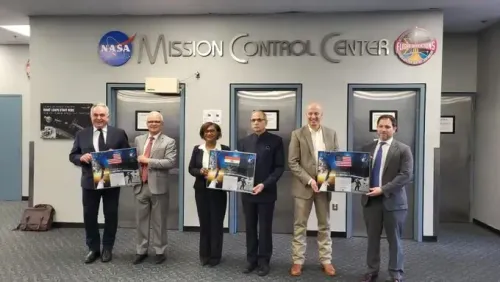
NASA invites ISRO to join Moon Base programme amid deepening India-US space ties
Synopsis
NASA's invitation to ISRO to join its Moon Base programme — confirmed by the US Ambassador at the 9th Civil Space Joint Working Group in Bengaluru — marks the most ambitious milestone yet in the India-US space partnership. Coming on the heels of the NISAR launch, it signals that India's role in deep space exploration is shifting from observer to active partner.
Key Takeaways
NASA has invited ISRO to join its Moon Base programme , announced during bilateral talks in Bengaluru on 5-6 August 2025 .
The invitation was confirmed by US Ambassador to India Sergio Gor in a post on social media platform X .
The 9th Civil Space Joint Working Group was co-chaired by the US State Department and NASA , with participation from senior ISRO officials.
The Moon Base proposal builds on India's participation in the Artemis Accords framework for peaceful lunar exploration.
Talks followed the successful launch of the joint NISAR Earth-observation mission, with both sides eyeing additional collaborative missions.
India and the US reaffirmed commitment to COPUOS guidelines on long-term sustainability of outer space activities.
NASA has formally invited the Indian Space Research Organisation (ISRO) to join its Moon Base programme, a landmark development announced during the 9th Civil Space Joint Working Group meeting held at ISRO headquarters in Bengaluru on 5 and 6 August 2025. The invitation signals a significant deepening of the India-US deep space partnership, extending bilateral cooperation well beyond Earth orbit.
What Was Discussed in Bengaluru
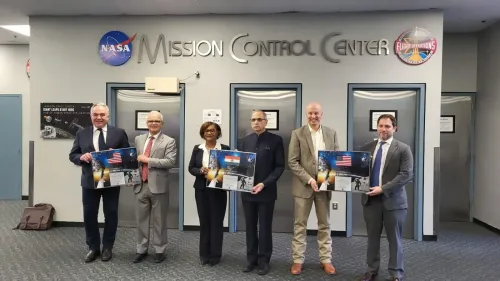
The two-day meeting brought together senior officials from ISRO, NASA, and the US State Department, who jointly co-chaired the session. Agenda items spanned human spaceflight, lunar exploration, scientific research, and commercial space activities. Officials reviewed the status of ongoing bilateral projects and identified fresh avenues for collaboration under the broader TRUST initiative — a framework anchoring US-India space engagement.
The invitation to ISRO to participate in NASA's Moon Base programme was described as a key outcome of the talks, building directly on commitments under the Artemis Accords, which India signed to promote the peaceful, sustainable exploration of the Moon and beyond.
What the US Ambassador Said
US Ambassador to India Sergio Gor confirmed the development on Tuesday in a post on social media platform X. 'NASA has invited ISRO to join its Moon Base program, deepening the U.S.-India deep space partnership! The news came as StateDept and NASA co-chaired the 9th Civil Space Joint Working Group in Bengaluru, advancing the 🇺🇸-🇮🇳 TRUST initiative,' he wrote.
NISAR Mission as a Launchpad
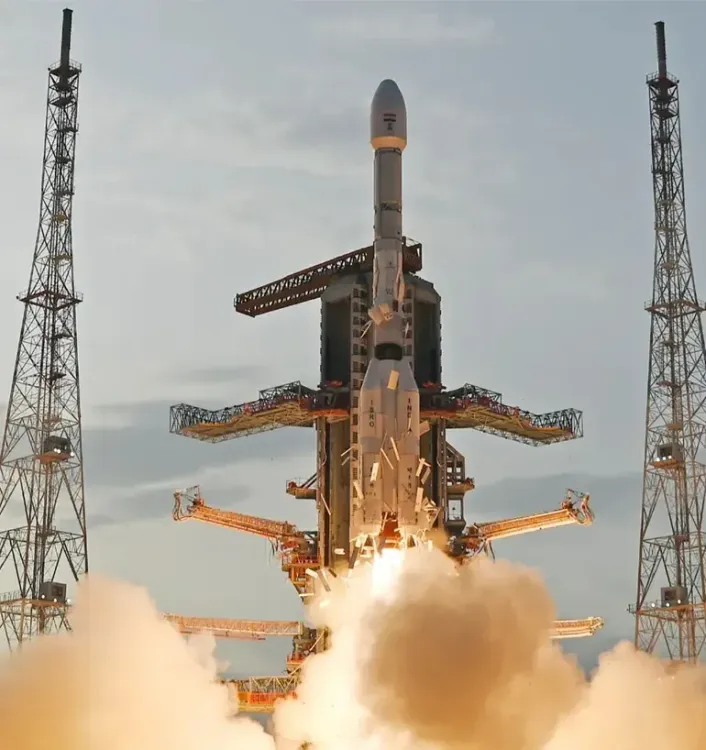
The Bengaluru talks followed the successful launch of the NASA-ISRO Synthetic Aperture Radar (NISAR) mission, a joint Earth-observation project designed to monitor surface changes and support research on natural hazards, ecosystems, and environmental shifts. Officials indicated that both sides are actively exploring additional collaborative missions and space technology initiatives that build on NISAR's momentum.
Both countries also agreed to advance discussions on sharing open scientific data under the Artemis framework, and reviewed opportunities in space science and advanced technologies.
Space Governance and Long-Term Sustainability
Long-term sustainability of outer space activities featured prominently on the agenda. India and the US reaffirmed their commitment to guidelines developed through the United Nations Committee on the Peaceful Uses of Outer Space (COPUOS), and reviewed multilateral efforts to promote responsible behaviour in space and strengthen global governance mechanisms.
This is the ninth edition of the Civil Space Joint Working Group, underscoring the institutional depth of the bilateral space relationship — one that has grown steadily since the two countries signed the Artemis Accords and accelerated with NISAR's launch. With a Moon Base invitation now on the table, the partnership appears set to enter its most ambitious phase yet.
Point of View
Not merely a bilateral goodwill gesture. What makes this different from earlier cooperation milestones is the programmatic specificity — joining a Moon Base programme implies hardware, mission roles, and cost-sharing commitments, not just data exchanges. India will need to weigh this against its own Chandrayaan and Gaganyaan timelines and the domestic political optics of resource allocation. The NISAR launch has given ISRO credibility as a delivery partner; the question now is whether New Delhi moves from accords signatory to active Moon Base contributor — and on what terms.
NationPress
11 Aug 2026
Frequently Asked Questions
What is NASA's Moon Base programme and why has ISRO been invited?
NASA's Moon Base programme is part of its broader Artemis initiative to establish a sustained human presence on and around the Moon. ISRO has been invited to join as a partner, reflecting India's growing capabilities in lunar exploration — demonstrated by Chandrayaan-3's successful south pole landing — and its status as an Artemis Accords signatory.
Where and when did the India-US space talks take place?
The talks were held at ISRO's headquarters in Bengaluru on 5 and 6 August 2025, as part of the 9th Civil Space Joint Working Group, co-chaired by the US State Department and NASA.
What is the TRUST initiative mentioned in the talks?
The TRUST initiative is a bilateral framework anchoring US-India space cooperation, referenced by US Ambassador Sergio Gor in his post on X confirming the Moon Base invitation and the outcomes of the Bengaluru meeting.
How does the NISAR mission connect to these latest developments?
The NASA-ISRO Synthetic Aperture Radar (NISAR) mission — a joint Earth-observation satellite — was successfully launched ahead of the Bengaluru talks. Officials said both sides intend to build on NISAR's success through additional collaborative missions and space technology initiatives.
What commitments did India and the US make on space governance?
Both countries reaffirmed their commitment to guidelines developed through the United Nations Committee on the Peaceful Uses of Outer Space (COPUOS) and reviewed multilateral efforts to promote responsible behaviour in space and strengthen global space governance mechanisms.