Dr. Jitendra Singh: India Eyes Crewed Moon Landing by 2040

Synopsis
Union Minister Dr. Jitendra Singh announced at the RISE Conclave 2026 in Bengaluru that India aims to land astronauts on the Moon by 2040, framing the mission as a shared national journey with common citizens as active partners in India's expanding space ambitions.
Key Takeaways
Jitendra Singh announced India's target of a crewed lunar landing by 2040 at the RISE Conclave 2026 in Bengaluru .
The minister described common citizens as active partners in India's scientific journey, signalling a public-engagement approach to the lunar programme.
India's Gaganyaan human spaceflight programme, approved in December 2018 , is the essential precursor to any crewed lunar mission.
Chandrayaan-3 achieved a historic soft landing near the lunar south pole in August 2023 , establishing the technical foundation for deeper lunar ambitions.
IN-SPACe , created in 2020 , enables private sector participation and is expected to play a key role in building crewed mission infrastructure.
India's 2040 goal places it alongside the US and China in a global competition for sustained human lunar presence.
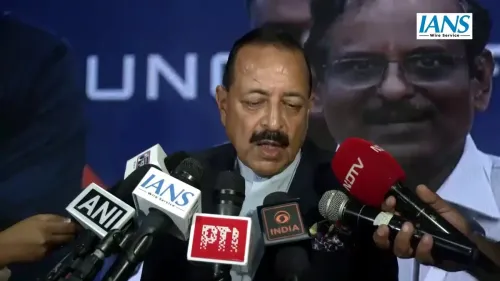
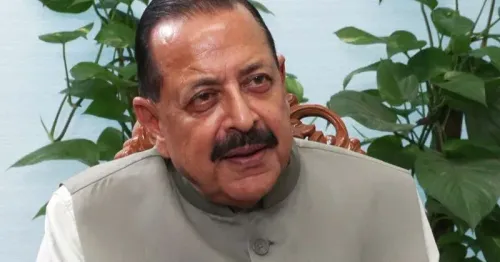
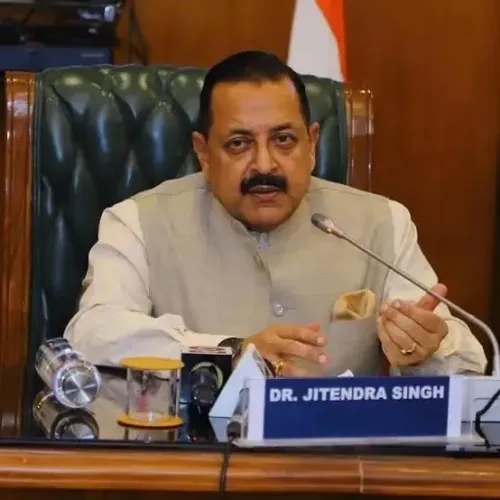
Union Science and Technology Minister Dr. Jitendra Singh on Monday, June 15, 2026, declared that India is targeting a crewed lunar landing by 2040 and emphasised that common citizens are active partners in the country's scientific journey, speaking at the #RISE_Conclave2026 in Bengaluru.
Context
Dr. Singh's remarks at the RISE Conclave 2026 in Bengaluru signal the government's intent to publicly anchor a long-range lunar ambition around a concrete year — 2040. The framing of 'common citizens as partners' reflects a deliberate effort to build broad societal ownership of what would be India's most ambitious space mission to date. The conclave brings together scientists, policymakers and industry stakeholders to chart the country's innovation and space trajectory.
India's space programme has historically been presented as a public good, and the minister's language reinforces that tradition while raising the stakes considerably with a crewed lunar goal.
Policy Backdrop
India's path to a crewed lunar landing runs through Gaganyaan, the country's first human spaceflight programme approved by the Union Cabinet in December 2018. Gaganyaan is designed to demonstrate India's capability to send astronauts into low-Earth orbit — a prerequisite for any deep-space human mission. Uncrewed test flights under the programme have been proceeding in stages, with the crewed orbital mission serving as the foundational step before lunar architecture can be formalised.
The lunar dimension of India's ambitions was sharpened dramatically by Chandrayaan-3, which achieved a historic soft landing near the lunar south pole in August 2023 — making India only the fourth country to land on the Moon and the first to do so at the south pole. That milestone established technical credibility and public momentum that now underpins the 2040 crewed goal.
IN-SPACe, established in 2020, has opened India's space sector to private firms, with the government positioning industry as a co-builder of future capabilities including launch vehicles, habitats and mission systems that a crewed lunar programme would require.
Stakeholders and Impact
ISRO scientists and engineers are the primary executors of any crewed lunar roadmap, but the minister's 'common citizens as partners' framing points to a wider stakeholder universe. Private space companies operating under IN-SPACe stand to benefit from long-duration mission contracts, while academic institutions and start-ups in the space-tech ecosystem could see increased funding and collaboration opportunities.
For the Indian public, a 2040 crewed Moon landing would represent a generational milestone — one that Dr. Singh appears to be framing as a shared national project rather than a purely governmental achievement. This positioning also serves to build sustained political and budgetary support across successive administrations through the decade.
What's Next
The immediate watchpoints are ISRO's budget allocations in coming parliamentary sessions and the sequencing of remaining Gaganyaan uncrewed test flights, which must succeed before any crewed orbital mission can proceed. A formal government announcement of a lunar crewed architecture — including mission design, crew selection criteria and international partnerships — has not yet been made public.
As global competition for lunar presence intensifies among the United States, China and their respective partners, India's 2040 target positions it as an independent pole in the emerging lunar economy, with Bengaluru increasingly serving as the nerve centre of that ambition.
Point of View
The ministry is attempting to insulate a long-duration, high-cost programme from the electoral cycle — building the kind of public ownership that sustains funding even as administrations change. The Bengaluru setting is deliberate: it reinforces the city's identity as India's space-tech capital and signals to private industry that the crewed lunar architecture is open for commercial participation. Taken together, this positions India not merely as a participant in the global lunar race but as an aspirant to independent deep-space human capability — a significant escalation in national ambition.
NationPress
14 Sept 2026
Frequently Asked Questions
When does India plan to land astronauts on the Moon?
Union Minister Dr. Jitendra Singh has stated that India is targeting a crewed lunar landing by 2040 , as announced at the RISE Conclave 2026 in Bengaluru.
What is India's Gaganyaan programme and how does it relate to the Moon mission?
Gaganyaan is India's first human spaceflight programme, approved in December 2018 , aimed at sending astronauts into low-Earth orbit. It is a critical precursor to any crewed lunar mission, as it will establish the foundational human spaceflight capabilities India needs before targeting the Moon.
Has India already landed on the Moon?
Yes. India's Chandrayaan-3 mission achieved a successful soft landing near the lunar south pole in August 2023 , making India the first country to land at the south pole and only the fourth nation overall to soft-land on the Moon.
What is the RISE Conclave 2026?
The RISE Conclave 2026 is an event held in Bengaluru that brings together scientists, policymakers and industry stakeholders to discuss India's innovation and space future. Dr. Jitendra Singh addressed the conclave on June 15, 2026 .
Can private companies participate in India's space and lunar programme?
Yes. IN-SPACe , established in 2020 , was created specifically to allow private sector firms to participate in India's space activities alongside ISRO , and private industry is expected to contribute to the infrastructure required for a crewed lunar mission.