Dr. Jitendra Singh: ISRO clears 3 Gaganyaan crew module tests
Synopsis
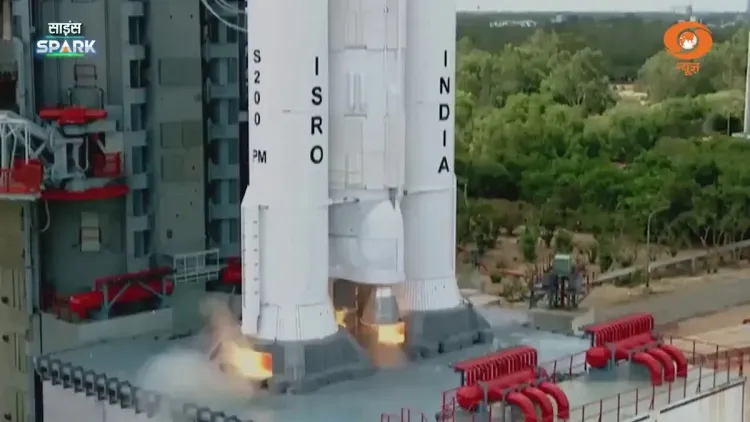
ISRO has successfully completed three critical qualification tests for the Gaganyaan crew module, Union Minister Dr. Jitendra Singh announced on 21 July 2026, advancing India's first human spaceflight programme and its goal of safely returning astronauts from orbit.
Key Takeaways
ISRO completed three critical qualification tests for the Gaganyaan crew module, announced on 21 July 2026 .
The tests validate safety systems focused on bringing astronauts back safely from orbit, including re-entry and recovery.
Gaganyaan was announced by PM Modi in August 2018 with the goal of sending Indian Vyomnauts to low-Earth orbit.
India aims to join the US, Russia, and China as nations with independent human spaceflight capability.
The next major milestone is an uncrewed orbital test flight of the full Gaganyaan mission stack.
The programme aligns with India's Atmanirbhar Bharat push for indigenous space technology.
Union Science and Technology Minister Dr. Jitendra Singh announced on Tuesday, 21 July 2026 that ISRO has successfully completed three critical qualification tests for the Gaganyaan crew module, marking a significant advance in India's first human spaceflight programme.
Context
In his post, Dr. Jitendra Singh stated that the qualification tests further strengthen 'the safety systems designed to bring our astronauts back safely from space,' underscoring that 'human spaceflight isn't just about reaching orbit, it's about ensuring a safe return to Earth.' The crew module is the spacecraft segment that houses astronauts during launch, orbital flight, and re-entry, making its qualification a foundational milestone before any crewed mission can proceed.
The three tests cleared by ISRO are described as 'critical qualification' exercises, meaning they validate that the hardware meets the stringent safety and performance standards required for human-rated spaceflight. Qualification testing typically covers structural integrity, thermal protection, and recovery systems — the last line of defence between astronauts and the hazards of re-entry and ocean recovery.
Policy Backdrop
Prime Minister Narendra Modi formally announced the Gaganyaan programme in August 2018, with an initial target of demonstrating crewed flight by 2022, a timeline subsequently revised as the programme absorbed lessons from the COVID-19 pandemic and technical development cycles. The mission aims to send Indian astronauts — officially designated Vyomnauts — to low-Earth orbit and return them safely, placing India in the small group of nations with independent human spaceflight capability alongside the United States, Russia, and China.
The programme sits at the intersection of India's Atmanirbhar Bharat push for indigenous technology and its broader ambition to expand from satellite launches and the Chandrayaan lunar series into crewed exploration. Supporting infrastructure — including a crew escape system and dedicated recovery ships — has been developed in parallel with the crew module itself.
Stakeholders and Impact
ISRO scientists and engineers are the primary stakeholders, having invested years in developing human-rated systems that meet standards considerably more demanding than those for unmanned missions. The four Indian Air Force pilots selected and trained as Vyomnauts stand to be the direct beneficiaries of each qualification milestone, as successful tests move the mission closer to the pad.
Beyond the immediate mission, the qualification of the crew module has downstream implications for India's planned space station and future lunar exploration ambitions. A proven crew module architecture reduces development risk and cost for subsequent crewed programmes, and demonstrates to international partners that India's human spaceflight infrastructure is operationally credible.
What's Next
The next major programmatic gate for Gaganyaan is the uncrewed orbital test flight of the full mission stack, which will validate end-to-end systems — launch vehicle, crew module, and recovery — before astronauts board. A revised timeline for the first crewed mission has not been officially confirmed, and observers will watch for ISRO's forthcoming announcements on the uncrewed flight schedule.
With crew module qualification advancing, India edges closer to joining the exclusive tier of spacefaring nations capable of independently launching humans into orbit and bringing them home — a capability that would reshape its standing in global space diplomacy and commercial partnerships.
Point of View
Not merely a communications exercise — qualification testing is the formal gateway that human-rating authorities require before any crewed flight is approved. Dr. Jitendra Singh's framing of the achievement around 'safe return' rather than launch spectacle reflects a deliberate effort to signal programmatic maturity to both domestic and international audiences. Coming after years of timeline revisions, each verified hardware milestone carries outsized political weight, reassuring Parliament and the public that Gaganyaan is progressing on engineering merit. The broader arc points toward India leveraging a proven crewed capsule as a diplomatic and commercial asset in the emerging era of international space station partnerships and lunar gateway discussions.
NationPress
20 Oct 2026
Frequently Asked Questions
What are the Gaganyaan crew module qualification tests?
Qualification tests are rigorous checks that verify the crew module meets human-rated safety standards for structural integrity, thermal protection during re-entry, and recovery systems. ISRO completed three such critical tests, as announced by Minister Dr. Jitendra Singh on 21 July 2026.
When will the Gaganyaan mission launch with astronauts?
An official revised date for the first crewed Gaganyaan flight has not been confirmed. The next major step is an uncrewed orbital test flight of the full mission stack, after which a crewed launch timeline is expected to be firmed up.
Who are India's Gaganyaan astronauts?
India's Gaganyaan astronauts are officially called Vyomnauts. Four Indian Air Force pilots were selected and have undergone training for the mission.
What is the Gaganyaan programme?
Gaganyaan is India's first human spaceflight programme, announced by Prime Minister Modi in August 2018. It aims to send Indian astronauts to low-Earth orbit and return them safely, making India one of a handful of nations with independent crewed spaceflight capability.
What is Dr. Jitendra Singh's role in India's space programme?
Dr. Jitendra Singh is the Union Minister of State (Independent Charge) for Science and Technology and Earth Sciences, and also holds a portfolio in the Prime Minister's Office. In this capacity he oversees ISRO and India's broader space policy.